
Let's talk about the elephant in the dining room: most restaurant operators would rather face a Friday night rush with one line cook than sit across from a banker or venture capitalist discussing "terms."
I've been there. Started as a busser, worked every station in the kitchen, managed the chaos, even brewed beer for a concept that needed "something different." And through all of it, one truth remained constant: the moment you give away a piece of your restaurant, you give away a piece of your vision.
But here's the thing, 2026 isn't your grandpa's restaurant industry anymore. The rules have changed. The pressure to scale has intensified. And the traditional funding playbook? It's broken.
The Growth Trap Nobody Talks About
You've nailed location one. The regulars know your name. The kitchen flows like a well-rehearsed dance. Your Instagram engagement actually translates to covers. Then someone, an investor, a well-meaning advisor, maybe even your accountant, suggests it's time to "take it to the next level."
Suddenly you're looking at three paths, and they all lead somewhere uncomfortable:
Path One: High-Interest Loans – Because nothing says "pursue your passion" like 12% APR and a personal guarantee that includes your house, car, and probably your firstborn.
Path Two: Equity Partners – Trade 30-40% of your business for capital, then spend the next five years explaining why you can't just "Sysco everything" or why authenticity matters more than an extra point of margin.
Path Three: Bootstrap Until You Burn Out – Work 80-hour weeks, defer every equipment upgrade, and pray your walk-in doesn't die during summer.
There's a fourth path. And it doesn't require you to sell your soul, your equity, or your sanity.
The Silent Killers Eating Your Growth Potential
Before we talk about funding your next location, we need to talk about why most restaurants can't. It's not always about lacking capital, it's about the invisible profit leaks that make funding impossible.
According to recent McKinsey research on restaurant industry trends, operators face unprecedented pressure from three silent killers:
Fragmented Tech That Creates More Problems Than It Solves
You've got a POS that doesn't talk to your inventory system. Your scheduling app exists in a parallel universe from your payroll. Your online ordering platform charges 30% and acts like they're doing you a favor. Every integration is another monthly fee, another login, another thing that breaks during dinner rush.
I once managed a concept where we had seven, yes, seven, different systems that were supposed to "streamline operations." Want to know what they actually did? Created seven new ways for information to get lost and seven new vendors to call when something inevitably crashed.
Operational Friction That Bleeds Margin Every Single Day
Food waste isn't sexy, but it's expensive. The produce that sits too long. The prep that doesn't get used. The over-portioning that happens when your expo is in the weeds. Industry data suggests restaurants lose 4-10% of purchased food to waste, that's not shrinkage, that's a location's worth of profit over five years.
Then there's labor. Not the obvious stuff, you know you need bodies on the floor. It's the hidden overtime. The inefficient scheduling. The training that never happens because you're too busy putting out fires. These aren't dramatic failures. They're death by a thousand paper cuts.
Stagnant Branding in a Market That Rewards Distinction
Here's what the research shows clearly: the middle is collapsing. Fast-casual concepts have sharpened their value prop. Fine dining doubled down on experience. Everyone else? Stuck in no-man's-land, competing on price in a race nobody wins.
Danny Meyer, founder of Union Square Hospitality Group and the guy who literally wrote the book on "enlightened hospitality", has been vocal on LinkedIn about this exact challenge: differentiation isn't optional anymore, it's survival. You can find his insights on authentic restaurant growth and hospitality that emphasize building distinct experiences rather than chasing rapid expansion.

The RFA Model: Capital Without the Compromise
Here's what we figured out: most restaurants don't need equity partners. They need a funding model that actually understands how restaurants work.
Our approach is straightforward and, frankly, should have existed decades ago. We provide capital for your growth, whether that's a second location, a major renovation, or a brand refresh, in exchange for food and beverage credits. No interest. No equity dilution. No banker breathing down your neck about EBITDA targets you can barely pronounce.
Think of it this way: you're essentially selling future meals at today's cost of goods. We get to feed our team, entertain clients, and support growing restaurant concepts. You get the capital to scale without giving up ownership or taking on crushing debt.
But here's the critical part most people miss: before we talk about funding your next location, we find the money to fund it in your current operation.
The 2-Week Turnaround: Finding Money You Didn't Know You Had
When I was running restaurant operations, there was always this moment during quarterly reviews where you'd look at the P&L and think, "We're busier than ever. Where the hell is the money going?"
The money's there. It's just hiding in inefficiency, outdated processes, and tech that's supposed to help but actually hurts.
Our 2-week operational sprint does something traditional consultants can't: we find "found money", real, recurring profit improvements that fund your growth.
Week One: The Discovery Sprint
– Menu engineering analysis that identifies your silent profit killers (that popular item everyone orders? It might be costing you more than it makes)
– Tech stack audit that eliminates redundant systems and cuts monthly SaaS bloat by 30-40%
– Supply chain review that finds better pricing without compromising quality (we've saved single operators $2,000+ monthly just by renegotiating produce contracts)
– Labor efficiency mapping that reduces unnecessary overtime and optimizes scheduling without cutting hours
Week Two: The Implementation Push
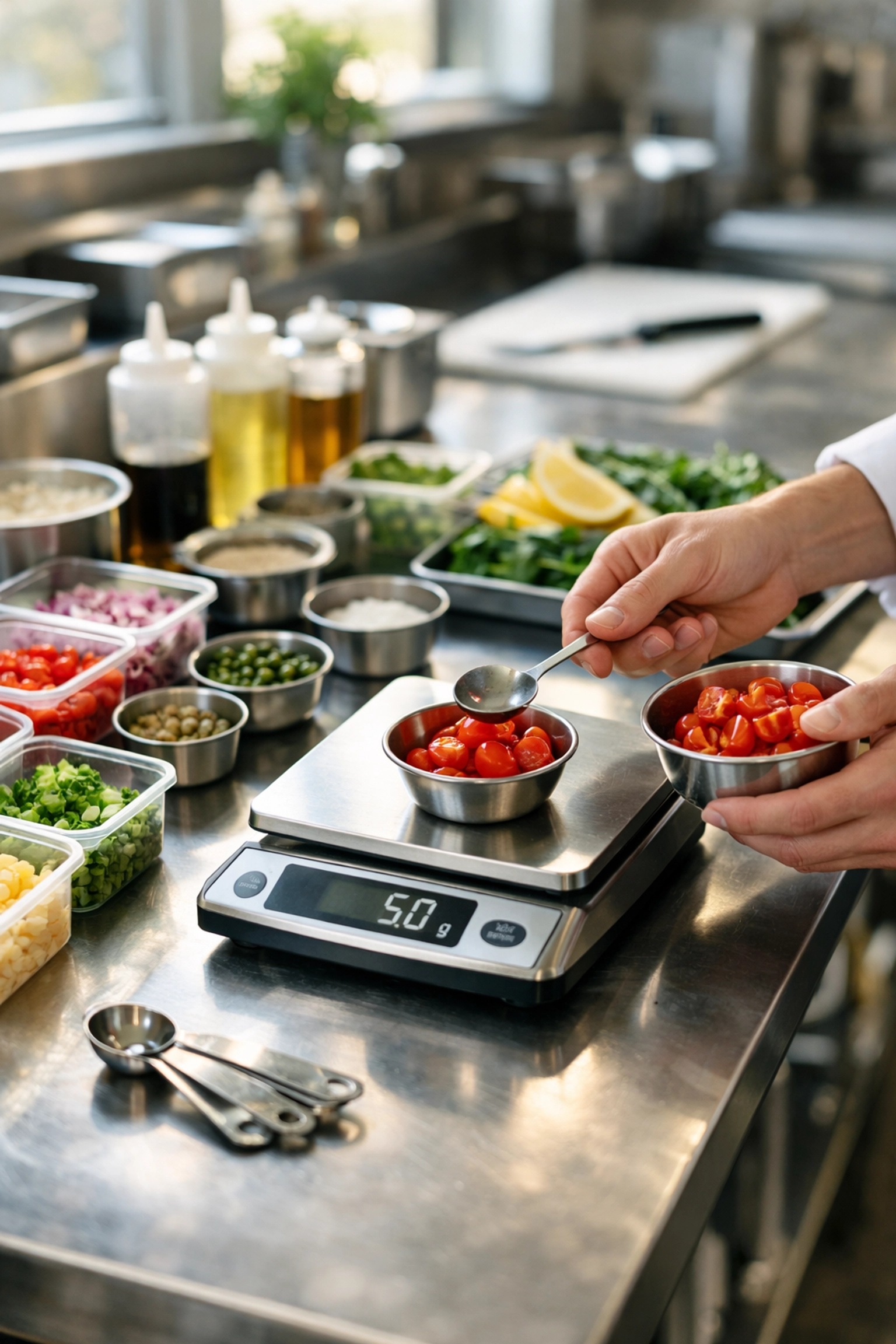
– Immediate fixes that stop the bleeding (portion control, waste reduction protocols, POS optimizations)
– Quick-win technology implementations that actually solve problems instead of creating new ones
– Staff training on new systems because technology only works if your team knows how to use it
– Performance dashboard setup so you can see where every dollar goes in real-time
The average restaurant we work with finds between $3,000-$8,000 in monthly recurring savings. That's $36,000-$96,000 annually. Over three years? That's a down payment on location two, funded entirely by operations you're already running.
Smart Funding in 2026: The New Rules
The old playbook said: find investors, pitch your concept, give away equity, hope they understand restaurants (they won't), and scale.
The new playbook says: optimize first, fund second, scale strategically.
According to Deloitte's 2026 restaurant industry outlook, successful restaurant growth in this decade depends on operational excellence and differentiated experiences, not just access to capital.
Here's what smart scaling looks like:
– Revenue diversification before replication – Multiple service channels (dine-in, delivery, catering, retail products) de-risk your business model and increase fundability
– Technology that enhances, not replaces, your competitive advantage – Automate the routine so your team can focus on hospitality and the unique aspects of your concept
– Authentic differentiation that can't be copied – Whether it's cultural expertise, hybrid format innovation, or experience-focused operations, scaling only works if you're scaling something worth replicating
– Flexible capital structures that align with restaurant economics – Traditional loans and equity don't understand that restaurants generate value differently than tech startups or retail chains

The Real Question: What Are You Actually Scaling?
Here's where most growth strategies fall apart: operators focus on replicating locations instead of replicating success.
Opening location two doesn't mean copying location one. It means understanding what made location one work, stripping away what was location-specific, and building a system that preserves your identity while allowing for operational consistency.
Before you sign a lease, answer these questions:
– Can you articulate what makes your restaurant different in one sentence?
– Do you have operational systems that work without you in the building?
– Can your team execute your standards without daily intervention?
– Do you understand your unit economics well enough to predict performance in a different trade area?
If you answered "no" to any of these, you're not ready to scale. And that's okay. Because getting these right means your second location actually works instead of becoming an expensive lesson in humility.
Why This Matters Right Now
The restaurant industry is polarizing. Value concepts are racing to the bottom on price. Premium concepts are doubling down on experience. The middle: where most independent restaurants live: is getting squeezed.
Scaling in 2026 means picking a side and committing. It means operational excellence isn't optional. It means funding structures need to align with how restaurants actually make money.
And it means not giving away equity to people who've never worked a dinner rush, managed a walk-in crisis, or explained to a line cook why consistency matters more than creativity.
The Bottom Line
You didn't get into this business to spend your days in investor meetings or explaining your vision to people who think Olive Garden is "authentic Italian." You got into it because you love restaurants: the chaos, the creativity, the moment when everything clicks and service flows like jazz.
Scaling your concept shouldn't mean compromising what made it special in the first place.
At Restaurant Finance Advisors, we're not here to tell you how to run your restaurant. We've been there: in the kitchen, on the floor, behind the bar, managing the chaos. We're here to find the money hiding in your operations, provide capital that doesn't cost you equity, and help you scale without selling your soul.
Because the restaurant industry needs more independent operators who actually give a damn, not more concepts that taste-test grouped their way to mediocrity.
Ready to scale the right way? Let's talk about what's actually possible when funding aligns with how restaurants really work.
Keywords: restaurant consulting, restaurant investment, restaurant new business, restaurant growth, find money your restaurants, restaurant franchising, smart funding, restaurant operations, margin optimization, restaurant scaling, alternative restaurant funding
Meta Description: Ready to scale your restaurant without giving up equity? This deep-dive explores the 2026 growth playbook, RFA's interest-free funding model, and how to find the capital hidden in your existing operations.
Outbound Links:


