
You ever notice how nobody tells you the truth about owning a restaurant? I mean, really tells you. Everyone talks about "following your passion" and "creating memorable dining experiences," but nobody mentions that you'll spend half your life trying to figure out why your ketchup bottles never match.
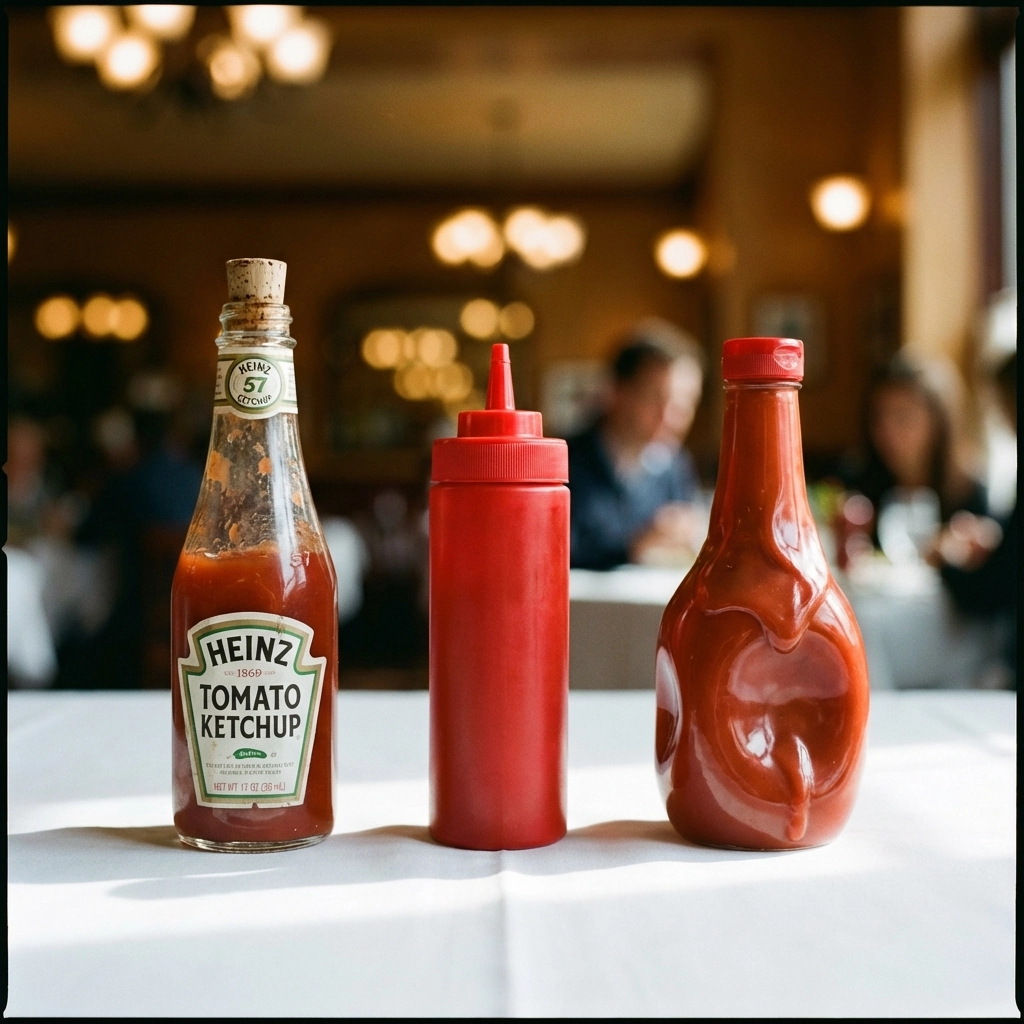
And what's the deal with ketchup bottles anyway? You order a case of Heinz, and somehow three different bottle designs show up. One's got the old-fashioned glass look, another's the modern plastic squeeze thing, and the third looks like it was designed by someone who's never actually seen ketchup before. Your dining room ends up looking like a condiment museum, and not the good kind.
The Great Napkin Dispenser Conspiracy
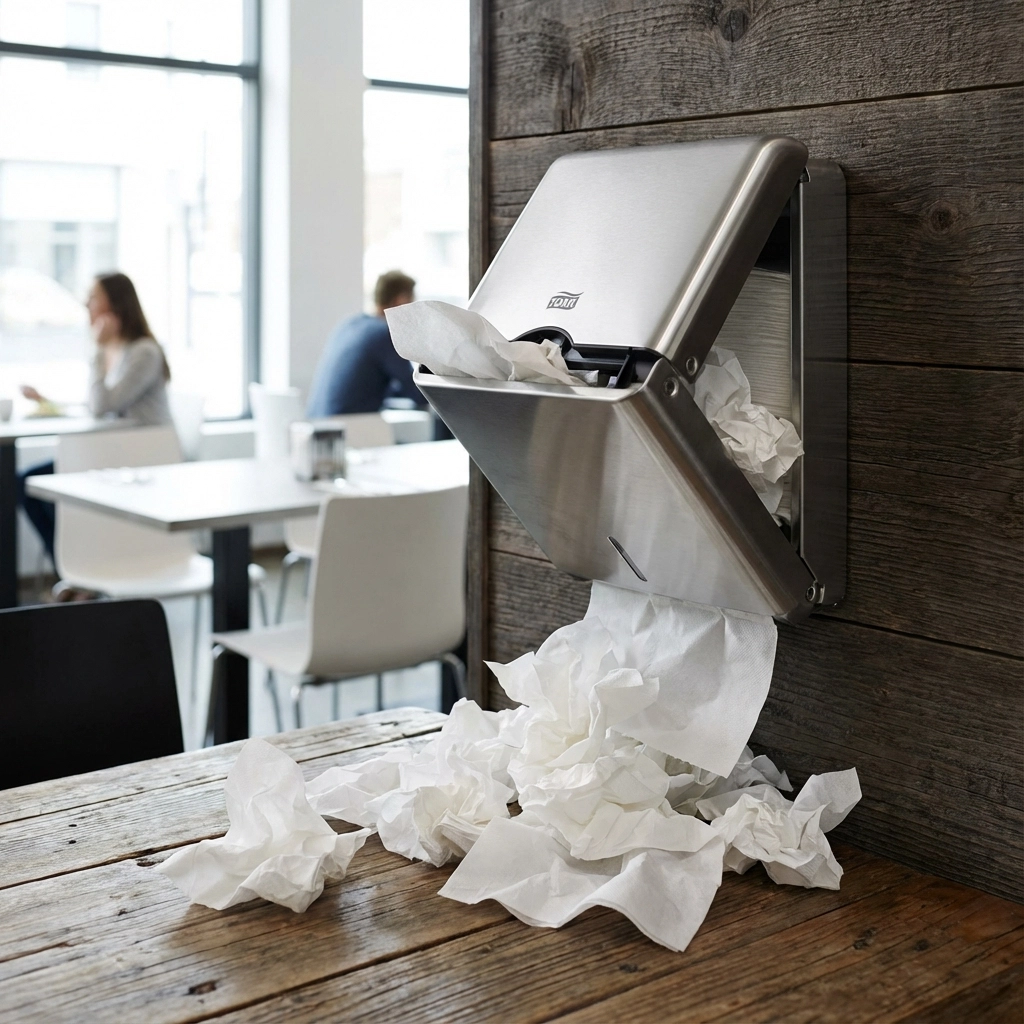
Then there are napkin dispensers. Whoever invented restaurant napkin dispensers clearly never had to refill one during a lunch rush. You've got customers staring at you like you're performing brain surgery while you're trying to jam a stack of napkins into a slot that's apparently designed for napkins from a parallel universe where they're shaped differently.
The worst part? These dispensers have exactly two settings: "dispense one napkin every five minutes" or "dump the entire contents onto the table with the slightest touch." There's no in-between. It's like they were designed by someone who fundamentally misunderstands both napkins and human behavior.
Here's what drives me crazy: We spend thousands on these fancy dispensers when we could just put napkins in a basket like normal people. But no, we need the professional napkin experience. Meanwhile, your food costs are through the roof because you're buying individual packets instead of bulk napkins.
Menu Descriptions Written by Poets (Who Don't Eat Food)
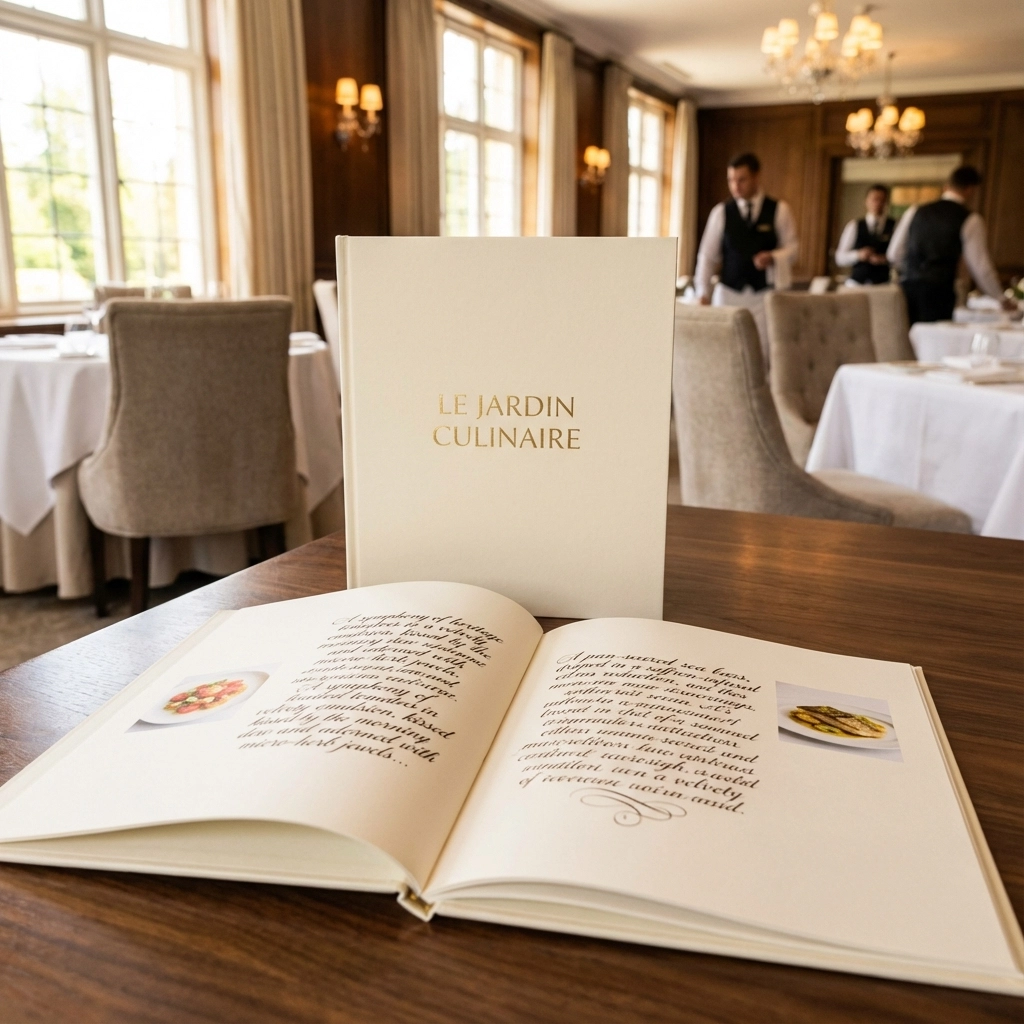
And don't get me started on menu descriptions. When did a grilled chicken sandwich become "fire-kissed free-range poultry, lovingly embraced by artisanal sourdough, accompanied by garden-fresh greens hand-selected at dawn"?
Listen, I've worked every position in a restaurant – busser, server, cook, manager, even brewer. You know what customers want? They want to know what they're ordering without needing a English literature degree. They want "grilled chicken sandwich with lettuce and tomato." Save the poetry for the wine list.
But here's the kicker – restaurants that use simple, clear menu descriptions actually sell more food. Turns out people order things they can understand. Who knew?
The Perpetual Motion Machine of Restaurant Problems
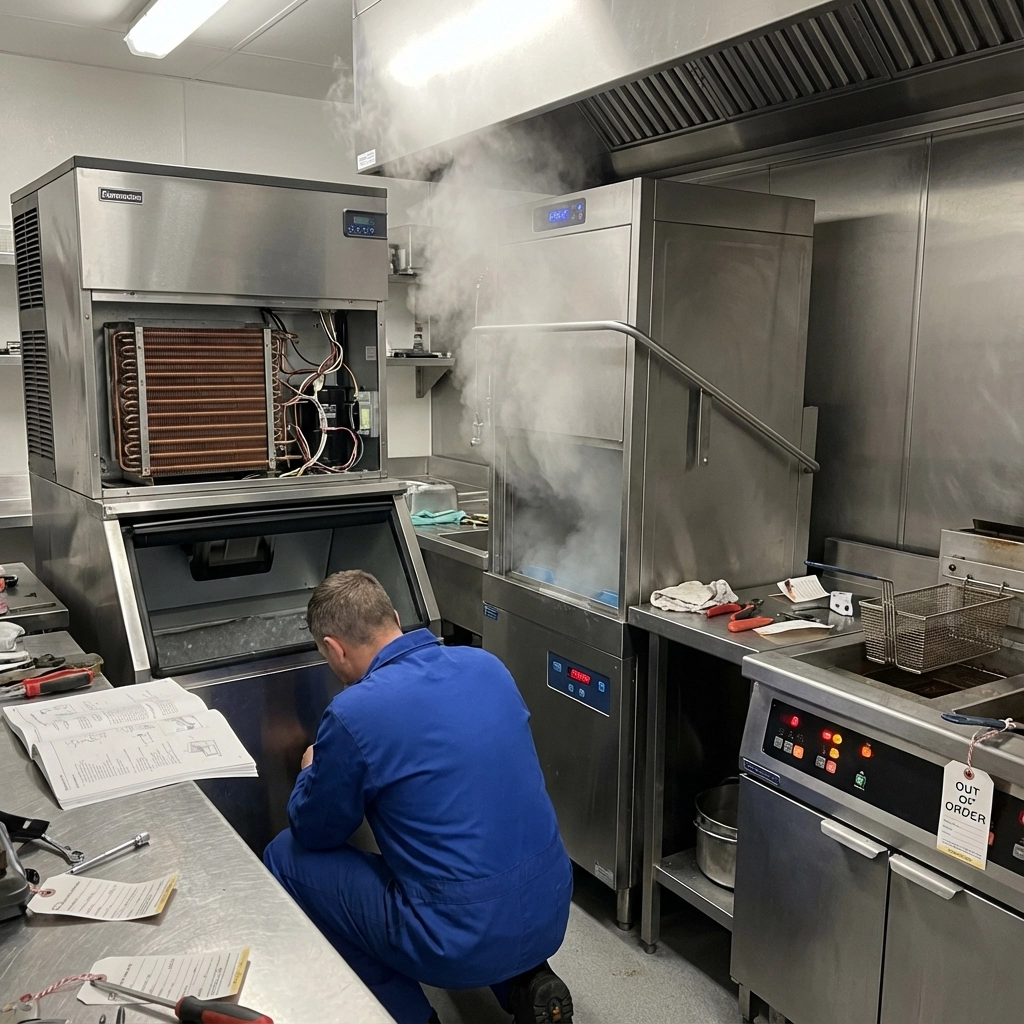
You ever notice how restaurant problems multiply? You fix the ice machine, and suddenly the dishwasher starts making that noise. You replace the dishwasher, and the walk-in cooler decides it's time for a vacation. It's like your equipment has meetings at night to coordinate their breakdowns.
The worst part is the timing. Nothing ever breaks on a slow Tuesday afternoon when you've got time to deal with it. No, the point-of-sale system crashes during Saturday night dinner rush, right when you've got a party of twelve waiting for their check and a line out the door.
I swear restaurant equipment has a built-in sensor that detects when you're busiest. "Oh, he's got three servers calling in sick and a health inspector in the dining room? Perfect time for the fryer to stop working."
The Customer Paradox
Then there are the customers themselves. They'll complain that restaurants are too expensive while ordering bottled water that costs more than the tap water at their house. They want everything fresh and local and organic, but they also want it cheap and fast and available at 2 AM on a Tuesday.
Customer logic goes like this: "I want a meal that takes three hours to prepare properly, but I'm in a hurry, so can you make it in ten minutes? Also, I'm on a budget, so can you make it cost less than the ingredients alone? Oh, and I'm allergic to everything that makes food taste good."
Don't even get me started on the people who come in five minutes before closing and want to "just grab a quick bite." Quick bite? You're about to order our most complicated entrée and sit here for an hour discussing your relationship problems with your date while my kitchen staff gives me death stares.
The Staff Situation (Or: Why I Know Everyone's Life Story)
Restaurant staff are interesting people. You'll hire someone who seems perfectly normal in the interview, and by day three you'll know about their childhood pet, their ex-boyfriend's mother's legal troubles, and their theory about why the government is putting things in the water.
Here's the thing about restaurant work: It attracts people who are either saving up for something specific, or they're running from something specific. Sometimes both. The trick is figuring out which category they're in before you put them in charge of your cash register.
And they always quit at the worst possible time. You'll have someone working for six months, everything's going great, they know the menu, customers like them, and then suddenly it's "I'm moving to Colorado to follow my spiritual journey" or "I got a job at the place across the street that pays fifty cents more per hour."
The Hidden Money Hemorrhages
But here's what really gets me – and this is where my years in the business really show – restaurants lose money in the stupidest ways possible. We obsess over food costs and labor percentages, but we ignore the obvious stuff.
Take portion control. You've got one cook who thinks a "side of fries" means half a potato, and another who's apparently feeding a family of eight. Your food costs are all over the place because nobody taught them that consistency isn't just about taste – it's about profit margins.
Or inventory management. I've worked in places where we'd run out of our signature dish on Friday night because nobody thought to check if we had enough ingredients. Meanwhile, we've got three cases of something nobody orders taking up space in the walk-in.
The real kicker? Most restaurants could reduce costs by 15-20% just by paying attention to the basics. Use portion scales. Do actual inventory counts. Train your staff to understand that waste comes out of everyone's paycheck eventually.
The Simple Solutions Nobody Uses
You know what the most successful restaurant I ever worked in did differently? They measured everything. Not in an obsessive way, but consistently. They knew exactly how many ounces went into every drink, how many sides came with every entrée, how long each table turned over.
They also did something revolutionary: They asked their customers what they actually wanted. Novel concept, right? Turns out people will tell you exactly what they're willing to pay for if you bother to ask them.
Most restaurants operate on assumptions. "Our customers want this," or "People don't care about that." But assumptions don't pay the rent. Data does.
The Bottom Line (Literally)
If you ever find yourself owning a restaurant, here's what nobody tells you: The difference between making money and losing money isn't in the big, dramatic changes. It's in paying attention to the thousand little things that add up.
Those mismatched ketchup bottles? They're not just ugly – they're inefficient. Your servers waste time explaining why your restaurant looks unprofessional. That's labor cost you don't need.
Those menu descriptions written for food critics? They confuse customers and slow down ordering. Slower ordering means longer table turns. Longer table turns mean less revenue per hour.
That broken ice machine you keep meaning to fix? Your bartender is making drinks with warm mixer, customers are complaining, and you're losing repeat business to the place next door that figured out ice matters.
The restaurant business is tough enough when you're doing everything right. When you're ignoring the basics because you're too busy putting out fires, you're just making it harder on yourself.
So here's my advice: Fix the little stuff first. Get napkin dispensers that work. Write menu descriptions people can understand. Train your staff to be consistent. Measure what matters.
Because at the end of the day, if you ever find yourself owning a restaurant, you'll discover that success isn't about being perfect – it's about being consistently good at the things that actually matter to your customers and your bottom line.
And maybe, just maybe, buy ketchup bottles that match.
SEO Keywords: restaurant consulting, restaurant opportunity, restaurant growth, reduce restaurant costs, restaurant management, restaurant operations, restaurant profit margins, restaurant efficiency, restaurant cost control, restaurant business development
Meta Description: A humorous Andy Rooney-style take on restaurant ownership challenges, from mismatched condiment bottles to hidden profit opportunities. Expert insights on reducing costs and improving restaurant operations from Restaurant Finance Advisors.
Outbound Links:
- Restaurant Operations Best Practices
- Food Cost Management Strategies
- Restaurant Profit Margin Analysis
Internal Links:


