
Did you ever notice how getting a table at a restaurant used to be simple? You'd walk in, someone would ask "How many?" and if they had room, you'd sit down. If they didn't, you'd wait at the bar or go somewhere else. Simple. Done. You'd be eating chips and salsa in five minutes.
Now? Now you need a masters degree in computer science just to get a sandwich.
The Digital Hostess Stand Nobody Asked For
I tried to make a reservation last week at a place that serves… wait for it… tacos. Not some fancy tasting menu where a chef in a white coat serves you eighteen courses on rocks and driftwood. Tacos. Street tacos. The kind that cost eight bucks.
But here's the thing: I couldn't just call them. Oh no. There was a website. Then I had to download an app. Then I had to create an account with a password that needed a capital letter, a number, a symbol, and apparently the blood of my firstborn. Then: and I'm not making this up: they wanted a credit card to hold the reservation.
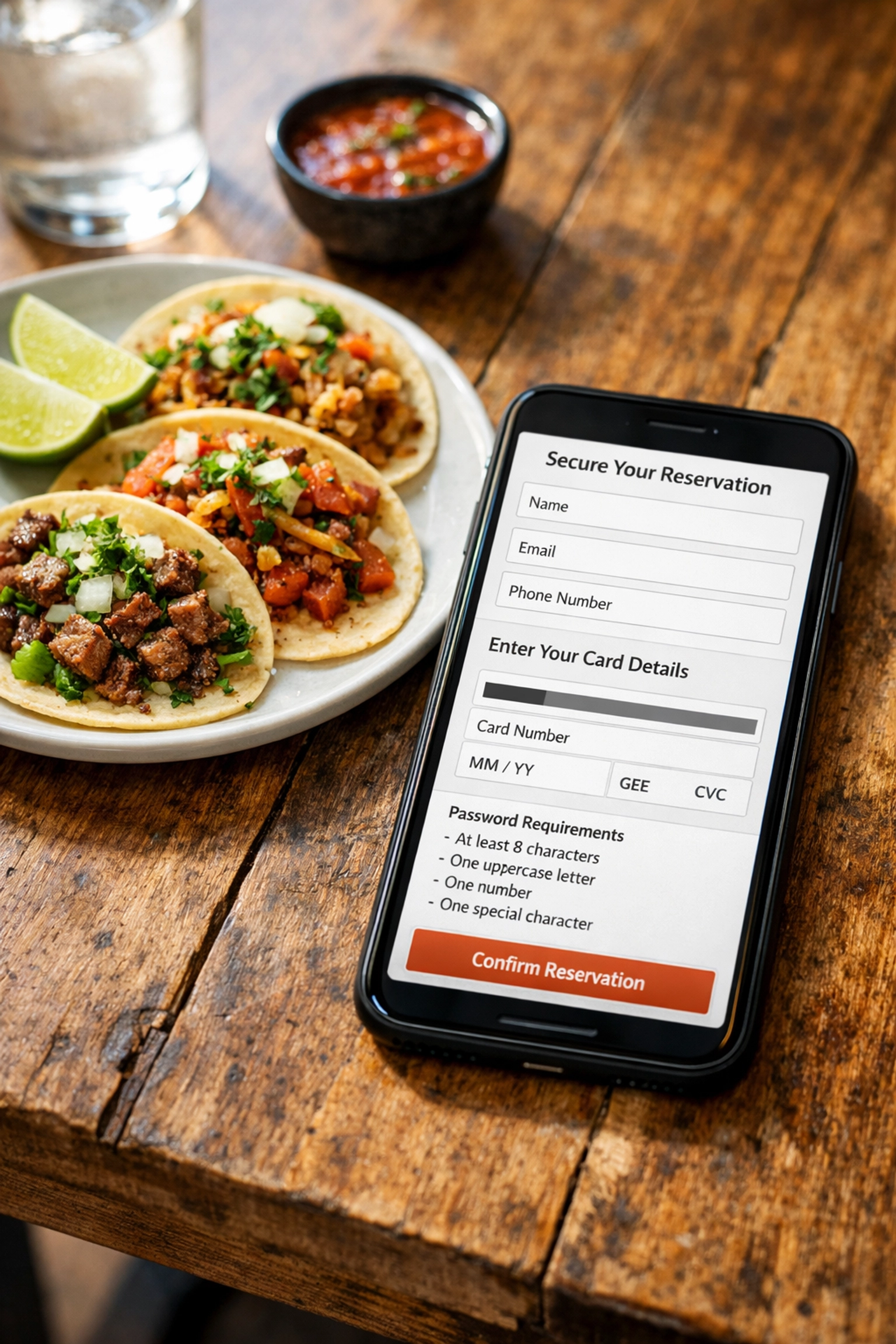
A credit card. For tacos.
And if I didn't show up? Fifty dollar cancellation fee. For two people. That's more than the tacos would've cost in the first place.
Did you ever wonder who decided this was a good idea? Because I can tell you: it wasn't anyone who's ever actually worked in a restaurant.
The QR Code Conspiracy
And while we're on the subject: what's with these QR codes? Every restaurant has them now, stuck on tables like digital barnacles. "It's more convenient," they say. "It's contactless," they say.
You know what was contactless? Looking at a menu. That thing made of paper. Or laminated plastic if you're at a diner. You'd pick it up, look at it, decide what you want, and tell the server. Revolutionary, I know.
Now you scan a code with your phone: which never works on the first try, by the way: and then you wait while it loads a PDF that's formatted for a screen three times the size of your phone, so you're pinching and zooming like you're defusing a bomb. And God help you if you're over fifty and forgot your reading glasses, because that menu text is smaller than the terms and conditions on a credit card agreement.
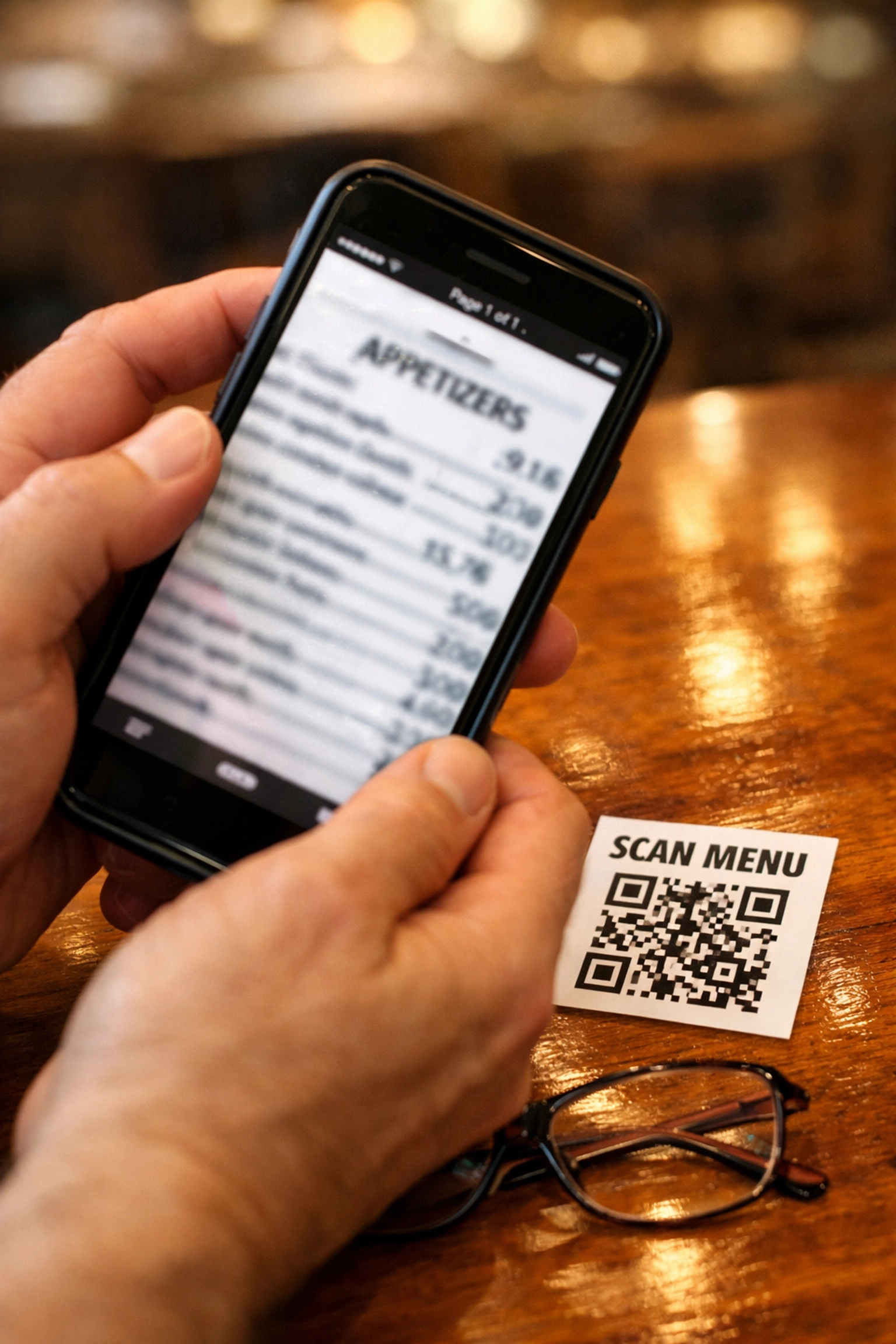
I worked as a server for years. You know what guests actually wanted? To not have to squint at their phones. They wanted to ask questions. "Is this spicy?" "Can I get that without onions?" "What's good here?"
Now they're just staring at a screen, getting hungrier and more annoyed by the second.
The $25 Deposit to Eat Dinner
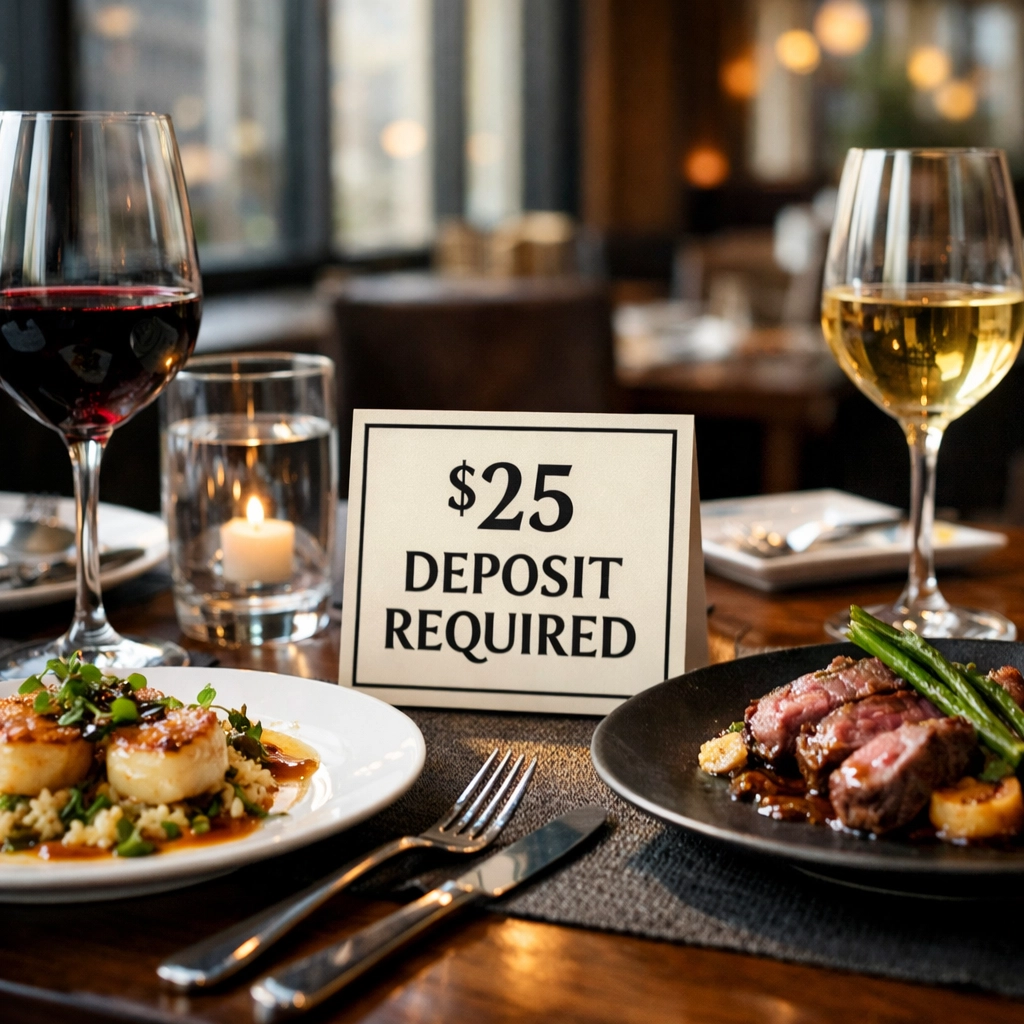
According to recent reporting from Eater, more restaurants are charging reservation deposits and no-show fees, and it's becoming the new normal. Some places charge $25 per person just to book a table. Others require you to pre-pay for a "tasting experience" before you even know if you'll like the food.
Look, I understand the no-show problem. I really do. When I was managing restaurants, no-shows killed us. We'd hold a six-top all night, turn away walk-ins, and then nobody would show up. It cost us real money.
But here's what I don't understand: how did we solve the problem by making it harder for everyone? The people who were going to show up anyway now have to jump through hoops. The people who weren't going to show up? They're still not showing up. They just booked at three different places "just in case" and now they're ghosting all of them.
We've created a system that punishes the good customers to maybe, possibly, catch a few bad ones.
Danny Meyer: you know, the guy who literally wrote the book on hospitality: recently shared on LinkedIn that true hospitality is about making people feel welcome, not making them feel like they're applying for a loan. He built an empire on the simple idea that restaurants should make dining easier, not harder.
Somewhere along the way, we forgot that.
The Technology We Actually Need
Here's the thing that really gets me: we have all this technology, and we're using it to make life more complicated instead of simpler.
At Restaurant Finance Advisors, we work with operators every day who are drowning in tech. They've got seven different apps, three POS systems, a reservation platform that doesn't talk to their table management system, and a scheduling app that nobody actually uses because it's too confusing.
And you know what they all want? They want it to just… work. They want to spend less time staring at screens and more time doing what they got into this business to do: cook good food and take care of people.
We help restaurants simplify their tech stack so they can get back to actual hospitality: the kind where you know your regulars' names and remember they don't like cilantro, not the kind where you send them seventeen text message confirmations about a reservation they made three weeks ago.
When Did Eating Out Become This Hard?
I remember when going out to eat was the easy option. You didn't feel like cooking? Go out. You wanted to celebrate something? Go out. You just wanted someone else to do the dishes for one night? Go out.
Now it's a production. You're making reservations three weeks in advance. You're getting reminder texts. You're getting emails asking you to pre-order your entrée. You're being told you have a "90-minute dining window" like you're trying to catch a flight, not eat a burger.
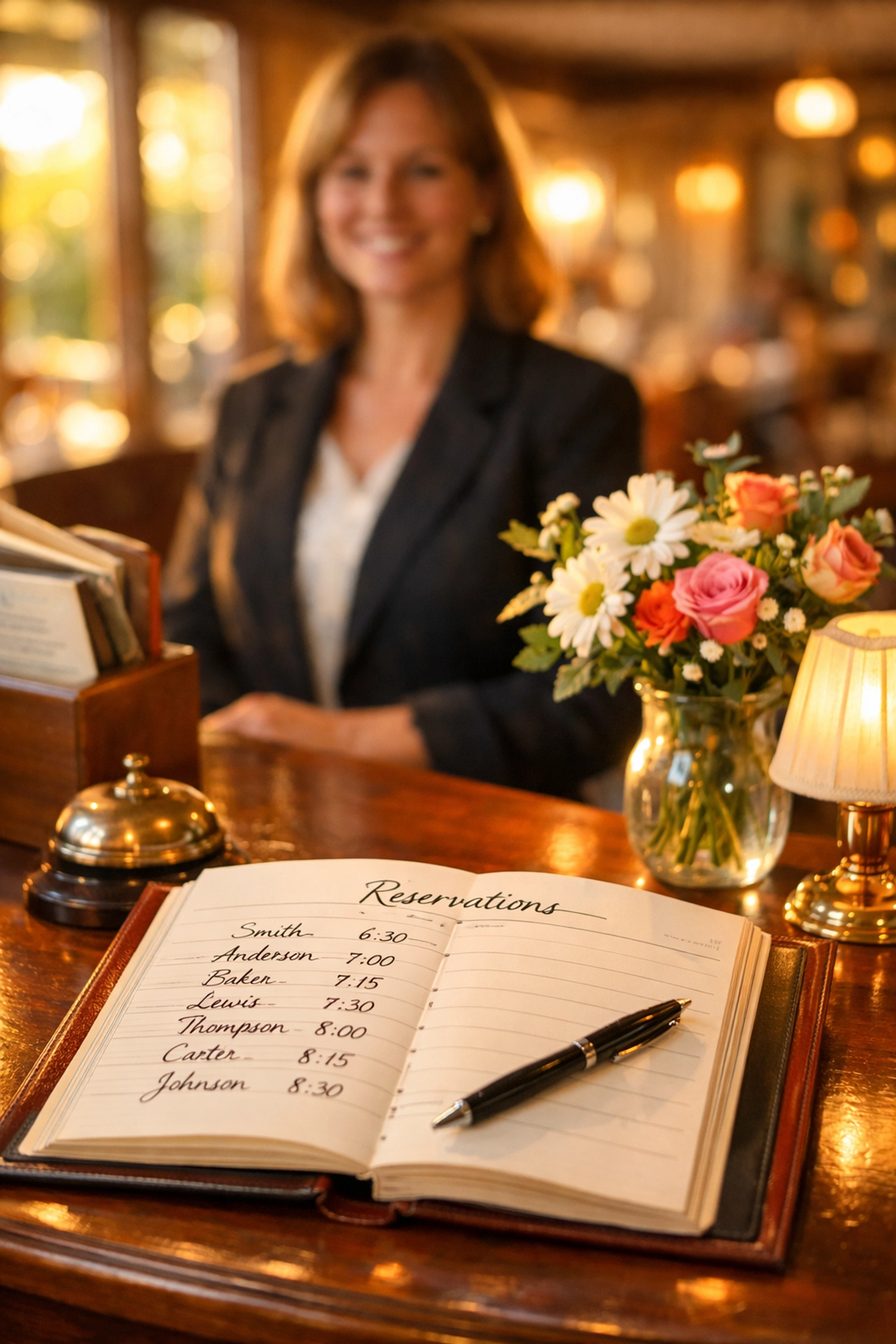
Did you ever notice that the fancier the technology gets, the less hospitable restaurants feel? The best meal I've had in the past year was at a neighborhood spot where I walked in, sat at the bar, and the bartender asked what I felt like eating. No app. No QR code. No reservation deposit.
Just a person talking to another person about food.
Radical, I know.
The Walk-In Is Dying (And We're All Worse Off For It)
Here's what really bothers me: we're killing spontaneity. You can't just go anywhere anymore. Every place worth visiting is booked solid for the next month, and if you show up hoping for a walk-in table, they look at you like you just asked them to perform surgery.
I've worked every position in a restaurant: busser, server, line cook, manager, even brewed beer for a restaurant brewery. And you know what made those shifts memorable? The surprises. The couple who wandered in for their anniversary. The group who just got off work and wanted to celebrate. The regular who showed up on a random Tuesday because they had a rough day.
Those moments can't happen when everything's booked sixty days out and there's a waitlist app and a deposit requirement.
We've optimized the soul right out of the experience.
Making It Simple Again
Look, I'm not saying we need to go back to using paper and pencils. Technology can be great when it actually helps. A good reservation system that integrates with your POS and helps you manage tables efficiently? Fantastic. An app that lets your kitchen communicate with front-of-house without screaming across the pass? Love it.
But when the tech makes things harder: for your staff, for your guests, for you: then what's the point?
We work with restaurant operators to find the balance: keeping the tech that actually improves operations and ditching the stuff that just makes everyone's life more complicated. Because at the end of the day, nobody remembers the app they used to make a reservation. They remember the food, the service, and how they felt when they walked through your door.
Did you ever notice that the best restaurants still feel like someone's happy to see you? Not your reservation confirmation number. You.
Maybe that's the real mystery: how we forgot that was the whole point.
Keywords: restaurant consulting, restaurant investment, restaurant new business, restaurant growth, find money your restaurants, restaurant tech, guest experience, restaurant operations, hospitality technology, reservation systems
Meta Description: Did you ever notice how hard it's become just to get a sandwich? Penny channels her inner Andy Rooney to look at the 'convenient' tech making restaurant-going a chore: and how RFA helps simplify it all.


