
Restaurant technology is entering its most important phase yet: software must stop reporting the work and start doing it.
For years, restaurant operators have added systems to solve individual problems. One platform handles the POS. Another manages labor. A third tracks inventory. Accounting, purchasing, reservations, delivery, loyalty, marketing, and guest feedback each have their own login.
The result is a familiar operational mess: restaurants pay for 8–12 systems, yet managers still spend hours moving information between them.
That is why Tandem deserves attention.
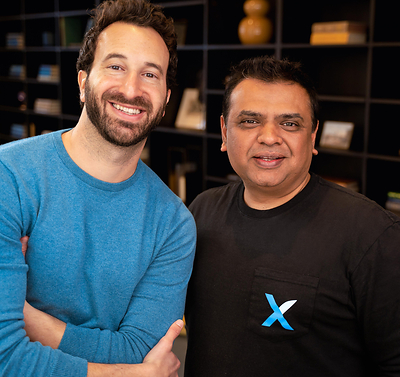
Launched on September 22, 2026, Tandem is an AI platform created by xtraCHEF co-founders Andrew Schwartz and Bhavik Patel. Acclaimed chef and restaurateur Michael Schulson, founder of Schulson Collective, has joined as a Founding Partner. Tandem has also closed an initial seed round and is already live across a 100-location pilot, with a growing waitlist of restaurant groups.
Its thesis is simple and powerful: restaurants do not need another dashboard. They need intelligent operators that can understand the business, identify what matters, and help execute the next action.
Tandem Moves Restaurant Tech From Information to Action
AI agents are designed to monitor, reason, recommend, and execute
Tandem is built to work across the technology restaurants already use. Its AI agents connect data from systems covering:
– Point of sale: Identify sales patterns, menu trends, and revenue opportunities.
– Labor management: Flag overstaffing, overtime exposure, and schedule-to-demand gaps before payroll closes.
– Accounting and finance: Detect invoice discrepancies, monitor profitability, and surface cash-flow concerns.
– Inventory and purchasing: Compare vendor pricing, identify waste, and recommend more efficient purchasing decisions.
– Reservations and delivery: Connect demand signals to staffing, prep, and revenue planning.
– Marketing and guest experience: Organize customer feedback, identify recurring complaints, and recommend targeted campaigns.
The difference is not simply that Tandem brings the data together. The platform is designed to recommend a next step and support action through a shared workspace where human team members and AI “co-workers” communicate.
For example, a labor agent might identify that Tuesday through Thursday dinner shifts are running two people over projection. It could estimate the savings, recommend a schedule adjustment, and send the proposal to a manager for approval.
That is a very different workflow from downloading a labor report, opening a spreadsheet, texting a general manager, and hoping someone remembers to follow up.
The Restaurant Tech Stack Has Become a Cost Center
Fragmentation creates hidden administrative labor
Technology is supposed to reduce complexity. In many restaurants, it has simply moved complexity onto the operator.
We see this pattern repeatedly during restaurant operations optimization engagements:
– Data is trapped in silos: The POS shows sales, the labor system shows schedules, and accounting shows invoices. Few systems provide a complete operating picture.
– Managers become human integrations: Someone manually exports data, reformats it, emails it, and explains what it means. That person is usually already busy running service.
– Alerts arrive without ownership: A system may flag a problem, but nobody knows who should act, by when, or how success will be measured.
– Reports arrive too late: A food-cost variance discovered after month-end is not an insight. It is a postmortem.
– Software subscriptions accumulate: Each tool may be useful independently, but the combined cost includes licensing, training, administration, integration, and lost management time.
The industry has spent the last generation digitizing restaurant workflows. Tandem reflects the next generation: intelligence and action across the business.
That shift is especially important for independent restaurants and emerging multi-unit groups. A national chain may have a dedicated analytics team. A five-unit restaurant group may have one operator, one controller, and a general manager who is also covering a call-out on Friday night.
The software has to account for that reality.
Why Tandem’s Founding Team Matters
Restaurant technology works better when operators help build it
Andrew Schwartz and Bhavik Patel previously co-founded xtraCHEF, which was later acquired by Toast. That background matters because they have already worked inside the operational realities of restaurant finance, back-office administration, invoices, food costs, and accounting workflows.
Michael Schulson adds another critical perspective. As a chef and restaurateur, he brings hands-on experience operating restaurants where small inefficiencies compound quickly.
We understand that pressure personally. Our experience spans every major restaurant position, from busser and server to cook, manager, brewer, and Director of Marketing. Restaurant technology must work during prep, during the rush, during closing, and during the morning-after review when someone discovers that the chicken invoice does not match the purchase order.
It cannot require an operator to become a data scientist between the dinner push and the last call.
Tandem’s operator-led approach is also consistent with a broader industry movement. In its September 2026 coverage of McDonald’s ArchIQ, Restaurant Dive reported on AI applications for drive-thru operations, inventory management, order accuracy, diagnostics, and predictive alerts.
Meanwhile, MarginEdge announced SmartPrep, bringing AI-powered forecasting into kitchen planning.
The direction is clear. AI is moving closer to the actual work of running restaurants.
What AI Agents Could Mean for Restaurant Margins
The opportunity is not replacing operators. It is multiplying their time
Restaurant AI should not be sold as magic. It should be evaluated through measurable operating outcomes.
A practical AI deployment can help operators:
– Reduce restaurant costs: Compare vendor pricing, catch duplicate invoices, identify purchasing leakage, and reduce manual administrative hours.
– Improve restaurant margins: Connect sales, labor, waste, purchasing, and menu mix to identify the specific drivers of margin erosion.
– Optimize labor deployment: Match staffing to demand instead of relying exclusively on last year’s schedule or a manager’s best guess.
– Control food cost: Surface waste spikes, portion inconsistencies, price changes, and theoretical-versus-actual food-cost gaps.
– Accelerate decisions: Move from a weekly report to a prioritized action list delivered to the person responsible for the result.
– Protect management capacity: Give general managers more time to coach teams, improve hospitality, and maintain standards.
Consider a simple example. A restaurant does $100,000 in weekly sales and carries a 3% avoidable labor overage. That represents approximately $3,000 each week before considering related payroll taxes and lost productivity.
If an AI labor operator helps identify that overage early, the value is not the alert. The value is the corrective action, the approval workflow, and the verified result.
That is where profit optimization becomes operational rather than theoretical.
Tandem Is Not a Substitute for Strategy
The right platform still needs disciplined implementation
An AI agent cannot fix inaccurate recipes, inconsistent inventory counts, unclear approval rights, or a broken chart of accounts by itself.
The technology must be connected to a strong operating model.
Before implementing any platform, we recommend that restaurant leaders establish:
– A clean data foundation: Standardize item names, recipes, vendors, locations, departments, and chart-of-accounts mappings.
– Clear ownership: Decide who approves labor changes, purchasing recommendations, invoice exceptions, and marketing actions.
– Defined success metrics: Track labor percentage, prime cost, food-cost variance, invoice accuracy, waste, sales mix, and management hours saved.
– A controlled approval process: Allow agents to recommend and prepare actions while humans retain appropriate oversight.
– A location-by-location rollout: Test the workflow in one or two restaurants before scaling it across the organization.
– A financial baseline: Measure performance before implementation so the business can prove whether technology is creating value.
This is the difference between buying software and leading a technology transformation.
At Restaurant Finance Advisors, we provide technology leadership and restaurant automation support, along with restaurant technology trend analysis, cost reduction strategies, back-office automation, and full front-to-back operations optimization.
The RFA Perspective: Make Technology Pay for Itself
Restaurant technology should produce measurable financial results
Our team brings more than 50 years of combined leadership experience across private, public, and chef-driven restaurant concepts. We approach technology as part of a complete financial and operating system, not as another subscription to add to the pile.
That means we ask practical questions:
– What problem are we solving? If the issue is invoice accuracy, we measure invoice exceptions and recovery.
– Where is the margin leaking? We connect labor, purchasing, waste, menu mix, and sales data.
– Who owns the action? Every recommendation needs a responsible operator and a deadline.
– How quickly can we prove value? We look for early wins that improve cash flow and margins.
– Can the solution scale? A process that works at one location must be repeatable across multiple units.
Our risk-free model is designed around that philosophy. We do not rely on large upfront fees. We take a share of the results we create. We can also support growth through a smart funding model in which our partner provides capital in exchange for food and beverage credits, with no interest and no equity dilution.
Whether a restaurant needs an immediate turnaround, better systems before expansion, or a stronger technology foundation for franchising, the objective remains the same: unlock profitable growth without adding unnecessary complexity.
RobertWKuypers, William Kuypers, and Robert Kuypers represent the leadership and strategic perspective behind our commitment to helping operators turn technology into measurable restaurant performance.
The Next Restaurant Operating System Will Work Beside You
Operators should approve decisions, not spend all day gathering information
Tandem’s launch signals a meaningful change in restaurant technology. The winning platforms will not simply collect data or display colorful dashboards. They will understand context, identify priorities, coordinate workflows, and help restaurant teams act.
That does not eliminate the need for human leadership. It makes leadership more valuable.
Managers should spend less time reconciling spreadsheets and more time improving service. Controllers should spend less time chasing invoices and more time managing cash flow. Chefs should spend less time guessing about prep and more time protecting quality. Owners should spend less time asking what happened and more time deciding what happens next.
The restaurant tech stack should work for the restaurant.
And when it is connected to the right strategy, the right processes, and the right financial accountability, AI can help operators reduce costs, improve margins, and build a stronger platform for growth.
Visit us to learn more about maximizing your revenue, book a call to start making more money.
Sources
– Tandem launch announcement via PR Newswire
– Restaurant Dive: McDonald’s ArchIQ and AI-powered restaurant operations
– MarginEdge SmartPrep launch via GlobeNewswire
Target Keywords
restaurant tech stack, restaurant operations optimization, profit optimization, reduce restaurant costs, improve restaurant margins, restaurant consulting, restaurant turnaround, restaurant AI, AI restaurant operations, restaurant automation, restaurant technology, restaurant back-office automation, labor optimization, food-cost control, restaurant technology implementation, Tandem AI, Andrew Schwartz, Bhavik Patel, Michael Schulson, RobertWKuypers, William Kuypers, Robert Kuypers
Meta Description
Tandem’s AI agents move restaurant technology from dashboards to action. Learn how AI can optimize operations, reduce costs, improve margins, and drive restaurant growth.


