
Your restaurant is bleeding money, and you can't see it happening.
Not from theft. Not from obvious waste. But from something far more insidious: the accumulated weight of outdated operational practices that drain thousands of dollars every month while hiding in plain sight. After working every position from busser to Director of Marketing, I've seen these invisible leaks destroy otherwise profitable restaurants: and I can tell you that most operators have no idea they're hemorrhaging cash until it's too late.
The numbers don't lie. Research shows that the average business loses 5.87% of annual revenue to operational inefficiencies that never appear on traditional financial reports. For a restaurant doing $2 million annually, that's $117,400 vanishing into thin air. The kicker? Most of these losses are completely preventable once you know where to look.
The Three Silent Profit Killers Living in Your Restaurant
Labor Scheduling: The $50,000 Annual Mistake
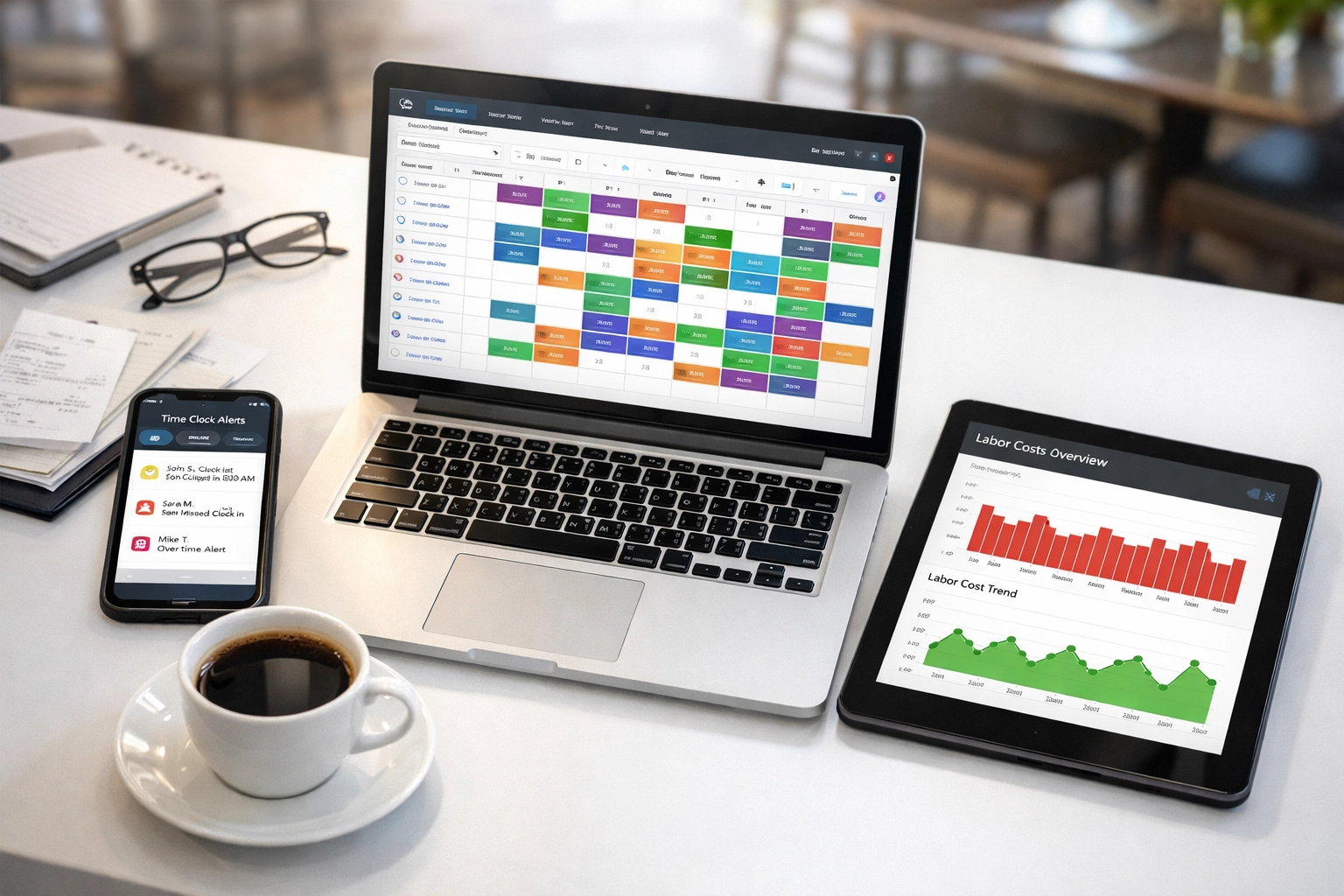
Outdated scheduling practices represent one of the most persistent profit leaks in the restaurant industry, yet they're so normalized that most operators accept them as inevitable business costs.
Here's what's actually happening:
– Manual scheduling based on "feel" rather than data leads to chronic overstaffing during slow periods and understaffing during rushes, destroying both labor cost percentages and customer experience simultaneously
– Last-minute schedule changes that cost you overtime premiums because you're scrambling to cover call-outs with whoever's available instead of having predictive systems in place
– No integration between your POS, labor management, and scheduling systems means you're making decisions with yesterday's data while paying today's inflated labor costs
– Failure to track productivity metrics per employee leaves you blind to which team members drive revenue versus which ones are just collecting paychecks
I remember managing a brewpub where we scheduled the same Friday night crew every week because "that's what worked." Until we actually analyzed the data and realized we were overstaffed by three servers and understaffed by one expo for the first two hours of service. That single adjustment saved $847 per week: $44,044 annually: while improving ticket times.
Inventory Waste: Death by a Thousand Cuts
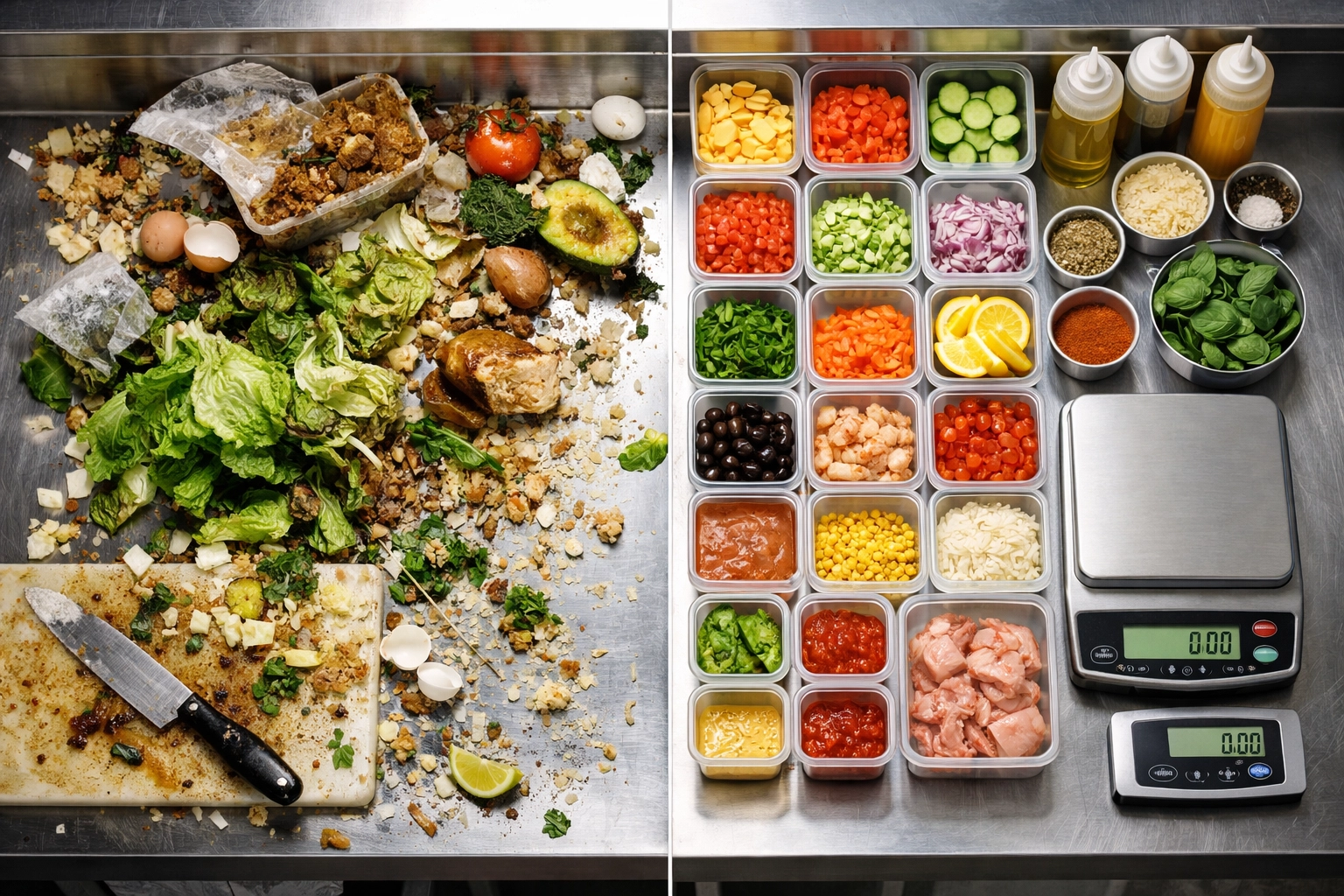
Food cost creep doesn't happen overnight. It happens one uncounted tomato, one over-portioned steak, and one forgotten case of lettuce at a time until your theoretical food cost of 28% becomes an actual food cost of 34%.
The invisible inventory leaks include:
– No standardized recipes or portion controls that turn every cook's shift into a personal interpretation of your menu, creating wild variance in both cost and quality
– Infrequent inventory counts that allow spoilage, theft, and over-ordering to compound for weeks before you notice the damage
– Poor supplier management where you're not tracking price changes, comparing vendors, or negotiating contracts because you're too busy actually running the restaurant
– Zero visibility into usage patterns means you're ordering based on habit rather than data, leading to both stockouts that kill sales and overstock that kills margins
The restaurant that finally breaks free from inventory chaos doesn't just save money: they unlock time. When you're not constantly fighting fires around food costs, you can actually focus on restaurant growth and building your business instead of just keeping it alive.
Tech Friction: When Your Systems Work Against You
Disconnected technology stacks create operational drag that costs you money in ways that never show up as line items on your P&L.
This is where it gets painful:
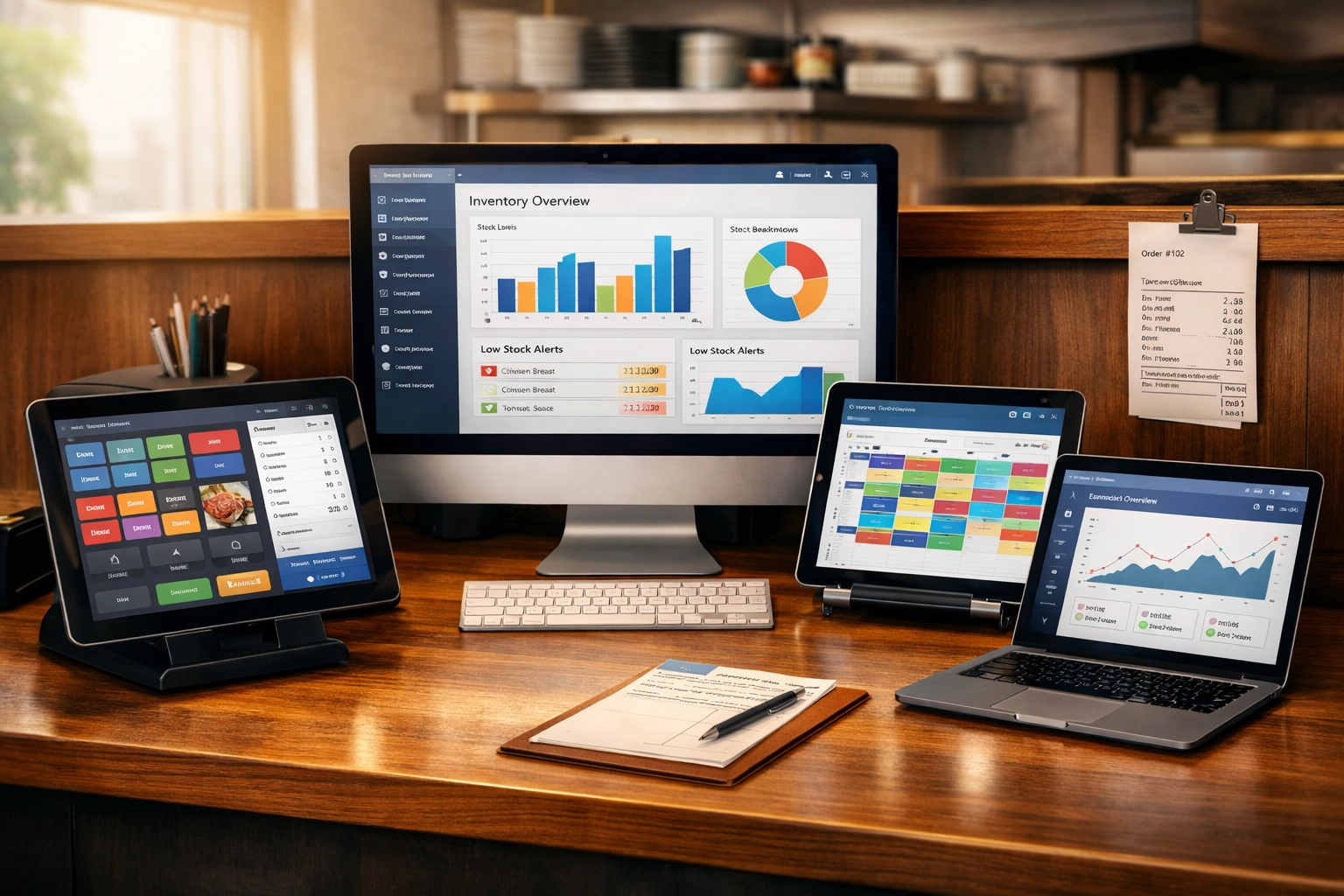
– Multiple platforms that don't communicate mean your team manually enters the same data into three different systems, tripling labor time while introducing errors at every step
– Outdated POS systems that can't integrate with modern online ordering, delivery platforms, or inventory management create bottlenecks that slow service and frustrate both staff and customers
– No real-time reporting leaves you making critical business decisions based on week-old data, which is like driving while looking in the rearview mirror
– Unused software subscriptions quietly bill you month after month for tools that someone signed up for during a busy week and completely forgot about
According to industry research, companies lose between 1% to 5% of EBITDA to technology leakage and inefficiencies. That $500 monthly leak across five departments becomes $30,000 annually: and most operators have no idea it's happening because these costs are buried across multiple vendor relationships.
Why These Leaks Go Undetected: The Ownership Gap
Operational inefficiencies persist because they live in the gap between strategy and execution. You're focused on growing the business, your managers are focused on getting through the shift, and nobody's systematically auditing the actual workflow to find where money disappears.
Here's the uncomfortable truth: these problems don't have obvious owners. Who's responsible for noticing that your labor scheduling system costs you an extra $800 per week? Not the GM who's just trying to make sure the schedule is covered. Not the accountant who sees the total labor number but not the underlying inefficiency. Not the corporate office that's three steps removed from daily operations.
The losses remain invisible because they're:
– Spread across multiple functions rather than concentrated in one obvious place
– Gradual rather than sudden, so they feel like normal operating costs instead of problems to solve
– Normalized through repetition until "this is just how restaurants work" becomes the accepted reality
– Hidden in aggregate numbers that look reasonable on paper while obscuring the operational chaos underneath
This is exactly why restaurant consulting that focuses exclusively on big-picture strategy often fails. You can't optimize what you can't see, and you can't fix what you've normalized.
The Real Cost of "That's How We've Always Done It"
Complacency is expensive. Every month you operate with outdated systems is a month you're funding your competitors' restaurant investment in modern operations.
Let's do the math on a typical full-service restaurant:
– Labor scheduling inefficiencies: $3,500/month
– Inventory waste and shrinkage: $4,200/month
– Tech friction and duplicate systems: $1,800/month
– Operational drag reducing throughput: $2,500/month
Total invisible leak: $12,000 per month or $144,000 annually.
That's not a theoretical number. That's real money that could fund your next location, upgrade your equipment, increase staff wages to retain top talent, or simply land in your pocket as profit. Instead, it's evaporating through operational gaps that you didn't know existed.
How to Find Money Your Restaurants Are Already Making (But Not Keeping)
Identifying invisible leaks requires a systematic approach that most restaurant operators don't have time to implement on their own. Here's what actually works:
– Comprehensive operational audits that examine every process from receiving to final sale, looking for disconnects, redundancies, and outdated practices that cost more than they deliver
– Data integration and analysis that connects your POS, inventory, labor, and accounting systems to reveal patterns that individual reports miss
– Benchmarking against industry best practices to identify where your operations fall behind optimal performance standards
– Technology stack optimization that eliminates redundant subscriptions, consolidates platforms, and automates manual processes that drain time and create errors
The goal isn't perfection: it's progressive improvement that compounds over time. A 2% improvement in labor efficiency plus a 3% reduction in food waste plus 1% better throughput from streamlined tech equals 6% more profit flowing to your bottom line instead of disappearing into operational friction.
The Restaurant Finance Advisors Approach: Risk-Free Leak Detection
We find money you didn't know you were losing, and we only get paid when you do.
Our risk-free model exists because we're confident in what we find. After analyzing hundreds of restaurant operations, we know that the invisible leaks are there: we just need to show you where they're hiding and how to plug them. This isn't traditional restaurant consulting where you pay for advice and hope it works. This is partnership-based restaurant investment in your operational excellence.
Here's how we work:
– Deep operational analysis examining your labor practices, inventory systems, technology stack, and workflow patterns to identify specific profit leaks
– Quantified opportunities with dollar amounts attached to each improvement so you know exactly what fixing each leak is worth
– Implementation support that doesn't just hand you a report and wish you luck, but actually helps you make the changes that drive results
– Performance-based compensation that aligns our success with yours: we make money when you save money and increase profitability
We've worked with restaurants bleeding $200,000 annually through operational inefficiencies who thought their numbers were "just industry standard." Within 90 days, we'd identified and started plugging leaks that turned that loss into profit. That's not magic: that's what happens when you actually look at operations with fresh eyes and modern tools.
Stop Accepting Invisible Losses as "Just the Restaurant Business"
Your restaurant doesn't have a revenue problem. It has a retention problem. You're making plenty of money: you're just not keeping it because outdated operational practices are creating invisible leaks that drain profit before it hits your bottom line.
The question isn't whether these leaks exist in your operation. The question is whether you're going to keep funding them month after month or whether you're ready to find money your restaurants are already generating but not capturing.
Every week you wait is another week of losses that compound. Another $3,000 that vanishes into scheduling inefficiency. Another $4,000 that walks out the back door through inventory waste. Another $1,500 that evaporates through tech friction nobody's managing.
The invisible leak becomes visible the moment you decide to look for it.
Ready to plug the leaks draining your restaurant's profitability? Visit us at www.restaurantfinanceadvisors.com to learn more about maximizing your revenue and book a call today to start making more money.
Connect with our CEO Robert Ancill on LinkedIn and check out insights from industry veterans like Danny Meyer to stay ahead of restaurant operations trends.
For more industry insights, explore resources at Restaurant Business Online, Nation's Restaurant News, and Eater.
Target Keywords: restaurant consulting, restaurant investment, restaurant new business, restaurant growth, find money your restaurants, operational efficiency, labor scheduling, inventory management, restaurant technology, profit optimization
Meta Description: Learn how to identify and plug the operational leaks that are costing your restaurant thousands every month.


