

It's Friday afternoon, and your restaurant is about to get absolutely slammed. You're triple-checking the prep list, praying the new line cook shows up on time, and wondering why table 42 thinks 7:30 on a Friday night is a walk-in kind of situation. In the chaos of the weekend rush, something crucial gets lost: the ability to see where your money is actually going.
Here's the thing: after spending years working every position from busser to director of marketing, I've seen this pattern play out hundreds of times. The weekend hits, adrenaline kicks in, and suddenly everyone's in survival mode. You're not thinking about pour costs or analyzing ticket times. You're just trying to get through service without anyone walking out or the kitchen catching fire.
But that survival mentality? It's costing you thousands of dollars every single week.
The Weekend Blindspot: When Busy Masks Broken
The irony of restaurant operations is that your busiest days often hide your biggest problems. When the dining room is packed and tickets are flying, it feels like success. Revenue is up, guests are happy, and your team is firing on all cylinders.
Except beneath that surface-level success, money is leaking out faster than a prep cook can blow through a case of plastic wrap.
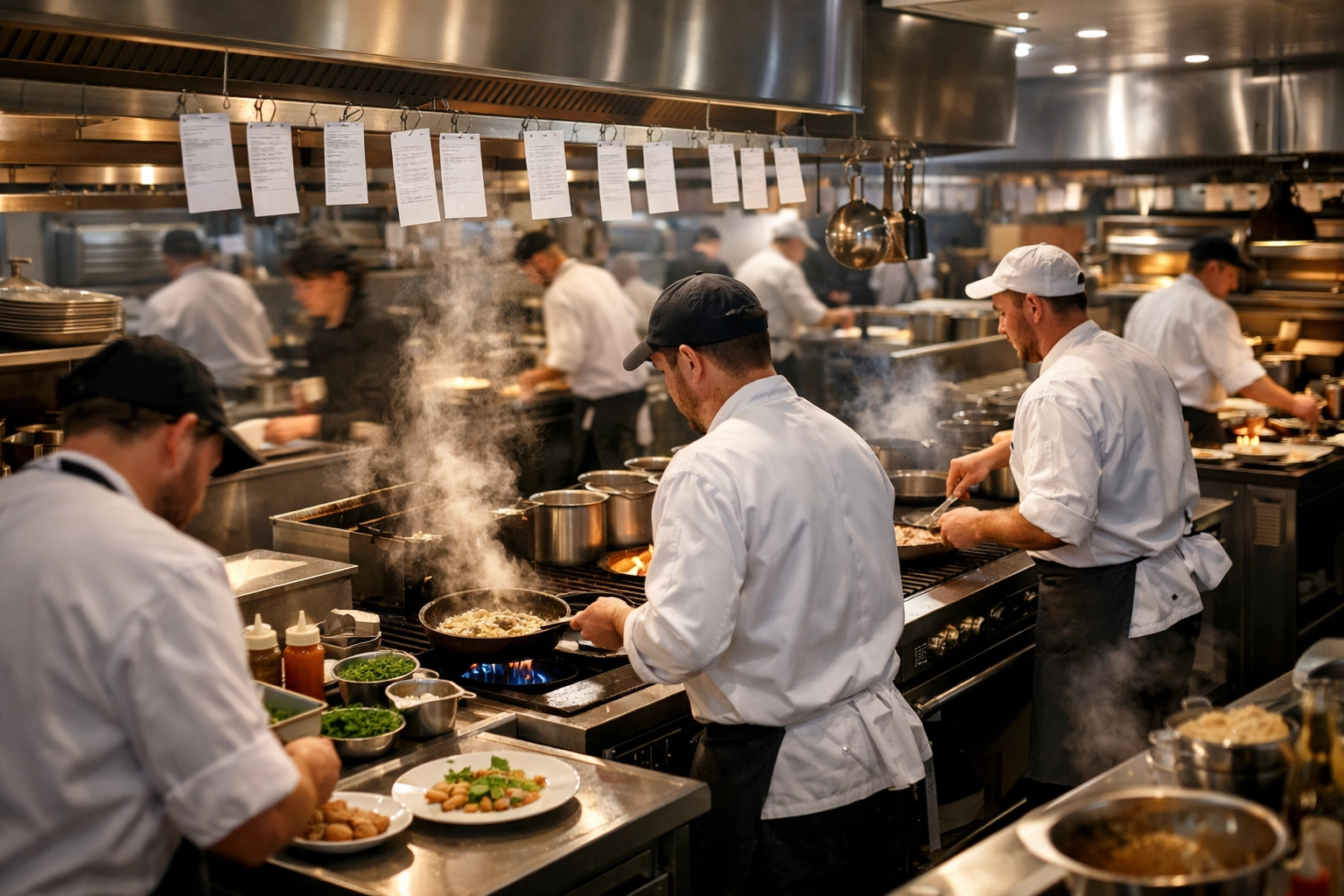
We see this constantly at Restaurant Finance Advisors. Operators call us after a "great" quarter of revenue growth, only to discover their margins have actually shrunk. How does that happen?
– Labor inefficiency during peak periods – You're overstaffed because you're afraid of getting slammed, which means you're paying for idle hands during slow turns. Or you're understaffed and hemorrhaging sales because service times balloon.
– Food waste that multiplies with volume – The Friday rush means more prep, more tickets, more chances for mistakes. That salmon special that didn't sell? It's sitting in your walk-in alongside three cases of produce you "might need" for the weekend.
– Pricing strategies that ignore your true costs – You set menu prices based on what you think your food costs are, not what they actually run during high-volume service when portion control goes out the window.
– Technology you're paying for but not using – That inventory management system you signed up for? Still sitting there while your sous chef eyeballs stock levels and hopes for the best.
According to recent data from the National Restaurant Association, labor costs are projected to consume 33-35% of revenue in 2026, while food costs are holding steady around 28-32%. But here's what those averages don't tell you: the variance between a well-run operation and one with hidden profit leaks can be 8-10 percentage points. That's not a rounding error: that's the difference between thriving and barely surviving.
The Plain Sight Problem: Why Smart Operators Miss Obvious Wins
You know what's wild? The money you're looking for isn't buried in some complex financial model or hidden in obscure line items. It's sitting right there in your four walls, during every single shift.
Industry veteran Roger Beaudoin recently posted on LinkedIn about the concept of "operational debt": the accumulated cost of all those small inefficiencies you've been putting off because you're too busy running service. He's right. Every time you say "we'll figure that out after the weekend," you're essentially taking out a loan against your future profits.
The hidden profits we're talking about live in three specific areas:
– Your existing systems that nobody optimized – Menu engineering isn't a one-time exercise you did three years ago when you opened. Your top sellers have changed, your costs have changed, and your margins have definitely changed. But when was the last time you actually sat down and analyzed what's making you money versus what's just filling seats?
– Your team's institutional knowledge that never became actual systems – Your best server knows exactly which appetizers to push and which cocktails have the highest margins. Your closing manager has a workflow that cuts labor by 45 minutes every night. But that knowledge? It's locked in their heads instead of being standard operating procedure.
– Your guest data that's collecting digital dust – You have POS reports showing exactly when your rushes hit, which items slow down service, and which guests are your most valuable repeats. You're just not using that intelligence to make actual decisions.

I spent enough years behind the bar to know that every restaurant has that one bartender who can tell you, down to the ounce, how much product they go through on a Friday night. They know because they're the one who has to restock everything Saturday morning. That person is a walking profit center: if you actually listen to them and build systems around their insights.
The Two-Week Reality Check: Finding Money Fast
Here's where we stop talking theory and start talking about actual money in your actual bank account.
At Restaurant Finance Advisors, we operate on a simple principle: we find tangible profit improvements in under 14 days, or you don't pay us. Not 90 days. Not "after we analyze your data for six months." Two weeks.
Why? Because the low-hanging fruit in restaurant operations is genuinely that accessible: if you know where to look and you're not afraid to make changes.
Our typical two-week engagement uncovers:
– Immediate menu adjustments that boost margins 3-5% – We're not talking about raising prices across the board and hoping guests don't notice. We're talking about strategic repricing based on actual contribution margins, removing items that kill your kitchen flow, and highlighting high-profit offerings through smart menu design.
– Labor scheduling optimization that saves $2,000-$5,000 monthly – Using your own POS data to build schedules that match actual traffic patterns instead of "how we've always done it." You'd be amazed how many restaurants are still scheduling based on gut feeling rather than actual ticket times and covers.
– Vendor consolidation and purchasing power moves – Most multi-unit operators are leaving 5-8% on the table by not leveraging their collective purchasing power. We negotiate those deals and find alternative suppliers for your biggest cost items.
– Technology stack rationalization – You're probably paying for three systems that do the same thing, while the one tool you actually need is sitting at the bottom of your monthly expenses, unused. We cut the fat and optimize what stays.

The reason this works so fast is because we're not inventing new strategies: we're implementing best practices that already exist in high-performing restaurants. Your concept doesn't need to be reinvented. It needs to be optimized.
The Weekend Rush Becomes Your Strategic Advantage
Once you see where the money is hiding, the weekend rush transforms from a blindspot into your biggest opportunity.
Think about it: your highest-volume periods are where small improvements create the biggest impact. A 30-second reduction in ticket time during a Friday dinner rush affects 200+ guests instead of 50. A labor schedule that's dialed in for peak periods saves money during the shifts that matter most.
This is where restaurant consulting actually earns its keep. Anyone can tell you to "control costs" or "increase efficiency." That's noise. What you need is someone who can walk into your kitchen on a Friday night, watch service, and say "your expo station is in the wrong spot and it's costing you four minutes per ticket."
That level of specificity? It comes from actually working in restaurants, not just studying them.
Recent insights from Nation's Restaurant News highlight that successful restaurant groups in 2026 are focusing heavily on operational excellence rather than expansion. The era of "growth at all costs" is over. Smart operators are finding 10-15% more profitability from their existing footprint before opening new locations.
That's exactly what we help you do.
The Risk-Free Reality: Results or You Don't Pay
We need to talk about how restaurant consulting typically works versus how it should work.
Traditional consulting: You pay a big upfront fee, they spend weeks "analyzing" your operation, they deliver a 40-page report full of recommendations, and then they leave. Whether those recommendations actually work? Not their problem. You already paid.
Our model flips that entire script. We operate on a results-based fee structure, which means we have skin in the game. We find measurable profit improvements in under two weeks, or we don't collect our fee. Simple.
Why would we structure it this way? Because we've done this hundreds of times, and we know exactly where the money is hiding. We don't need six months to figure out that your food costs are running 4% higher than they should be, or that your labor scheduling is built around the wrong variables.
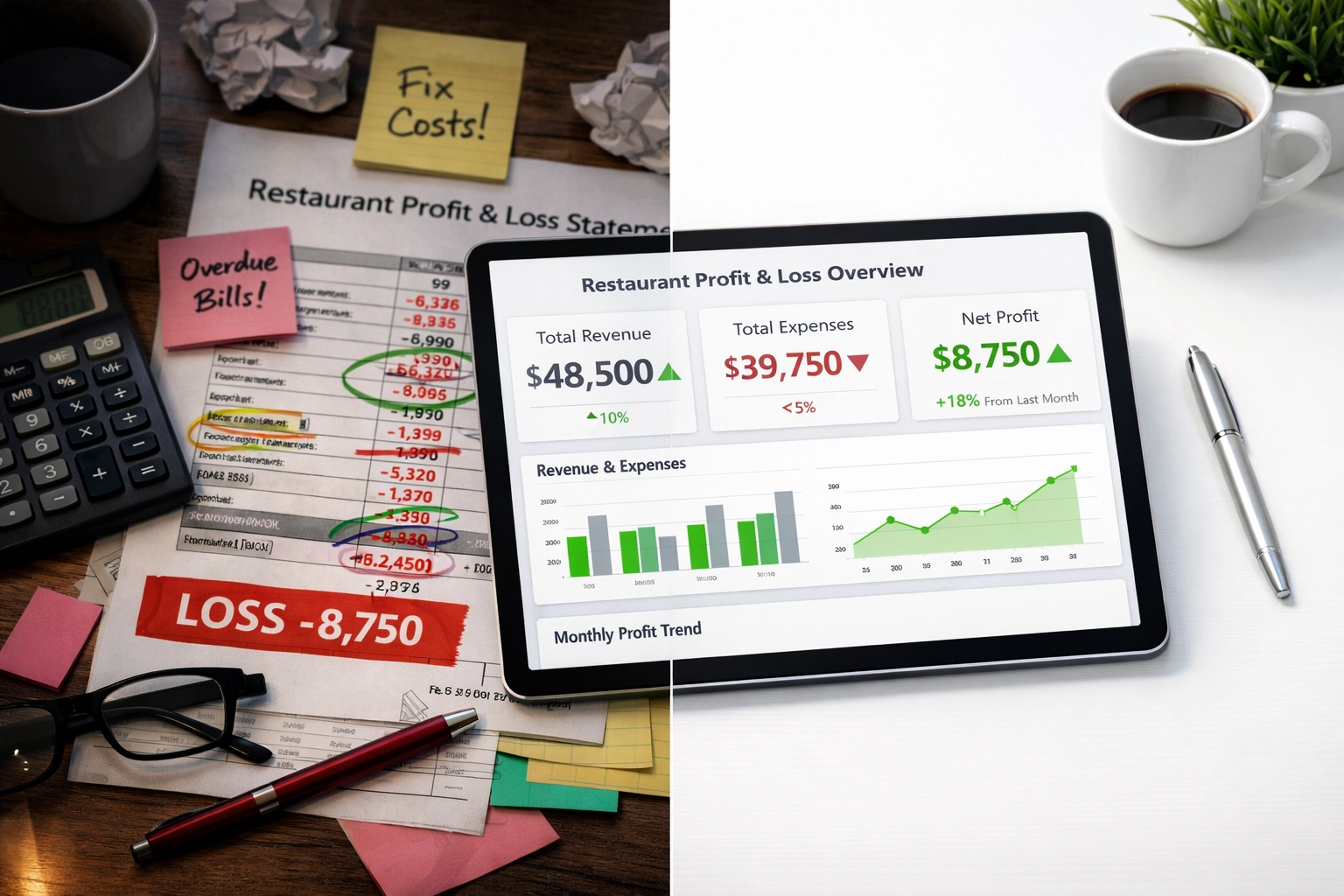
When you work with Restaurant Finance Advisors, you get:
– A two-week intensive focused entirely on finding money now – Not someday. Not after you implement phase three of our strategic roadmap. Now.
– Direct access to advisors who've actually worked in restaurants – We've pulled the same shifts you're pulling. We understand the difference between theoretical solutions and what actually works when you're slammed on a Saturday night.
– Tangible, measurable outcomes you can track immediately – We're talking specific dollar amounts in margin improvement, labor savings, and waste reduction. Not vague promises about "optimizing your operation."
– Zero risk on your end – If we don't find meaningful profit improvements in under 14 days, you don't pay our consulting fee. That's how confident we are in this process.
This isn't about us being magicians. It's about having pattern recognition from working with hundreds of restaurant operations. The profit leaks in your business? We've seen them before, and we know how to fix them.
Stop Letting Busy Hide Broken
Here's your reality check: being busy and being profitable are not the same thing. You can run a packed dining room seven nights a week and still barely break even: or worse, slowly bleed cash while convincing yourself that "once things settle down" you'll fix the underlying issues.
Things don't settle down in restaurants. That's the business we chose.
The weekend rush will keep coming. The labor challenges will keep evolving. The food costs will keep fluctuating. You can either keep operating in survival mode, hoping things somehow improve, or you can take two weeks to systematically find the money that's already inside your four walls.
Those hidden profits aren't hidden because they're hard to find. They're hidden because you've been too busy to look.
We'll handle the looking. You keep running service.
That's the partnership.
SEO Keywords: restaurant consulting, restaurant investment, restaurant new business, restaurant growth, find money your restaurants, operational efficiency, margin optimization, restaurant operations, labor cost control, menu engineering
Meta Description: Don't let the weekend rush mask your margin leaks. Learn how to identify hidden profits and scale your concept with RFA's 2-week turnaround strategy.
Outbound Links:
- National Restaurant Association 2026 Industry Outlook: https://restaurant.org/
- Nation's Restaurant News Industry Trends: https://www.nrn.com/


