

Look, I've been in this industry long enough to know that the "90% of restaurants fail" stat gets thrown around like free bread at Olive Garden. I've washed dishes, flipped burgers, managed the chaos of Friday night service, and even brewed beer for a taproom. And here's what I'll tell you straight up: that 90% number is complete nonsense.
But here's the thing, just because the stat is inflated doesn't mean we should ignore why restaurants actually struggle and what separates the winners from the "going out of business" signs.
The Real Numbers: What the Data Actually Shows
Recent data from Datassential reveals something fascinating: the first-year restaurant failure rate dropped to just 0.9% in 2025, the lowest since at least 2018. That's not a typo. Less than one percent.
Now, before you start thinking this business is easy money, let's pump the brakes. The National Restaurant Association estimates that roughly 30% of restaurants close overall, with about 17% failing in their first year. Still nowhere near 90%, but significant enough that we need to pay attention.
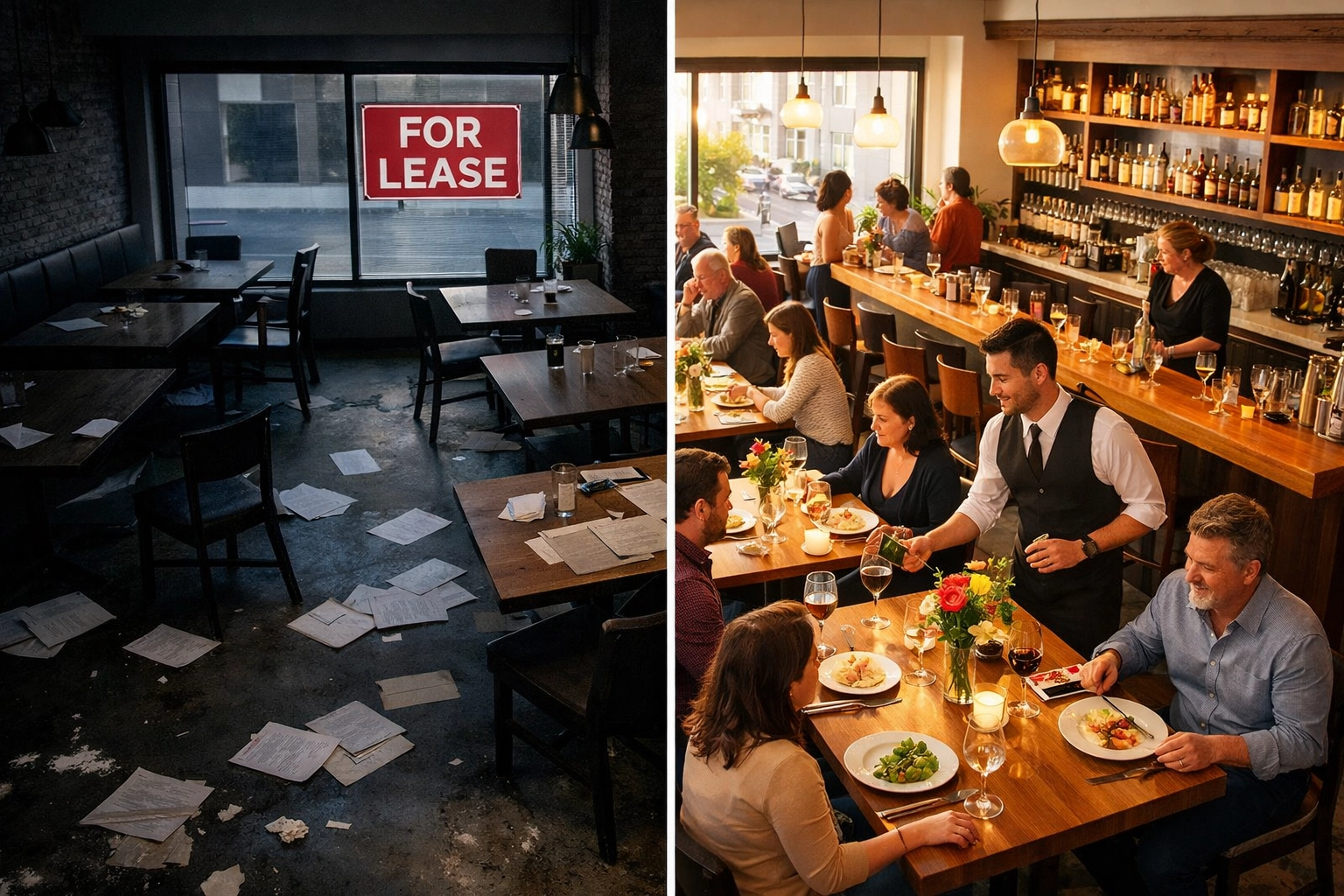
The variation in these numbers tells us something important: how you define "failure" matters. Is it bankruptcy? Closing to open a different concept? Selling because the owner retired? The restaurant business is complex, and so are the reasons establishments close their doors.
What's undeniable is this: there's a massive gulf between restaurants that barely survive and those that absolutely crush it. And I've seen both sides of that equation from every position imaginable.
Why Restaurants Actually Struggle: The Operational Breakdown
The Location Gamble
I once worked at a beautifully designed steakhouse that opened in what the owner called a "up-and-coming neighborhood." Translation: nobody lived there yet, and the people who did couldn't afford $45 ribeyes. Poor location strategy isn't just about foot traffic, it's about matching your concept to your demographic.
The successful restaurants? They do their homework. They analyze traffic patterns, understand local income levels, and, here's the kicker, they actually talk to the community before signing a ten-year lease.
Operational Inefficiencies: Death by a Thousand Cuts
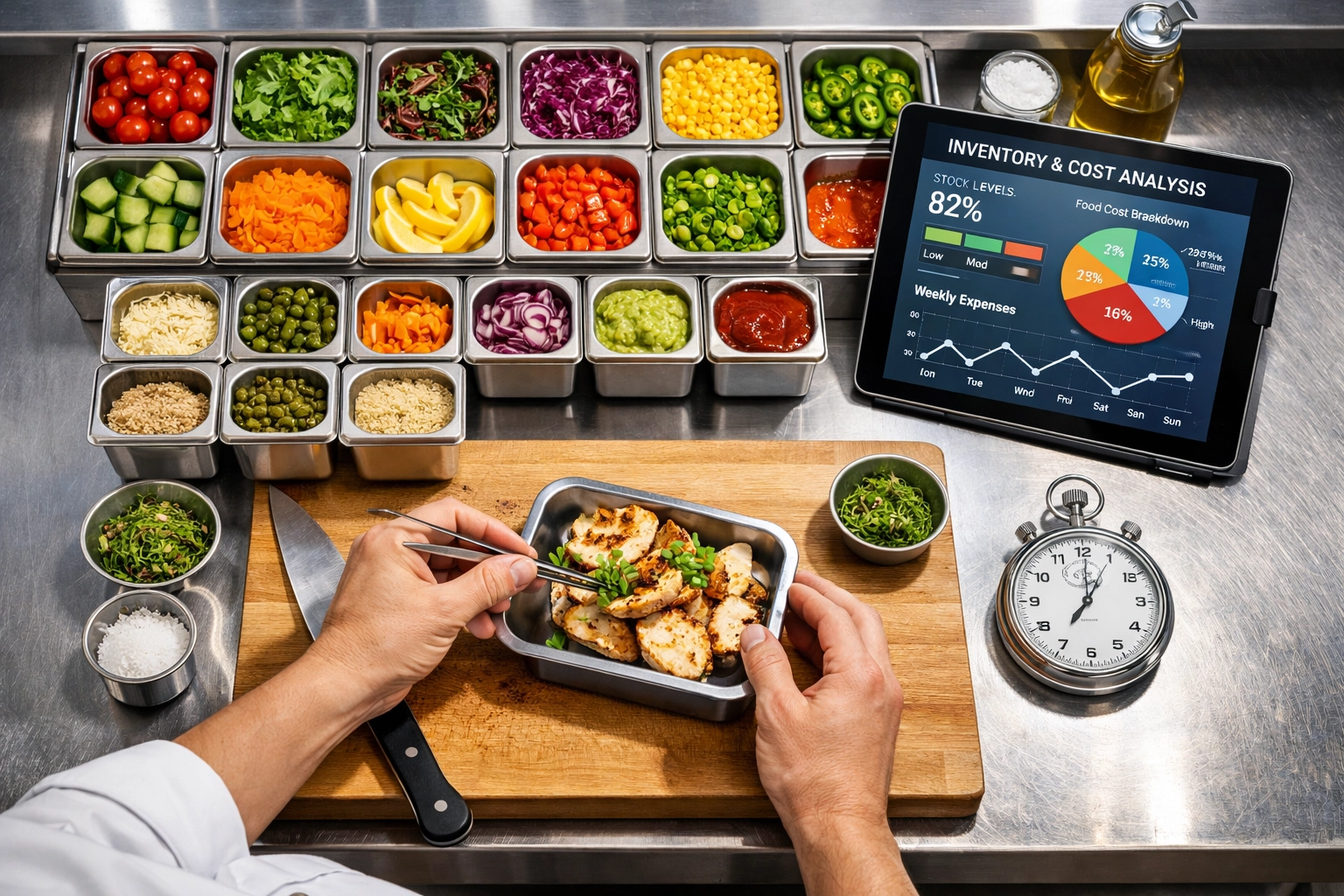
As someone who's managed inventory at 2 AM while simultaneously trying to figure out why we're burning through fryer oil like it's going out of style, I can tell you this: operational inefficiencies will kill you faster than bad food.
Here's what actually breaks restaurants:
– Inventory mismanagement: When your walk-in looks like a game of Tetris played by someone who's never seen Tetris, you're bleeding money
– Labor scheduling chaos: Overstaffing Tuesday lunch while understaffing Saturday dinner is like lighting money on fire, but with more angry customers
– Technology resistance: If you're still managing reservations with a paper notebook in 2026, we need to talk
– Lack of systems: When every shift depends on whether your best cook shows up, you don't have a business, you have a prayer
Financial Mismanagement: The Silent Killer
Working my way up from busser to marketing director taught me something crucial: most restaurant owners know food and hospitality, but not necessarily finance. And that's not a dig, it's just reality.
I've watched talented chefs open dream restaurants without understanding basic cash flow. They'd crush service, get great reviews, and still be three months behind on rent because they didn't account for the 30-day lag on receivables or the seasonal dip in January.
The math is brutal. Restaurant margins typically run between 3-5% for full-service operations. That means if you're doing $50,000 in monthly revenue, you might net $1,500-$2,500. One unexpected equipment breakdown or health department violation, and you're underwater.
How the Top 10% Actually Thrive: The Playbook
Operational Excellence as a Religion
The restaurants that thrive treat operational efficiency like it's a competitive advantage, because it is. According to Restaurant Business Online, top-performing restaurants focus relentlessly on:
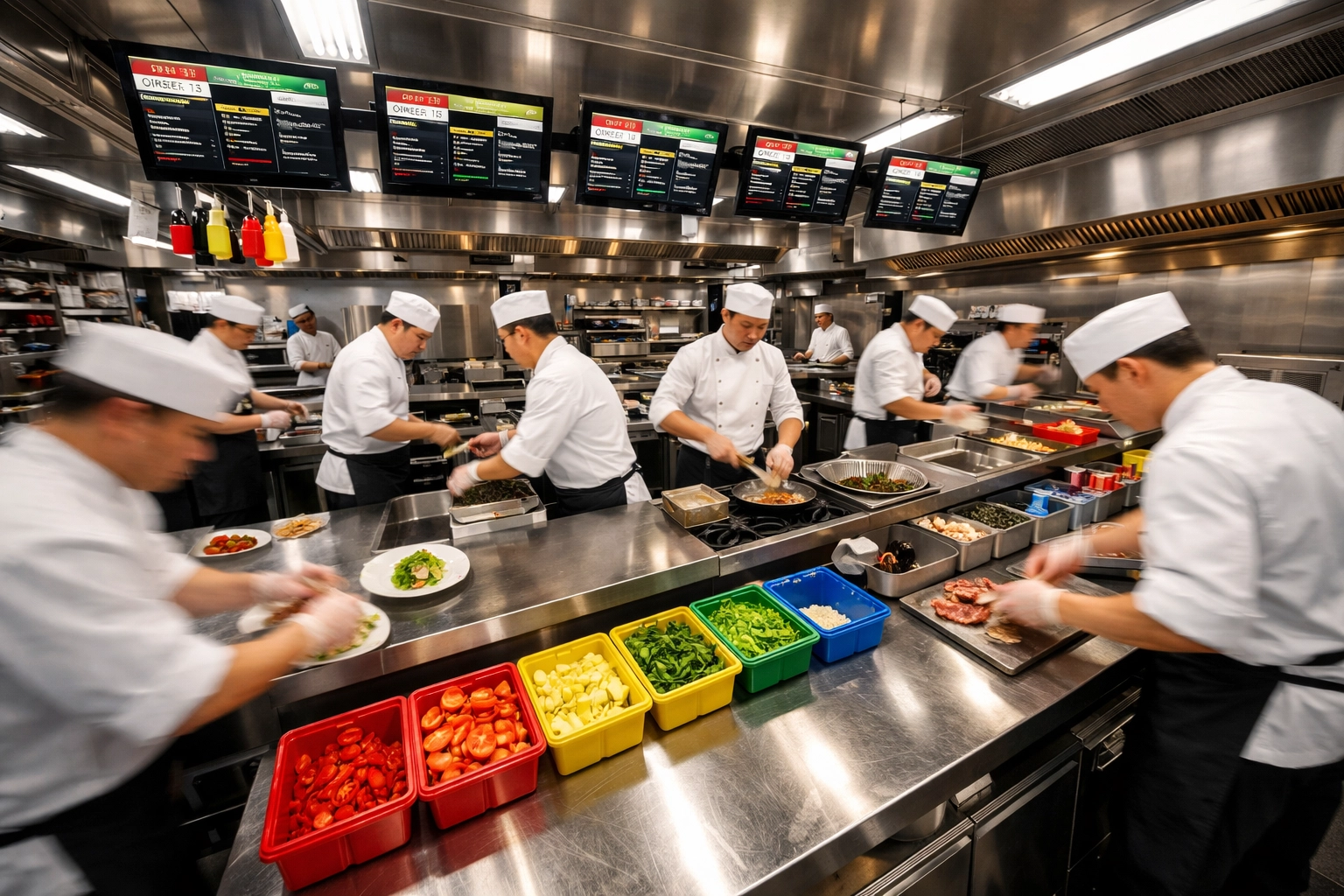
– Kitchen flow optimization: Every second counts. The best operations engineer their kitchen layout, prep processes, and mise en place like they're designing a Formula 1 pit crew
– Real-time data utilization: They know their food cost percentage daily, not monthly. They track labor costs by shift, not by pay period
– Technology integration: From inventory management systems to AI-powered forecasting, they leverage tech to eliminate waste and maximize efficiency

Margin Protection: Guarding Every Penny
Listen, when I was brewing beer for a restaurant, I learned that every ingredient either makes you money or costs you money: there's no middle ground. The successful operators understand this at a molecular level.
They implement:
– Strategic menu engineering: Analyzing which items drive profit versus which just drive volume
– Dynamic pricing: Adjusting for seasonality, competition, and cost fluctuations
– Waste reduction protocols: Tracking every ounce that goes in the trash and treating it like the profit leak it is
Industry leaders like Danny Meyer have built empires not just on hospitality, but on financial discipline. His Union Square Hospitality Group didn't become a powerhouse by accident: they treated every operational decision as a financial decision.
Strategic Growth: Scaling Smart
Here's where most restaurants get it wrong. They have one successful location and immediately try to open three more. Strategic growth isn't about expansion: it's about replication of success.
The top 10% focus on:
– Proven systems: They don't open location two until location one runs without them
– Financial reserves: They maintain 6-12 months of operating capital before expanding
– Market validation: They test new concepts with pop-ups or limited runs before committing to brick and mortar
As Nation's Restaurant News regularly reports, the fastest-growing restaurant concepts aren't always the flashiest: they're the most systematically sound.
The Restaurant Finance Advisors Risk-Free Model: A Different Approach
Now, let me tell you about something that would have saved my younger self about a decade of stress: a truly risk-free partnership model.
Here's the traditional restaurant consulting pitch: "Pay us $10,000 upfront, and we'll tell you how to make more money." Maybe it works, maybe it doesn't, but you're out ten grand either way.
We flipped that model on its head.
Our approach at Restaurant Finance Advisors is simple: we only make money when you make money. We come in, identify the hidden revenue opportunities: the menu pricing gaps, the operational inefficiencies, the vendor contracts that are bleeding you dry: and we only get paid based on the actual money we help you recover or generate.
Think about it like this: If we can't find and unlock additional revenue for you, we don't deserve to get paid. And if we do find it (which we do, consistently), you're paying us from money you wouldn't have had otherwise.
This model works because we've been where you are. I've closed the restaurant at 2 AM and opened it again at 6 AM for breakfast prep. I've negotiated with distributors who thought they could push around a young manager. I've looked at P&L statements that made me want to cry.
We know where the money hides in restaurants because we've worked every position, made every mistake, and learned every lesson the hard way.
The Bottom Line
The restaurant industry isn't a death trap where 90% fail. But it is an industry where the margin between thriving and barely surviving is razor-thin.
The top 10% succeed because they:
– Treat operational efficiency as a competitive weapon
– Protect margins like their business depends on it (because it does)
– Grow strategically, not emotionally
– Partner with people who understand both the kitchen and the spreadsheet
As Eater frequently covers, the restaurant landscape is evolving faster than ever. The operators who thrive are those who adapt, optimize, and: crucially: know when to bring in expertise that complements their own.
After working every role from busser to marketing director, I can tell you this: you don't need to know everything, but you do need to know what you don't know. The best restaurant operators I've worked with weren't experts at everything: they were experts at building teams and partnerships that covered all the bases.
Whether you're struggling to hit your numbers or you're successful and want to scale, the economics of restaurant turnarounds come down to one thing: turning operational excellence into financial performance.

Visit us at www.restaurantfinanceadvisors.com to learn more about maximizing your revenue and book a call today to start making more money.
Connect with me, Robert Ancill, to discuss how we can help your restaurant not just survive, but thrive.
Target Keywords: restaurant consulting, restaurant investment, restaurant new business, restaurant growth, find money your restaurants, restaurant turnaround, restaurant operational efficiency, restaurant profit margins, restaurant financial management, restaurant success strategies
Meta Description: Deep dive into why most restaurants struggle and the financial strategies the top 10% use to stay profitable and scale. Learn about operational efficiency, margin protection, and risk-free growth models.


