
Your restaurant is probably hemorrhaging money right now, and you don't even know it.
We're not talking about the obvious stuff, the line cook who burns three steaks during Saturday dinner rush or the server who comps desserts without manager approval. We're talking about the quiet, invisible profit drains happening in your back-of-house every single day. The ones that don't announce themselves with a crash or a customer complaint. The ones that cost you $50,000 or more annually while you're too busy expediting tickets and putting out fires.
After working every position from busser to director of marketing, yes, including that soul-crushing stint as a prep cook where I learned exactly how creative people can get with FIFO rotation: we've seen how easy it is to miss what's happening behind the kitchen doors. You're in survival mode. You're managing labor, handling vendor deliveries, dealing with the POS system that crashed again, and somehow trying to make payroll.
Meanwhile, your profit margins are walking out the back door.
The Three Silent Killers of Restaurant Profitability
1. Food Waste: The $4,000 Monthly Ghost
Food waste isn't just about the wilted lettuce you toss on Tuesday morning. It's the pounds of product that disappear between receiving and plating, and most operators drastically underestimate the real cost.
Recent National Restaurant Association data shows that restaurants lose between 4-10% of their food purchases before it ever reaches a customer's plate. For a restaurant doing $2 million annually with a 30% food cost, that's $24,000 to $60,000 vanishing into your dumpster every year.
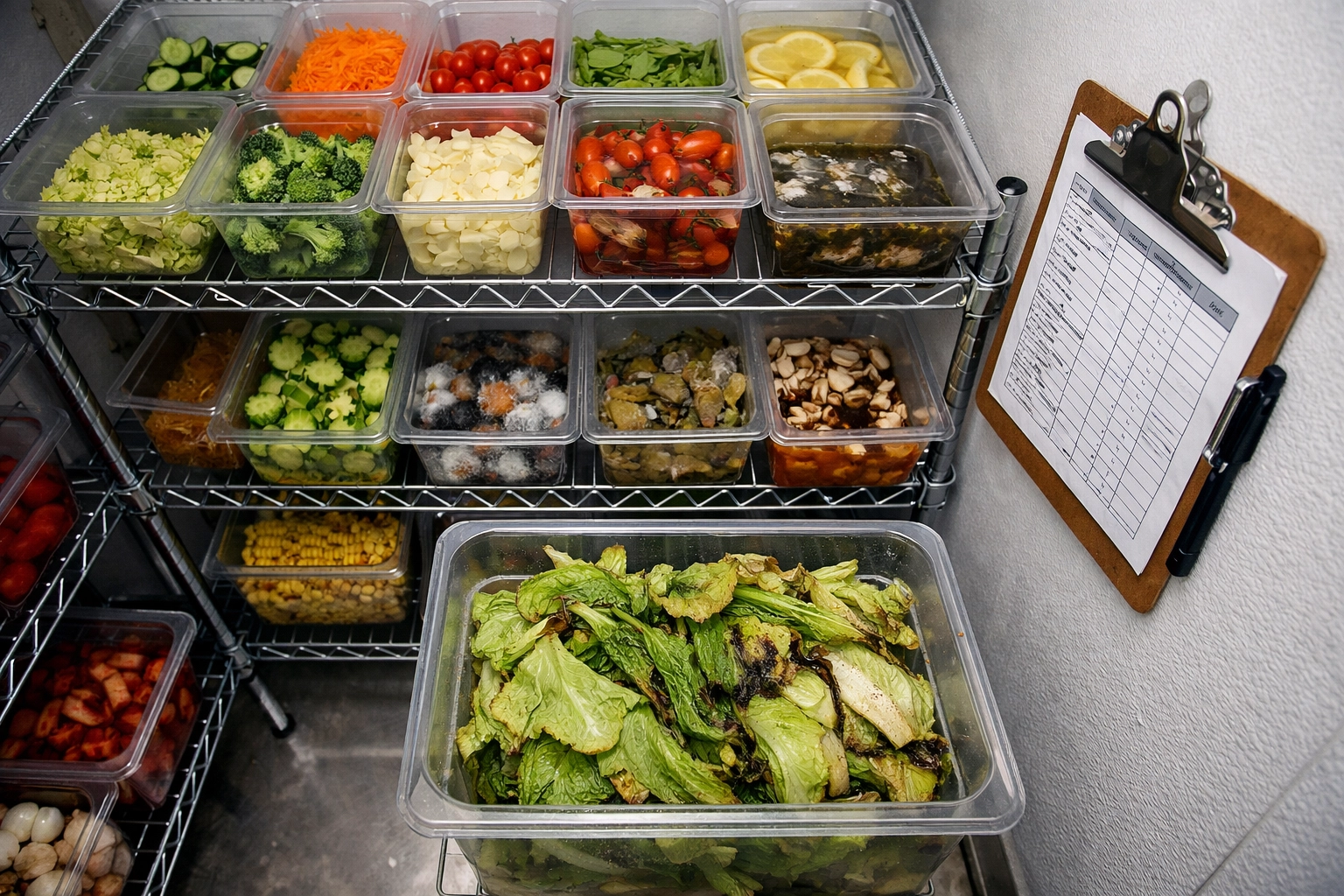
The problem compounds because waste happens in layers:
– Over-ordering to avoid 86'ing menu items – We get it. Running out of your signature dish on Friday night is a nightmare. But that safety stock mentality means you're carrying excess inventory that degrades before it sells.
– Lack of par level discipline – When your sous chef eyeballs the walk-in instead of using actual data, you're guessing with $10,000 worth of product every week.
– Prep waste from poor training – That new line cook trimming salmon fillets at 40% yield instead of 65% is literally throwing away money with every cut.
– The "it's still good" syndrome – How many times have you seen someone smell the cream, shrug, and use it anyway? And how many times does that product actually get used before it crosses the line?
David Scott Peters, restaurant profitability expert and LinkedIn thought leader, puts it bluntly: "Most restaurant owners have no idea how much food they're throwing away because they're not tracking it systematically. What you don't measure, you can't manage."
2. Vendor Pricing Creep: Death by a Thousand Paper Cuts
Your broadline distributor just raised prices by 3% across the board, and you probably didn't even notice.
Here's what we see constantly: operators establish vendor relationships, get comfortable with their rep, and then stop scrutinizing invoices. Meanwhile, prices creep up incrementally: 2% here, 4% there, a "temporary surcharge" that becomes permanent.
The math is brutal. On that same $600,000 annual food spend, a 5% unnoticed price creep costs you $30,000 per year. That's real money that should be hitting your bottom line.
We've worked with restaurants where we found:
– Mystery upcharges and delivery fees that appeared six months ago and never went away
– Case sizes that quietly decreased while prices stayed the same (the old shrinkflation trick)
– Duplicate line items for the same product at different prices, depending on which warehouse it shipped from
– Vendor "promotions" that actually cost more than the regular price when you do the math per ounce
The real kicker? According to recent industry research, 58% of restaurant operators admit they lack real-time visibility into their back-of-house operations. You can't catch vendor pricing games if you're not watching the tape.
3. Tech Subscription Bloat: The Modern Money Pit
How many software subscriptions is your restaurant currently paying for? If you're like most operators, you don't actually know off the top of your head.
We routinely find restaurants paying for:
– Three different scheduling systems because different managers prefer different platforms
– Two inventory management tools that don't talk to each other (or to your POS)
– That kitchen display system you stopped using after the trial period but forgot to cancel
– Duplicate analytics platforms that pull the same data and show you the same charts
– Training software nobody uses because it's too clunky and everyone just does verbal orientation anyway

Each subscription feels small: $79 here, $149 there. But stack them up and you're looking at $2,000 to $5,000 monthly in redundant technology costs. That's $24,000 to $60,000 annually for tools that aren't delivering ROI.
The technology paradox of 2026 is real: we have more tools than ever to run restaurants efficiently, but most operators are drowning in subscriptions they don't use effectively. Industry data shows that 46% of operators plan to increase technology budgets this year, but throwing more money at more tools won't solve the problem if you're not using what you already have.
Why You Can't See the Leak From Inside the Kitchen
The fundamental challenge isn't that you're bad at running restaurants: it's that you're too close to the operation.
When you're working in the business instead of on the business, you develop blind spots. That's not a character flaw; it's human nature. The expeditor calling for fries doesn't have the bandwidth to audit last quarter's distributor invoices. The GM closing at midnight six nights a week isn't reviewing tech subscription utilization reports.
We learned this the hard way during our own time managing restaurants. You get into a rhythm. Vendor shows up Tuesday and Thursday. You sign the invoice. Product goes into the walk-in. You trust your systems because you have to: there aren't enough hours in the day to verify everything.
But here's the uncomfortable truth: the money left on the table compounds every single week you don't address it.
A $1,000 weekly leak becomes $52,000 annually. Add up waste, vendor creep, and unused tech? You're easily looking at $50,000 to $100,000 in recoverable profit for a mid-volume operation.
The Two-Week Money Hunt: How We Find What You're Missing
We approach restaurant profitability differently because we've lived it.
Our process doesn't require months of disruption or expensive audits. We can identify your biggest profit leaks in two weeks because we know exactly where to look. We've received those shipments, placed those orders, managed those prep teams, and paid those invoices.
Here's how it works:
– Week One: The Discovery Sprint – We analyze your purchasing data, invoice history, tech stack, and waste tracking (or lack thereof). We interview your team. We watch your processes. We identify the specific areas where money is walking out the door.
– Week Two: The Recovery Plan – We deliver a prioritized action plan with specific dollar values attached to each opportunity. Renegotiate this vendor. Eliminate these redundant subscriptions. Implement this simple waste tracking protocol. Each recommendation comes with expected ROI and implementation difficulty.
Because we work on a results-based fee structure, we only win when you win. If we can't find meaningful savings, you don't pay consulting fees. That's how confident we are that your back-of-house is leaving money on the table.
The Equipment Factor Nobody's Talking About
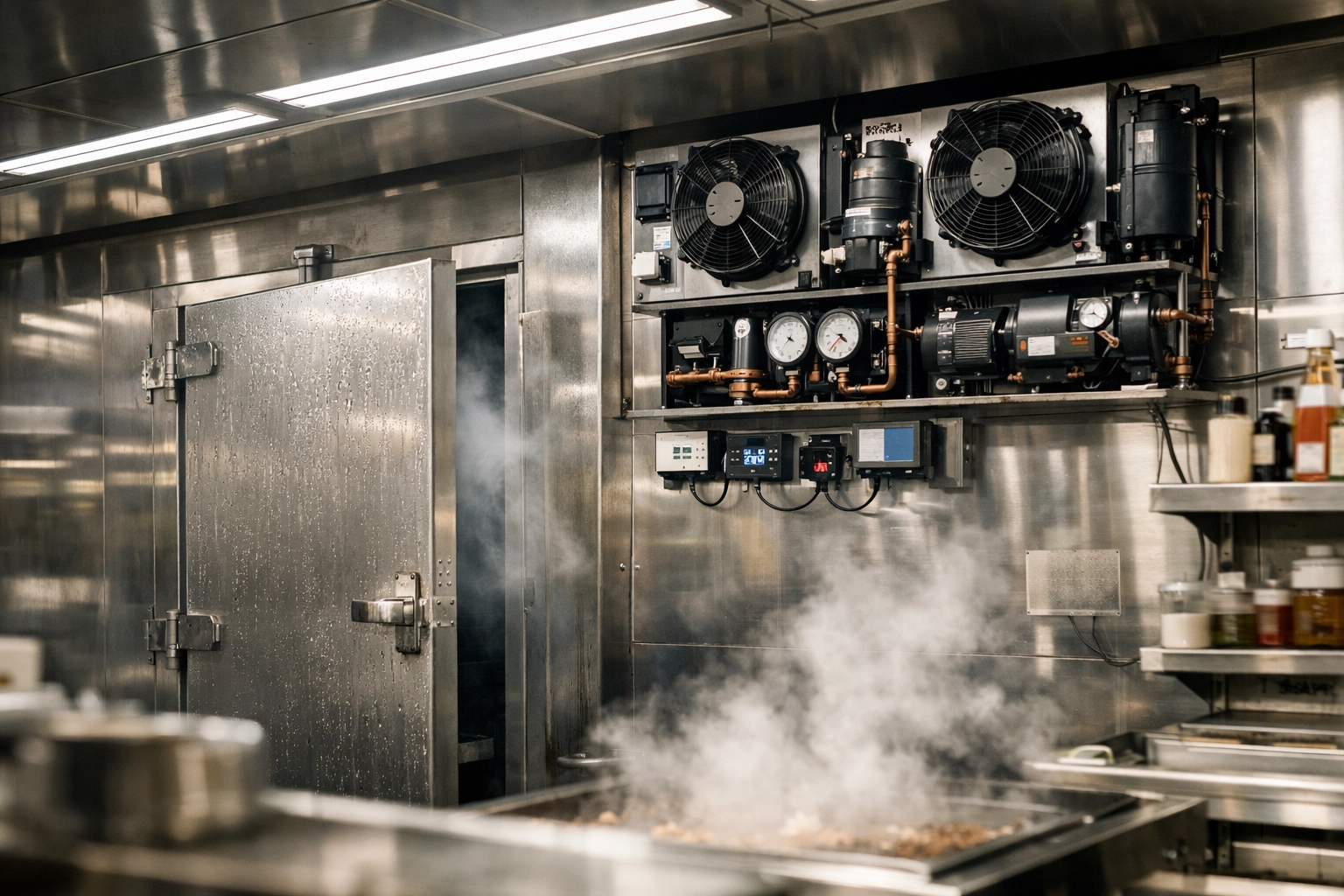
Here's a sobering stat from recent industry research: 49% of quick-service and fast-casual operators report significant downtime from equipment failures, with 24% estimating revenue losses between $1,001 and $5,000 per hour during disruptions.
Your walk-in compressor that's "running fine" but cycling more frequently than it should? That's costing you energy dollars and is one blown bearing away from a catastrophic loss. The fryer that takes longer to recover temperature? That's costing you speed of service and customer satisfaction.
Equipment efficiency isn't sexy, but it's massively profitable. Better yet, 63% of operators now recognize that real-time visibility into equipment and energy usage would help reduce expenses: but most haven't implemented monitoring systems yet.
Stop Accepting Profit Leaks as "The Cost of Doing Business"
The restaurant industry has normalized chronic profit loss.
We've all heard the excuses. "Food waste is just part of the game." "Vendors raise prices: what are you gonna do?" "Technology costs money if you want to stay competitive."
But what if the real game is recovering that leaked profit and putting it to work growing your business instead?
Imagine having an extra $50,000 in annual cash flow to:
– Finance that second location you've been planning
– Build a proper marketing budget instead of just hoping for word-of-mouth
– Invest in retention bonuses for your best people so you stop training replacements
– Actually take a salary that reflects the 80-hour weeks you're putting in
That money exists. It's in your operation right now. You just need someone who knows where to look and how to extract it without disrupting your daily service.
Your Next Move
The difference between restaurants that thrive and restaurants that survive often comes down to margin management.
You can keep accepting that 5-8% profit margin as "industry standard," or you can reclaim what's yours and push that number to 12-15%. The choice is simpler than you think: you just need the right partner to help you see what you've been missing.
We've walked in your shoes. We've burned ourselves on the same problems. And we've developed the systems to fix them quickly.
Ready to find your $50,000 leak? Let's spend two weeks looking at your operation with fresh eyes. No long-term commitment, no upfront consulting fees, just results-based partnership that aligns our success with yours.
Visit Restaurant Finance Advisors to start the conversation, or connect with us on LinkedIn to learn how other operators are recovering profit they didn't know they were losing.
Keywords: restaurant consulting, find money your restaurants, restaurant growth, restaurant investment, restaurant operations, restaurant profitability, back-of-house efficiency, food waste reduction, vendor management, restaurant technology
Meta Description: Is your restaurant leaking profit? Discover the three most common areas where money is left behind and how to plug the holes in just two weeks.
Outbound Links:
- National Restaurant Association research on operational efficiency and food waste management
- David Scott Peters on LinkedIn for restaurant profitability insights
- Industry reports on restaurant equipment downtime and technology investment trends


