
We've all been there, staring at a spreadsheet at 2 AM, calculator in one hand, cold coffee in the other, trying to figure out how the hell we're going to fund the next location without selling our soul (or equity) to investors who've never worked a Friday dinner rush in their lives.
The restaurant growth game in 2026 looks different than it did even two years ago. The old playbook, max out credit cards, beg uncle for a loan, give up 40% equity to someone who thinks FOH means "front of house plants", is officially dead. What's replacing it is smarter, faster, and doesn't require you to mortgage your firstborn.
After working every position from busser to marketing director (yes, I've scraped gum off tables and run P&L meetings in the same building), I've seen what works and what sends operators into a financial death spiral. Here's what you need to know about scaling your restaurant business in 2026 without giving up the house.
The New Reality: Sustainable Growth Beats Aggressive Expansion Every Time
Here's the uncomfortable truth: Most restaurant failures aren't caused by bad food or poor service: they're caused by growth that outpaces operational capacity.
We've watched too many brilliant concepts implode because they opened locations 4, 5, and 6 before they had the management bench to support them. According to Restaurant Dive, the smartest operators in 2026 are prioritizing three strategic pillars:
– Revenue expansion through strategic franchising rather than corporate-owned sprawl that drains cash reserves and management attention
– Leadership and management development that builds organizational depth before geographic width: because your best line cook doesn't automatically become your best kitchen manager
– Market share gains in existing and adjacent markets instead of jumping across the country before dominating your backyard
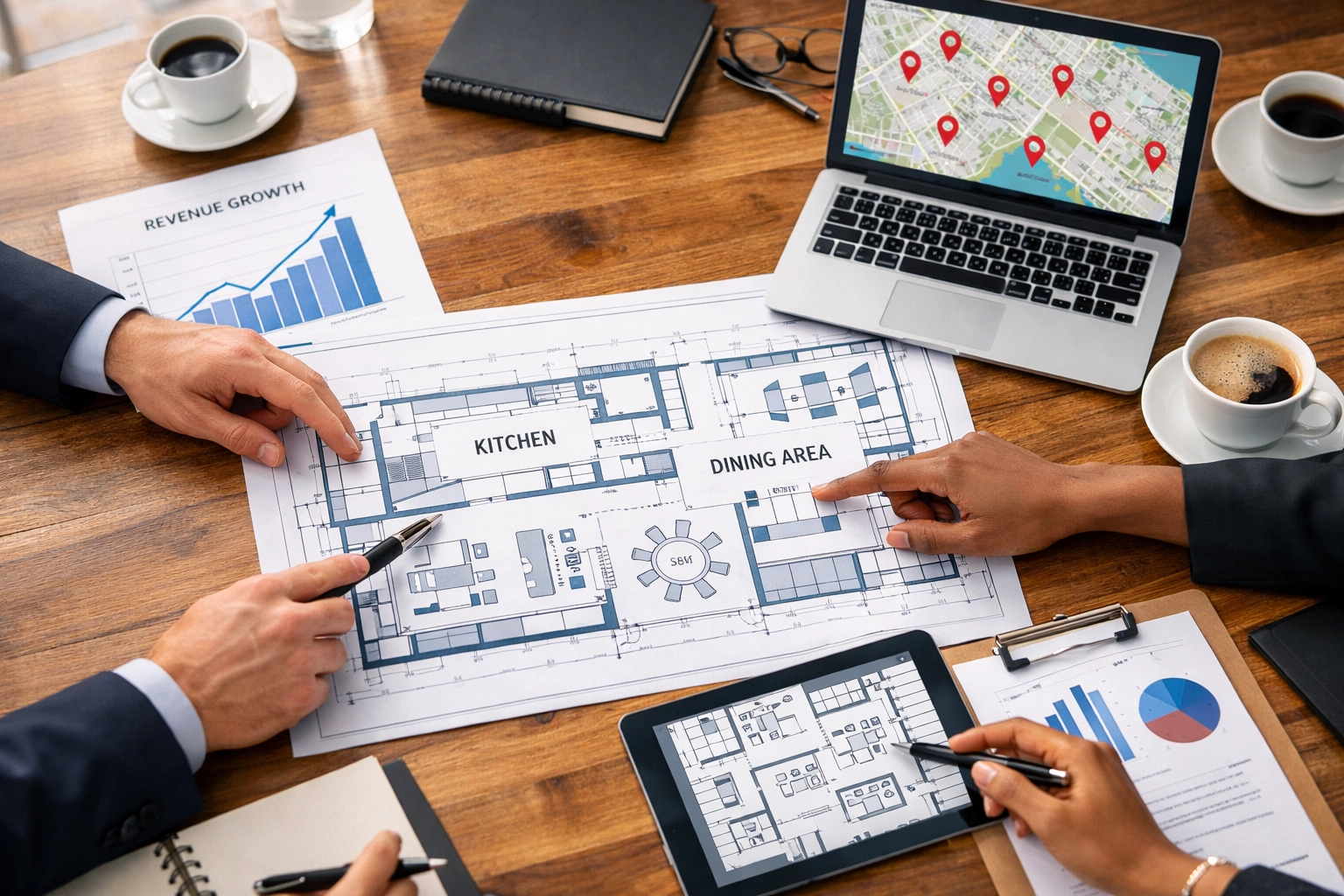
The shift is profound: We're finally acknowledging that sustainable restaurant growth requires building the engine alongside adding more fuel. You wouldn't put a V8 workload on a 4-cylinder team: so why do we keep trying?
Protecting Your Margins While Scaling: The Menu Engineering Revolution
Every dollar you leave on the table during expansion is a dollar you can't reinvest in quality, people, or the next location.
The operators winning in 2026 aren't competing on price: they're reframing value through intentional bundling and strategic promotions that don't train guests to wait for deals. Here's what that actually looks like in practice:
– Feature high-margin items through menu placement psychology rather than burying your 68% margin appetizer on page three while your 22% margin burger gets hero treatment
– Implement time-based pricing for peak versus off-peak periods that captures maximum revenue during Friday night while filling seats on Tuesday lunch without permanent discounting
– Use data-driven promotions tied to specific behaviors like first-time visits or reactivation of lapsed customers: not blanket discounts that tank your average check
I learned this the hard way as a manager dealing with a "Taco Tuesday" that was so successful it cannibalized our profitable Thursday and Friday business. We were packed on Tuesday and empty the rest of the week. Smart menu engineering and revenue growth management means understanding the complete picture, not just filling seats one day at a time.
Smart Capital: The F&B Credit Revolution Nobody's Talking About
This is where most operators get it wrong: They think the only path to restaurant investment involves giving up equity, taking on crushing debt, or both.
Traditional restaurant funding options in 2026 still look like this:
- Bank loans with personal guarantees that put your house on the line
- Investors who want 30-40% equity for capital you'll pay back 3X over
- SBA loans that take 90+ days and require perfect credit
- Credit cards at 24% APR (don't even get me started)
But there's a better way that most operators don't know exists: F&B credit lines that leverage your existing vendor relationships to unlock capital without interest or equity dilution.
Here's how it works: Instead of borrowing money, you're accessing purchasing power for food, beverage, equipment, and supplies you're already buying. No interest. No equity. No personal guarantees. It's the difference between paying $100,000 to a bank over five years versus using that same $100,000 in purchasing power to grow revenue immediately.
We've helped operators secure this type of smart funding with a 14-day turnaround: not 90 days of paperwork hell. For operators looking to find money for restaurants without traditional debt traps, this approach changes everything about how you can scale.
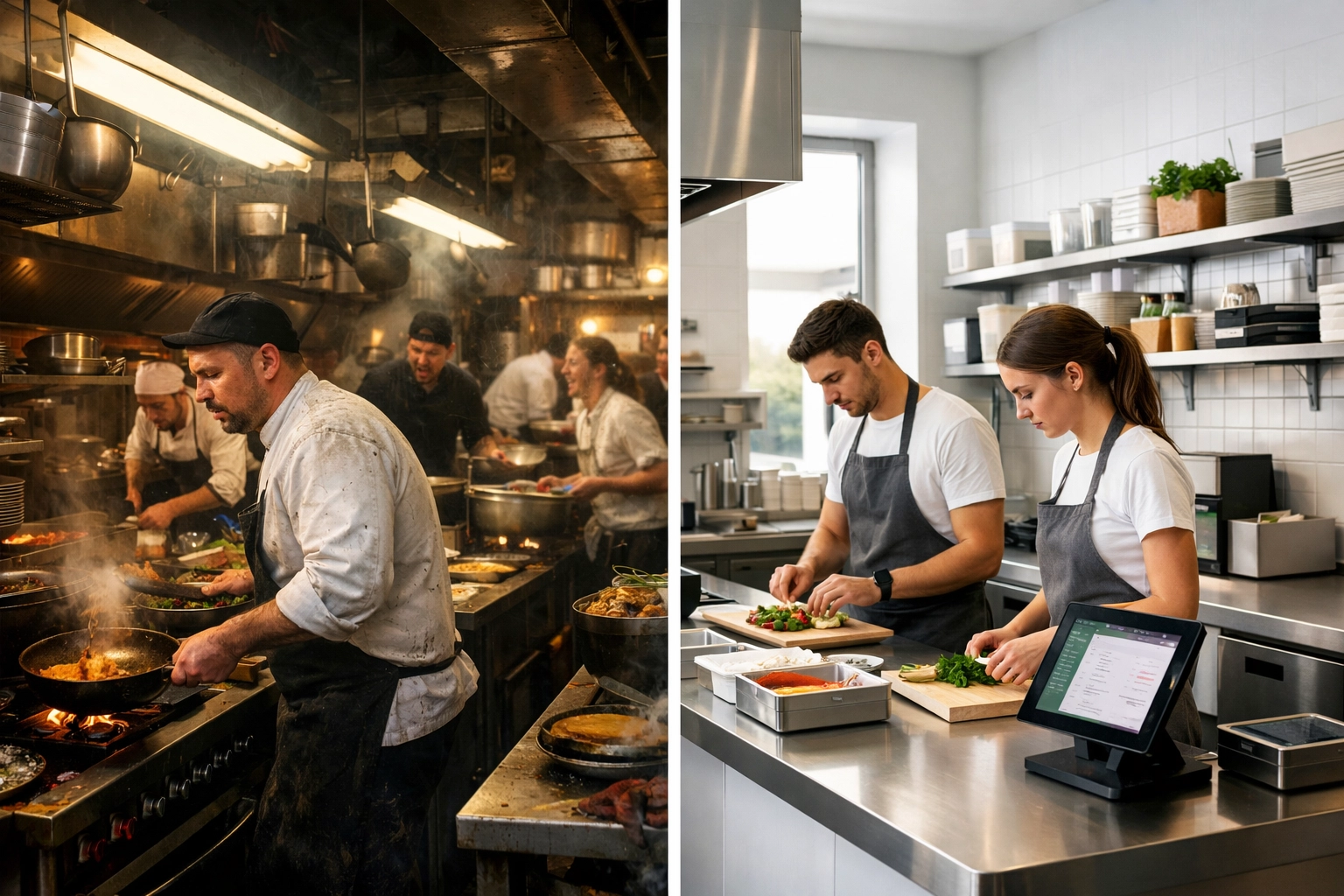
The Efficient Expansion Formula: Smaller Footprints, Bigger Returns
The 6,000 square foot full-service dinosaur is dead: long live the 1,200 square foot delivery-focused concept.
The restaurant new business models crushing it in 2026 share common DNA:
– Smaller, cost-efficient footprints focused on delivery and carry-out that cut construction costs by 60% and get you open in 12 weeks instead of 9 months
– Modular and standalone builds that eliminate expensive landlord buildout requirements and give you flexibility to test new markets quickly
– Chicken-centric and beverage-focused formats with lower overhead and simpler operations that don't require a culinary institute graduate on every line
According to industry research, these streamlined formats allow operators to scale rapidly in both dense urban and suburban markets without the crushing overhead of traditional locations. Translation: You can test market 3 before you're 100% certain market 2 will work.
As someone who's opened restaurants from scratch (and closed one that was too big for its market), I can't overstate how much easier life gets when your fixed costs are 40% lower than your competitor down the street.
Technology as Your Capital Multiplier: AI Isn't Coming, It's Here
If you're not using AI and digital systems as productivity drivers in 2026, you're already behind.
Smart restaurant consulting isn't about telling you to "use more technology": it's about deploying specific tools that act as capital multipliers across your value chain:
– Demand forecasting and dynamic pricing powered by AI that adjusts pricing in real-time based on demand, weather, events, and competitor activity
– Menu design optimization using machine learning to predict which new items will actually sell based on your specific customer data: not gut feeling
– Supply chain optimization that reduces food waste by 15-20% through better ordering algorithms than your overworked kitchen manager can calculate at 5 AM
Tools like TouchBistro are integrating AI-driven insights directly into POS systems, giving operators real-time visibility into what's working and what's draining cash. This isn't future tech: it's happening right now, and operators who wait will be competing against operators who don't.
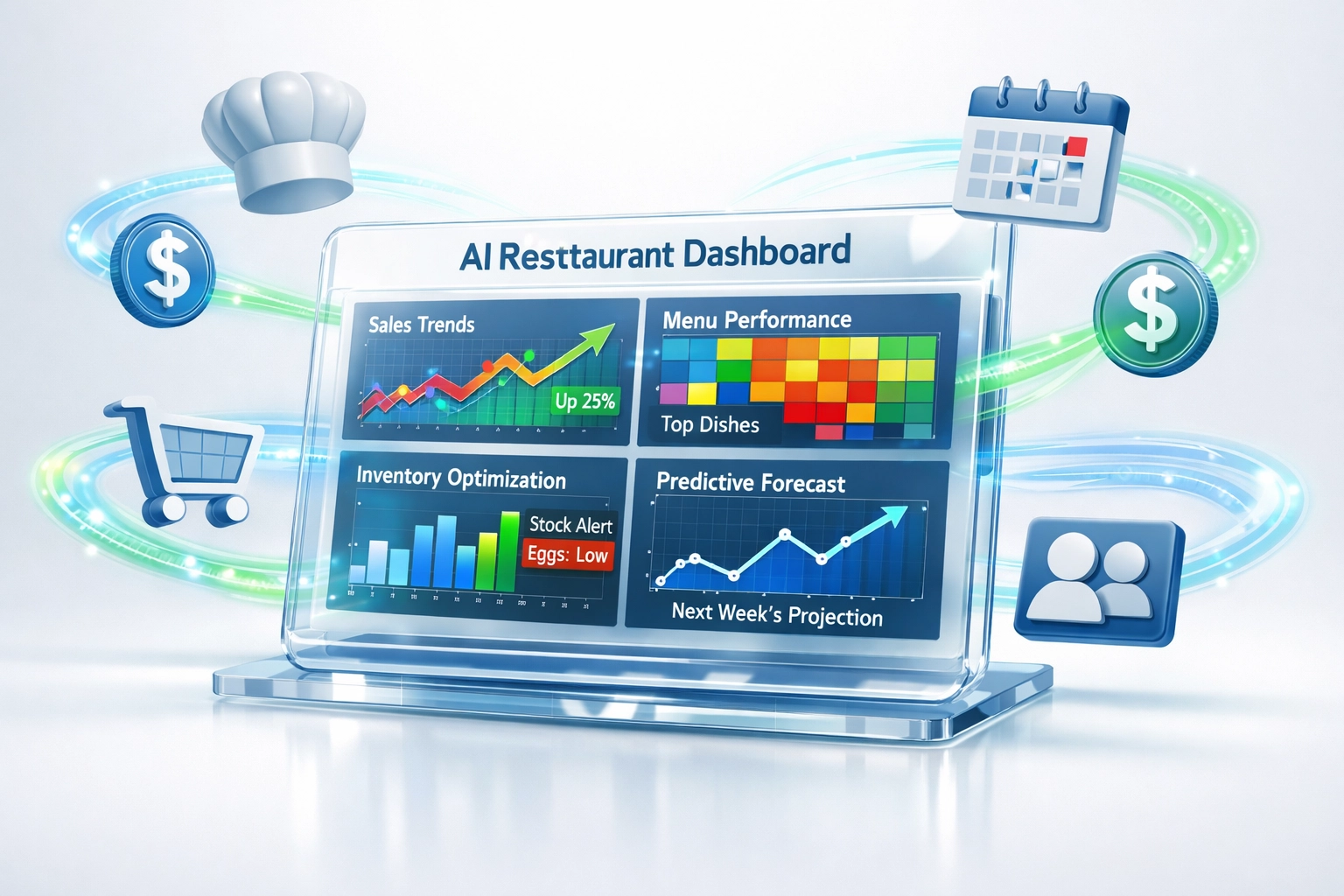
The ROI is absurd: A $300/month software investment that cuts food waste by 12% pays for itself 10X over in a mid-volume restaurant. That's capital efficiency that multiplies with every location you add.
Building Your Team: The Hidden Cost Everyone Underestimates
You know what's more expensive than paying for great talent? Not paying for great talent and watching your locations fail one by one.
With 98% of operators identifying labor costs as a top concern according to recent surveys, the focus has shifted from hiring warm bodies to holistic retention. Industry leaders like those featured on Wray Executive Search understand that strong retention directly improves same-store sales and reduces the $5,500+ average cost of replacing a single employee.
What actually works in 2026:
– Competitive benefits including mental health support (because we finally acknowledged that restaurant work is hard on mental health after pretending it wasn't for 100 years)
– Flexible earned-wage access that lets employees access wages before payday without predatory lending fees
– Professional development and clear advancement paths so your best server knows they can become your next GM without leaving for a corporate chain
Investment in people isn't soft HR fluff: it's growth capital disguised as payroll. Every percentage point improvement in retention is money you're not spending on recruiting, training, and covering for understaffed shifts with emergency labor.
Revenue Growth Management: It's Not Just About Filling Seats
The 2026 winners understand that restaurant growth isn't about more covers: it's about more profitable covers.
Smart operators are implementing revenue growth management strategies that would make airlines jealous:
– Price architecture and loyalty propositions that reward repeat visits without permanent discounting
– Protein-forward menus and late-night dining that capture high-margin dayparts competitors ignore
– Affordable entry options that keep price-sensitive diners engaged while premium items drive check averages for those willing to pay
Industry veterans like Robert Ancill have been pioneering these approaches, demonstrating that strategic pricing and menu psychology can increase revenue per location by 15-20% without adding a single seat.
This is restaurant investment in your existing assets before you chase new ones. Fix the roof on house one before you buy house two.
The 14-Day Advantage: Speed as Competitive Weapon
In 2026, the ability to move fast is worth more than having perfect information.
Traditional restaurant funding timelines look like this:
- Week 1-4: Application and documentation
- Week 5-8: Underwriting and back-and-forth
- Week 9-12: Approval and closing
- Week 13: Actually get the money
By the time you've secured traditional funding, the real estate opportunity is gone, your competitor has opened, or market conditions have shifted.
Our approach flips this: 14-day turnaround from application to funding using F&B credit structures that don't require the traditional underwriting circus. For operators in high-growth mode, this speed advantage is the difference between capturing market share and watching someone else do it.
Your 2026 Action Plan: What to Do Monday Morning
Stop waiting for perfect conditions. Stop assuming you need to give up equity or take on crushing debt to grow. Start thinking about restaurant investment and restaurant consulting as strategic advantages: not necessary evils.
Here's your Monday morning checklist:
- Audit your current funding structure: are you paying 18%+ on anything?
- Calculate your real cost of capital including opportunity cost
- Assess which locations are actually profitable versus just busy
- Identify your next three growth opportunities ranked by risk
- Build your management bench before you commit to location 4
The restaurant operators who'll dominate 2026 and beyond aren't the ones with the most locations: they're the ones with the most sustainable, profitable, scalable systems backed by smart capital that doesn't strangle growth.
We've been in the trenches with you: from scraping fryers to analyzing cash flow statements. We know what works because we've lived what doesn't.
Visit us at www.restaurantfinanceadvisors.com to learn more about maximizing your revenue and book a call today to start making more money.
Target Keywords: restaurant consulting, restaurant investment, restaurant new business, restaurant growth, find money your restaurants, restaurant capital, F&B credit, restaurant funding 2026, sustainable restaurant expansion, restaurant financial strategy
Meta Description: Discover the 2026 restaurant growth blueprint: secure smart capital without equity or interest, scale efficiently with F&B credits, and build sustainable expansion with proven strategies from industry veterans.


