

Your guests aren't cheap. They're exhausted.
After four years of relentless menu price increases across the industry, something fundamental has shifted in early 2026. The playbook that worked during the post-pandemic recovery, pass along cost increases, watch check averages climb, rinse and repeat, has officially stopped working. We're seeing it everywhere: declining covers, grumbling regulars, and operators wondering why their "loyal" customers are suddenly ghost stories.
Here's the uncomfortable truth: raising prices right now might be the fastest way to kill your restaurant growth, not fuel it. And if you've been banking on another round of menu repricing to save your margins, we need to talk.
The Consumer Fatigue Ceiling Is Real
According to the National Restaurant Association's latest State of the Industry report, consumer pushback on pricing has reached critical mass in 2026. While unemployment remains low and wages have technically outpaced inflation, perception trumps reality. Your guests feel poorer, even when their bank accounts say otherwise.
I've been in this business long enough to remember when a $12 burger felt premium. Now that same burger costs $18, and customers are doing the mental math every single time they glance at your menu. The grocery receipt shock that started in 2022 has created a permanent shift in how diners evaluate value, and they're no longer giving restaurants the benefit of the doubt.
This isn't a temporary blip. It's structural.
Danny Meyer recently noted on LinkedIn that the industry's "inflation as a strategy" era is over, and operators who don't pivot to operational excellence will find themselves in a volume death spiral. He's right. Price alone no longer sustains growth, volume does. And you can't rebuild volume by adding another dollar to your chicken sandwich.

Why the Old Pricing Playbook Broke
Let's be honest about what happened over the past few years. Rising costs? Pass them along. Labor squeeze? Bump the menu. Supply chain chaos? Another 8% increase. The problem is that every restaurant in your market did the exact same thing, and now consumers are comparison-shopping with the fury of someone who just realized they've been slowly boiled like a frog.
Here's what we're seeing in the data:
– Price elasticity is rising fast – Consumers are now incredibly responsive to even small price changes, trading down to value concepts or cooking at home rather than absorbing another increase
– Private label momentum is crushing branded players – In grocery, store brands are eating share from premium options, and the same psychology applies to dining, why pay $22 for your upscale burger when the local diner's $14 version suddenly seems "good enough"?
– Non-essential spending is getting ruthlessly cut – Travel and experiences still win consumer dollars, but dining out (especially casual concepts without a strong differentiation) is getting squeezed hard
– Last-minute splurges are dead – The spontaneous Tuesday date night or impulse takeout order? Gone. Consumers are planning, budgeting, and stretching every dollar with a level of intentionality we haven't seen in decades
I remember working as a server during the 2008 recession, watching regulars vanish overnight. This feels similar, except it's self-inflicted. We trained guests to expect constant price increases, and now they're responding by not showing up.
The Hidden Cost of "Just Raising Prices"
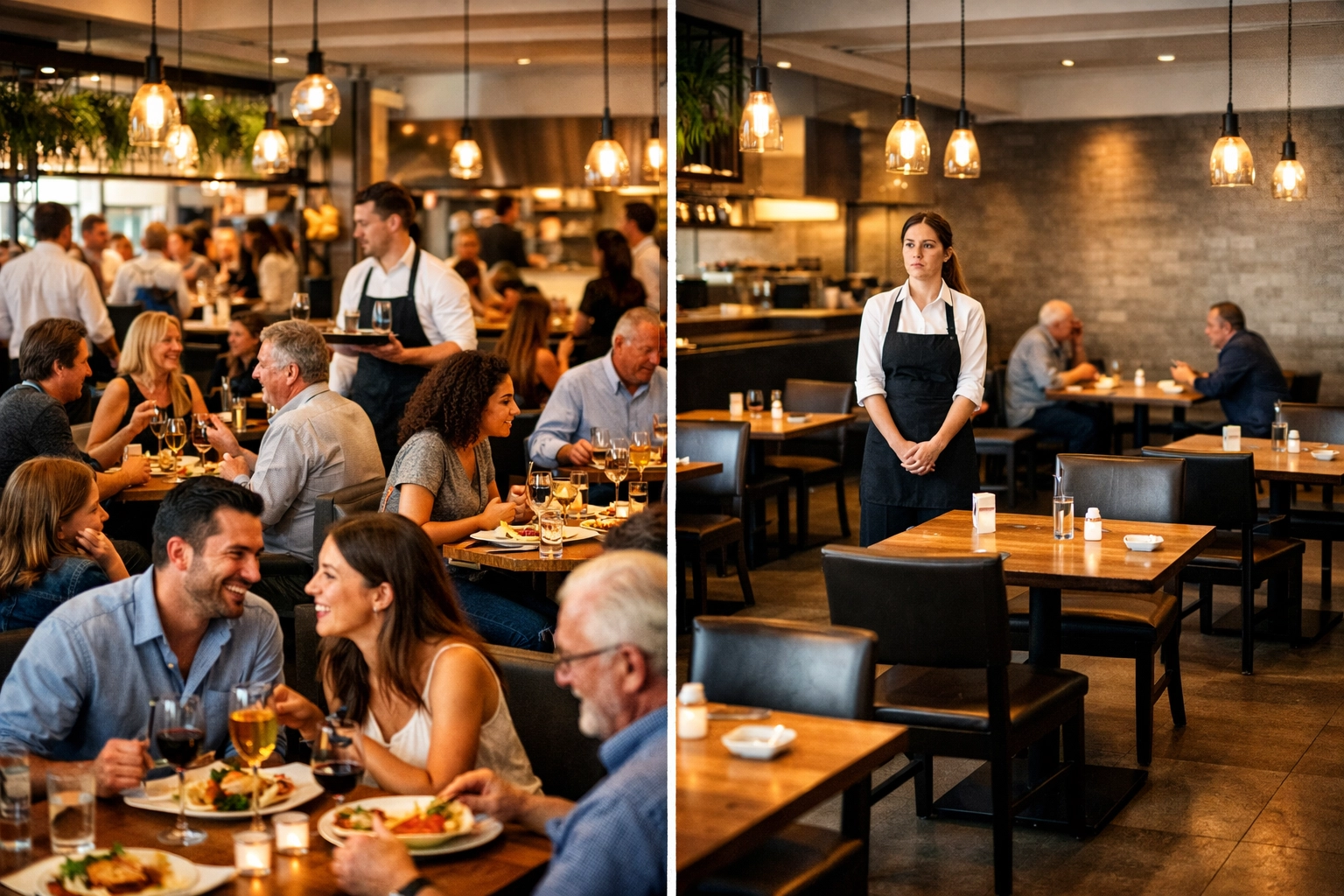
Here's the math that scares me: A 10% price increase that drives a 12% decline in covers is a net revenue loss, and that doesn't even account for the downstream damage to your brand, your team morale, or your ability to fill seats during critical dayparts.
When I was running kitchen operations at a high-volume concept, we had this saying: "You can't prep your way out of a sales problem." The same logic applies here. You can't price your way to profitability if nobody walks through the door.
Every time you raise prices without improving perceived value, you're making a bet that your guests have nowhere else to go. In 2026, that bet loses. They have options, lots of them, and many are choosing to vote with their feet.
The Smarter Play: Find Money Your Restaurant Already Has
This is where restaurant consulting stops being a luxury and becomes a survival strategy. Because while you can't control consumer sentiment or macroeconomic trends, you absolutely can control how efficiently your operation runs, and that's where the real money is hiding.
At Restaurant Finance Advisors, we've built our entire model around a simple premise: most restaurants are leaving $50K–$150K per year on the table through operational inefficiencies, and we can find it in two weeks flat.
Here's what that looks like in practice:
– Prime cost optimization – We audit your labor schedules, supplier contracts, and menu engineering to identify margin wins that don't require touching menu prices. Often, we're finding 3–5 points of prime cost savings within the first week
– Waste reduction strategies – From portion control inconsistencies to prep inefficiencies, waste is the silent killer. One client was throwing away $2,800/month in protein alone due to over-prepping. That's $33,600/year that went straight to the dumpster
– Tech stack rationalization – You're probably paying for three POS integrations that do the same thing, two loyalty platforms nobody uses, and a reservation system with features you'll never touch. We've helped clients cut $1,500–$4,000/month in tech bloat without losing functionality
– Menu mix rebalancing – Instead of raising prices across the board, strategic menu engineering lets you guide customers toward higher-margin items while keeping price-sensitive favorites stable. It's pricing strategy, not price increases
– Supplier renegotiation – When was the last time you actually shopped your contracts? We had a client who hadn't reviewed their produce pricing in 18 months. We saved them $1,200/month with two phone calls
The beautiful part? None of this alienates your guests. You're not asking them to pay more, you're simply running a tighter, smarter operation that preserves margins while keeping your value proposition intact.

The 2-Week Turnaround Advantage
Traditional consulting engagements drag on for months, rack up billable hours, and often deliver reports that sit on shelves collecting dust. We don't work that way.
Our process is built for restaurant investment and restaurant growth, not endless analysis:
We come in, spend two weeks embedded in your operation (yes, actually working alongside your team), identify the biggest opportunities, and deliver an action plan with quantified ROI targets. Then: and this is the part operators love: we only get paid based on results.
If we say we can find you $75K in annual savings and we don't deliver? You don't owe us the full fee. It's that simple. We eat our own cooking, so to speak.
This model works because we're not theorists. We've worked every position in restaurants: from bussing tables to running marketing departments. We know what it's like to be in the weeds on a Saturday night, to deal with a walk-in cooler that dies during prep, to negotiate with a supplier who's trying to slip in a 12% increase on a Tuesday afternoon.
We speak your language because we've lived your reality.
What 2026 Demands: Value Creation, Not Value Extraction
The restaurants winning right now aren't the ones with the cheapest prices or the fanciest concepts. They're the ones delivering authentic value: quality food, consistent service, and an experience that justifies every dollar spent.
According to recent retail research, 87% of consumers will still pay more for brands they trust. The key word there is trust. If your guests believe you're gouging them to protect margins, that trust evaporates. But if they see you investing in quality, treating your staff well, and running a tight operation? They'll give you grace on pricing.
This is the new competitive advantage: operational excellence that creates margin without extracting value from your customers.
The playbook for 2026 isn't complicated:
– Stop reflexively raising prices – Unless you're genuinely adding value (better ingredients, upgraded experience, etc.), another price bump just erodes goodwill
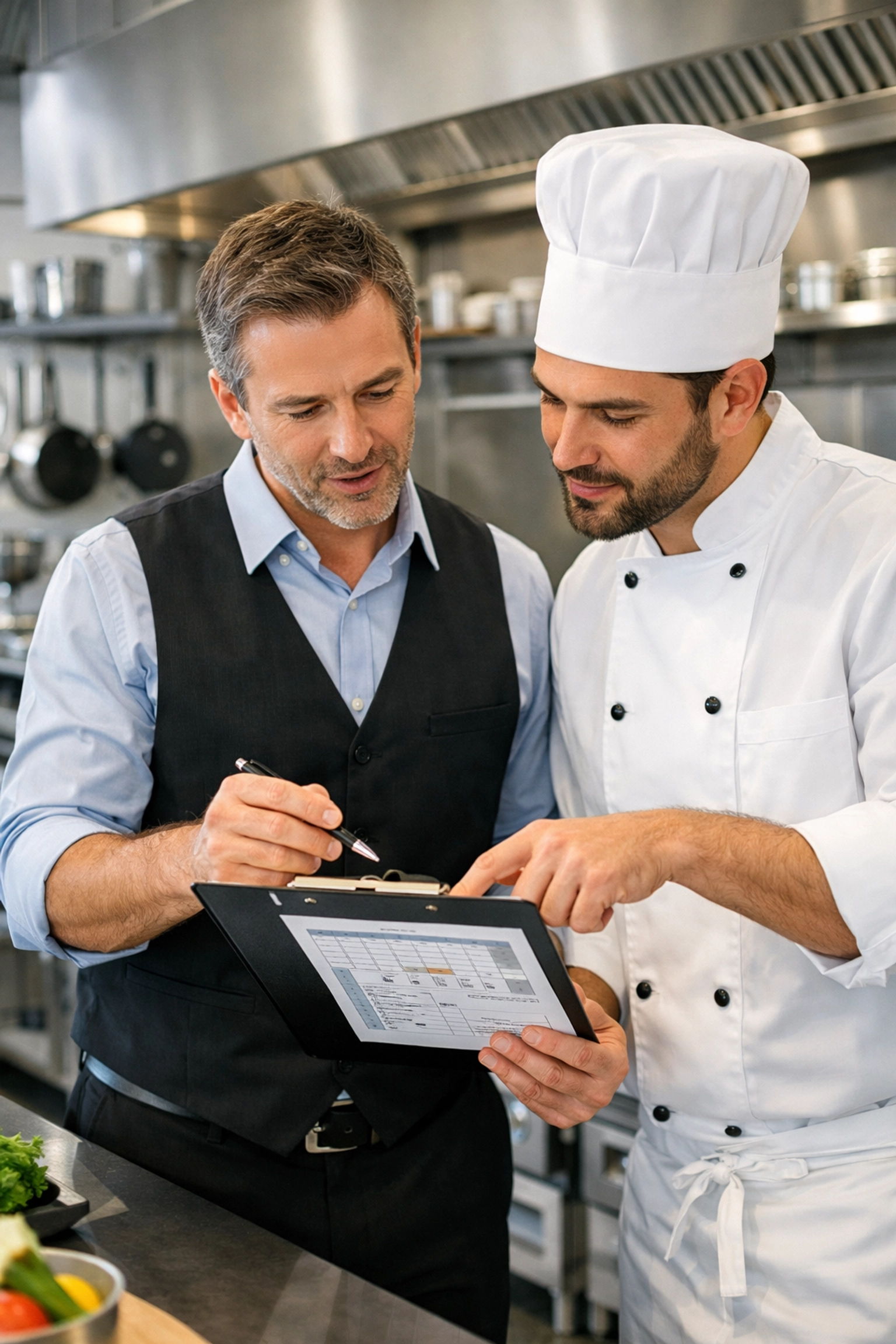
– Audit everything – From labor scheduling to vendor contracts, assume nothing is optimized and prove yourself wrong
– Invest in your team – Labor is your biggest cost, but also your biggest opportunity. Well-trained, engaged staff reduce waste, upsell naturally, and create the kind of experience guests will pay for
– Use data ruthlessly – Gut instinct is great for seasoning, terrible for financial strategy. Know your actual food costs, labor percentages, and item-level profitability
– Partner with experts who've done it before – You wouldn't ask your accountant to run your kitchen. Don't try to tackle complex financial optimization without restaurant-specific expertise
The Bottom Line
The 2026 price perception gap isn't going away. Consumers have hit their ceiling, and trying to push through with more price increases is like adding water to a grease fire: it only makes things worse.
But here's the opportunity: while your competitors are busy pricing themselves out of business, you can be building a leaner, stronger operation that protects margins, preserves volume, and positions you for sustainable restaurant growth when the market stabilizes.
At Restaurant Finance Advisors, we've helped dozens of concepts navigate exactly this challenge. We find money your restaurants already have, optimize operations without sacrificing quality, and deliver results in weeks, not quarters.
The question isn't whether you can afford to invest in operational consulting. It's whether you can afford not to: especially when your competition is still playing the old game and losing.
Ready to find the hidden margin in your operation? Let's talk. We promise you'll be surprised by what we uncover in just two weeks.
Meta Description:
Are your guests pushing back on menu prices? Learn why 2026 requires a shift from price hikes to operational efficiency and how to find hidden margins without losing customers.
Keywords:
restaurant consulting, restaurant investment, restaurant growth, find money your restaurants, restaurant new business, menu pricing strategy, operational efficiency, prime cost optimization, restaurant margins 2026, price perception gap, consumer sentiment restaurants, value-based pricing
Outbound Links:
– National Restaurant Association – State of the Industry 2026


