

The middle is dead. If your restaurant is still trying to be everything to everyone in 2026, you're probably watching your margins evaporate faster than a line cook's patience during a Saturday night rush.
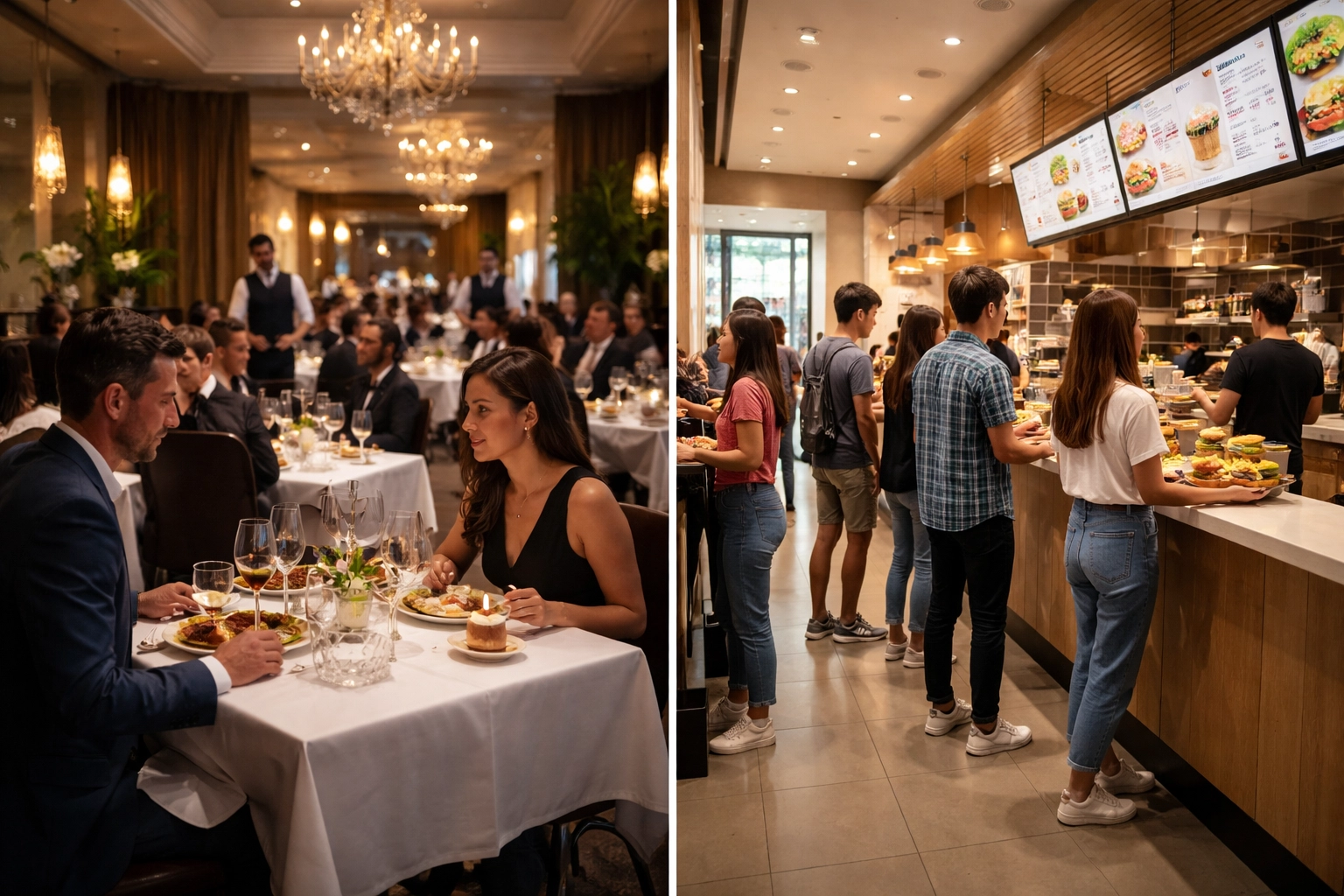
Here's the uncomfortable truth we're all living through: the American dining economy has split into two distinct camps. On one side, you've got affluent consumers dropping $200 on omakase without flinching. On the other, you've got value-conscious Gen Z and Millennials who will drive twenty minutes out of their way for a $5 meal deal. And that vast "middle market" that built casual dining empires in the '90s? It's shrinking faster than your ice machine output in July.
We've worked every position in a restaurant, from scrubbing dishes at 2 AM to crafting marketing strategies in corner offices. And we can tell you that surviving (and thriving) in this bifurcated economy requires a fundamentally different playbook than what worked even two years ago.
Let's break down exactly how to capture both ends of this split market and protect your bottom line.
Understanding the 2026 Market Split
This isn't just a temporary blip, it's structural. According to Restaurant Dive, upper-income consumers are benefiting from tax law changes and asset appreciation, while lower-income earners face headwinds from rising costs, insurance premiums, and wages that haven't kept pace with inflation.
Here's the math that should keep you up at night: a single high-income earner spending $10,000 on dining experiences effectively offsets spending cuts by 20 lower-income customers. That's not a typo. One whale equals twenty regulars.
The implications for restaurant growth are massive:
– Premium concepts are thriving – Fine dining and elevated casual restaurants continue posting gains
– Value brands are struggling – Unless they've doubled down on aggressive promotions
– The middle is getting squeezed – Casual dining chains without a clear identity are bleeding traffic
Strategy #1: Segment Your Offerings, Not Your Brand
McDonald's figured this out, and so should you. They revived their Extra Value Meals to recapture budget-conscious diners while simultaneously pushing premium McRib campaigns and celebrity collaborations. Same brand, two completely different value propositions running in parallel.
For your restaurant consulting strategy, this means:
– Create a value-tier menu – Think smaller portions, lunch specials, or a dedicated "everyday" section that gives price-sensitive guests permission to visit
– Protect your premium experience – Your signature dishes and elevated options should remain untouched, marketed to guests who aren't counting pennies
– Use daypart segmentation – Early bird specials and late-night happy hours can capture value seekers without diluting your prime-time premium positioning
We once watched a fine-dining spot in Chicago nearly tank itself by slashing prices across the board during a slow quarter. The result? They lost their affluent regulars who suddenly felt like they were eating at an Applebee's, AND they didn't attract value seekers who didn't trust a "fancy place" offering discounts. Worst of both worlds.
The lesson: You can serve both markets, but not with the same message at the same time.
Strategy #2: Find Money Your Restaurant Is Already Losing
Here's where 2026 gets interesting. The "One Big Beautiful Bill Act" (OBBBA) includes some significant tax benefits that most restaurant operators are completely sleeping on:
– Bonus depreciation – If you're investing in equipment, renovations, or new technology, you may be able to accelerate those deductions significantly
– Reduced tip taxes – Changes to how tipped income is treated could put real money back in your employees' pockets (and make you a more attractive employer)
– R&D credits – Yes, restaurants can qualify for these if you're developing new menu items, processes, or proprietary systems
Beyond tax benefits, there's operational money hiding in plain sight. We've walked into restaurants and found $30,000+ in annual savings just by auditing their liquor and bar programs, renegotiating vendor contracts, and tightening up food cost controls.
When we talk about restaurant investment in 2026, we're not just talking about raising capital, we're talking about mining the capital that's already buried in your P&L.

Strategy #3: Tailor Everything to Your Customer Base's Income Level
Location, positioning, and messaging matter more than ever. According to Nation's Restaurant News, the biggest determining factor in whether a restaurant thrives or struggles in this economy is the income level of its core customer base.
This means you need to get brutally honest about who's actually walking through your door:
– Affluent neighborhoods – Double down on experience, quality ingredients, and premium upsells. These guests want to feel special, not savvy.
– Mixed-income areas – This is where segmentation strategy becomes critical. You need both a value entry point and a premium pathway.
– Budget-conscious zones – Lead with value, but don't race to the bottom. Focus on perceived value (generous portions, combo deals) rather than just slashing prices.
We remember managing a location in a college town where we initially tried to position ourselves as "elevated casual." Students would walk in, see $18 entrees, and walk right back out. Once we introduced a $9 lunch menu and kept our premium dinner service intact, traffic doubled and check averages actually went UP because we weren't scaring away the parents visiting on weekends.
Strategy #4: Leverage Risk-Free Capital Solutions
Traditional bank loans are getting tighter. Credit contraction is real, especially for restaurants without pristine financials. But here's the good news: alternative capital solutions have matured significantly.
At Restaurant Finance Advisors, we've built a food & beverage credit model specifically designed for operators who need capital to grow, pivot, or weather this bifurcated economy, without the traditional risks that keep owners up at night.
Our risk-free turnaround model means:
– No personal guarantees strangling your family's finances – We structure deals that protect you
– Flexible repayment tied to performance – Because we know cash flow in this industry is a rollercoaster
– Strategic guidance included – Capital without consulting is just expensive money
Restaurant new business development in 2026 isn't about throwing cash at problems. It's about deploying capital strategically to capture the right market segments at the right time.
Strategy #5: Prepare for Volatility (Because It's Coming)
One social media post from Washington can change everything. We're not being dramatic, policy shifts in 2026 have been fast, unpredictable, and market-moving. OpenTable's 2026 Dining Trends Report highlights that consumer confidence can collapse even when GDP numbers look strong.
Build contingency into your operations:
– Maintain 60-90 days of operating reserves – Yes, this is hard. Yes, it's essential.
– Create menu flexibility – Have value-tier options ready to deploy if your customer base's spending suddenly contracts
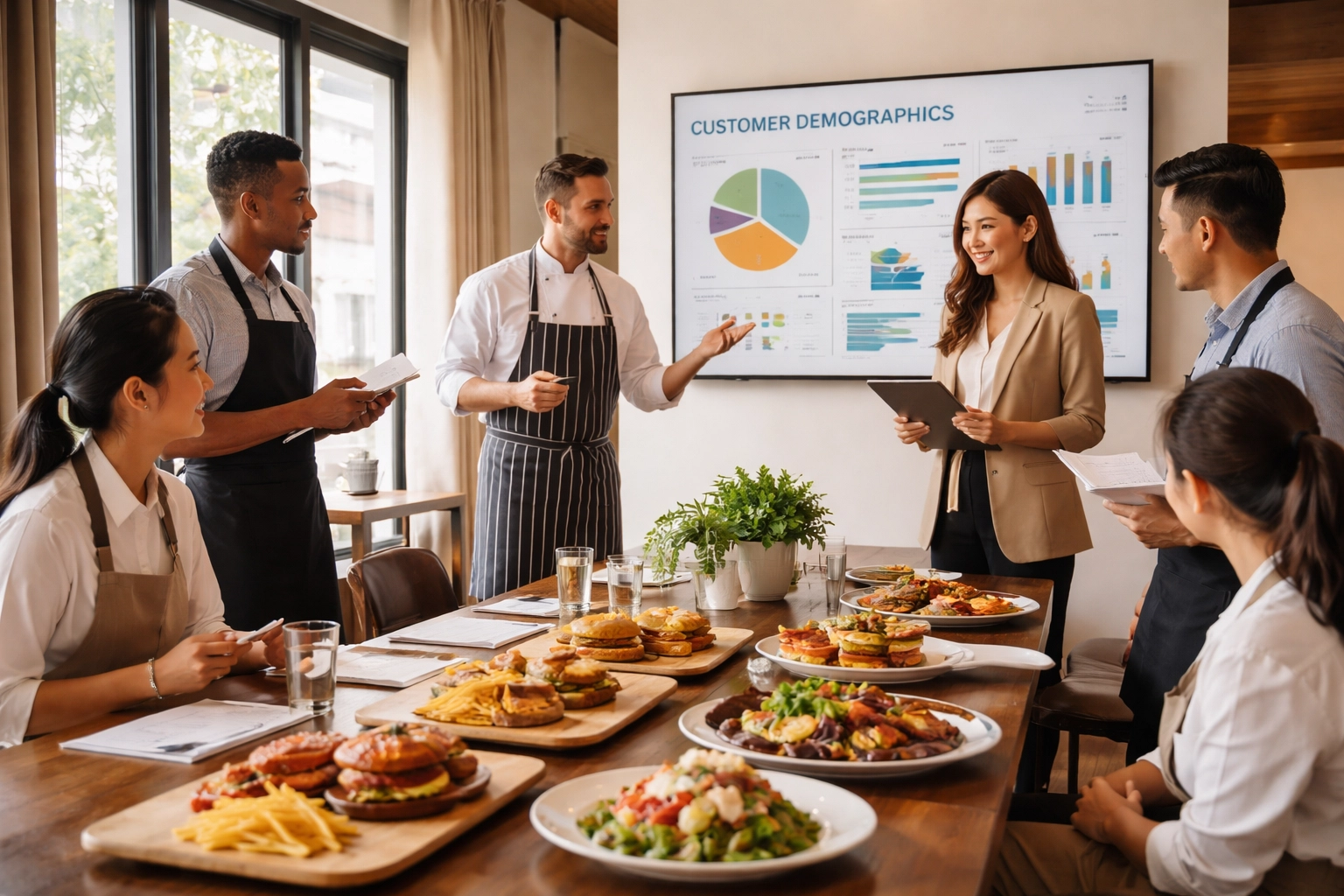
– Monitor your specific customer base – Macro data won't save you. Track YOUR guests' behavior weekly.
We've seen operators blindsided by tariff announcements, supply chain disruptions, and viral social media moments that tanked (or boosted) traffic overnight. The restaurants that survived weren't the biggest or the best-funded: they were the most adaptable.
The Bottom Line
There are winners and losers in every segment of this split market. Your job isn't to pick a side: it's to deliberately position yourself to serve one or both ends of the divide without getting stuck in the middle.
This means smarter segmentation, aggressive cost recovery, tailored messaging, flexible capital, and operational agility. It's not easy. But neither is working the line on Mother's Day, and you survived that.
At Restaurant Finance Advisors, we partner with operators who refuse to accept "survival mode" as their ceiling. If you're ready to optimize your operations and find the money hiding in your restaurant, let's talk.
Because in a bifurcated economy, the only thing worse than picking the wrong strategy is having no strategy at all.
Keywords: restaurant consulting, restaurant investment, restaurant new business, restaurant growth, find money your restaurants
Meta Description: Is your restaurant stuck in the middle? Discover how to navigate the 2026 bifurcated economy, leverage new tax benefits, and find hidden revenue in your operations.
Outbound Links:


