
December 2025 has delivered a triple threat that's making restaurant owners nationwide reach for the antacids. Between escalating tariffs crushing supply chains, margins so thin you could use them as tissue paper, and a chicken war so intense it makes Game of Thrones look like a friendly neighborhood barbecue, we're witnessing the perfect storm that's reshaping how restaurants survive and thrive.
Having worked every position from busser to marketing director, I've seen plenty of industry upheavals. But this December feels different: it's not just one challenge hitting operators, it's three massive headwinds converging at once. Let's break down what's happening and, more importantly, what you can do about it.
The Tariff Tsunami: When Politics Meets Your Produce Bill
The numbers don't lie, and they're not pretty. Recent industry data reveals that 47% of restaurant businesses report tariffs have directly forced them to increase menu prices for customers. But here's the kicker: that's just the tip of the iceberg.

Behind those headline price increases lies a more complex story of supply chain disruption that's hitting operators from multiple angles:
– Ingredient costs have skyrocketed for 41% of operators due to tariff-driven price increases on everything from imported spices to specialized equipment parts
– Supply chain volatility has become a major obstacle for 25% of businesses, making it nearly impossible to forecast costs more than a month out
– Small and independent operators are getting crushed, lacking the purchasing power that allows large chains to absorb or negotiate around tariff impacts
The reality is brutal: when your olive oil supplier calls to say prices are jumping 30% because of new tariffs on Mediterranean imports, you've got exactly two choices. Absorb the cost and watch your margins evaporate, or pass it along to customers who are already price-sensitive.
Smart operators are getting creative with sourcing strategies. We're seeing restaurants pivot to domestic suppliers where possible, negotiate longer-term contracts to lock in current pricing, and build stronger relationships with multiple vendors to avoid single-source dependencies.
Key Takeaway: Tariffs aren't going away, so diversify your supply chain now and build cost flexibility into your menu engineering before you're forced to make emergency price adjustments.
Death by a Thousand Cuts: The Penny Shortage Reality
Restaurant margins have always been thin, but 2025 has redefined what "razor-thin" actually means. We're talking about profit margins so tight that losing a few pennies per plate can mean the difference between profit and loss for the month.
The margin compression is hitting from every direction simultaneously:
– Ingredient price increases are impacting 76% of restaurant operators directly in their profit margins, with no relief in sight
– Labor costs forced 62% of operators to raise menu prices just to maintain basic profitability as minimum wage increases continue rolling out nationwide
– Operating costs from utilities to insurance continue climbing while customer spending power remains constrained by broader economic pressures
What makes this particularly challenging is the unpredictability. Unlike labor costs, which you can forecast based on known wage increases, ingredient prices fluctuate based on global trade conditions, climate impacts, transportation costs, and international conflicts. It's like trying to run a business while someone keeps moving the goalposts.
The most successful operators we're working with have shifted focus from pure cost-cutting to revenue optimization. They're maximizing every guest interaction through:
– Enhanced digital ordering systems that encourage add-ons and upsells
– Loyalty programs that increase visit frequency and average check size
– Strategic menu engineering that guides customers toward higher-margin items
– Expanded dayparts and catering services to generate revenue beyond traditional dinner service
Key Takeaway: You can't cut your way to prosperity in this environment: focus on maximizing revenue per customer while maintaining operational efficiency.
The Great Chicken War: When Value Battles Get Vicious
The restaurant industry is experiencing what analysts are calling "the most intense value war in history," and it's not pretty. Fast-casual chains that were growth darlings just 18 months ago are now struggling to maintain basic customer traffic.
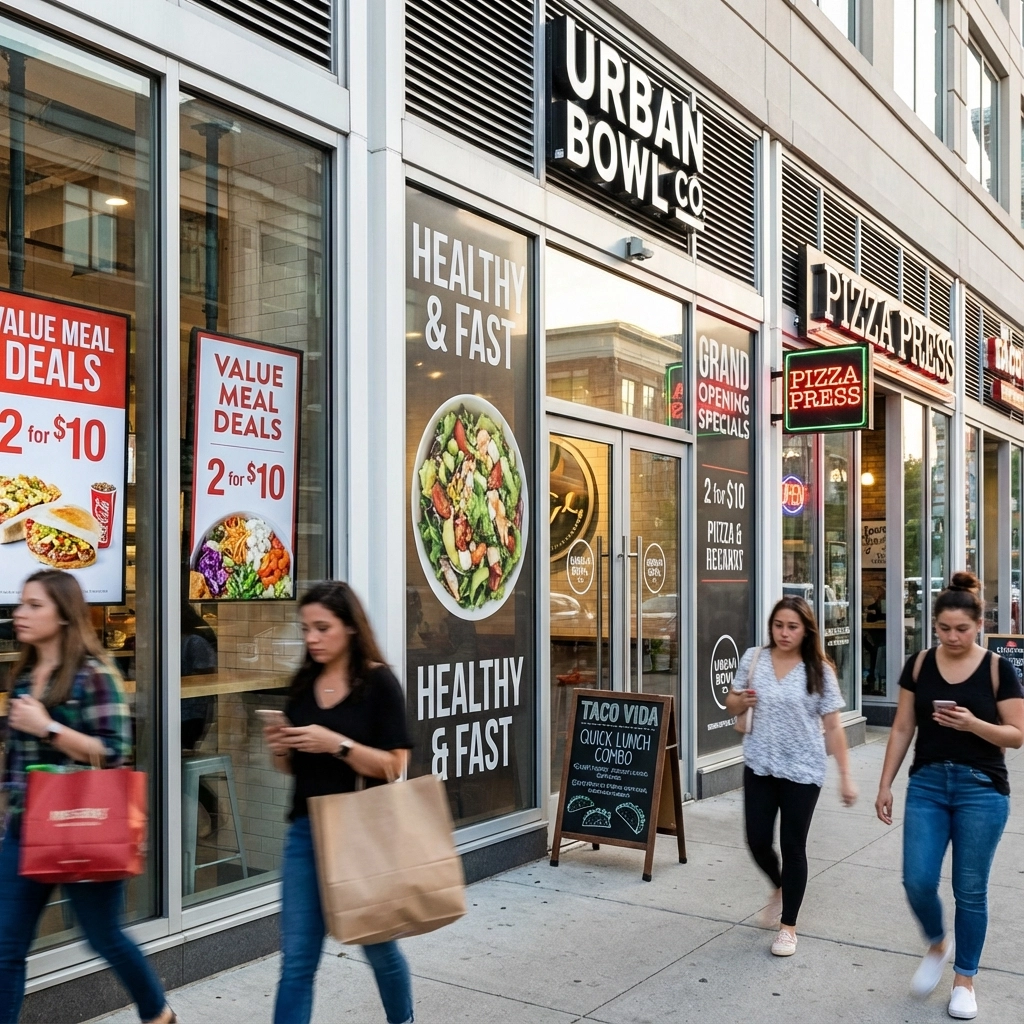
The casualties are mounting across the industry:
– Chipotle is experiencing its worst sales slump in years, despite being a market leader with strong brand recognition
– Cava reported sub-2% same-store sales growth after enjoying 20%-plus growth the previous year
– Sweetgreen lost 12% of its transactions in Q3, a devastating blow for a growth-focused brand
– Panera Bread remains deep in transformation mode, trying to reinvent its value proposition
– Wendy's announced plans to close 200-300 underperforming locations, a stark reminder that even established players aren't immune
This isn't just about chicken prices or promotional wars: it's about a fundamental shift in consumer behavior. Customers are simultaneously paying higher prices while demanding greater value, creating an impossible paradox for operators.
The winners in this environment are operators who understand that value doesn't just mean low prices. Value means:
– Consistent food quality that justifies premium pricing
– Exceptional service experiences that create emotional connections
– Operational efficiency that allows for competitive pricing without sacrificing margins
– Clear value propositions that help customers understand why they should choose you over countless alternatives
Key Takeaway: Competing solely on price is a race to the bottom: focus on delivering exceptional value through quality, service, and experience differentiation.
What This Means for Your Restaurant's Future
Large chains with massive purchasing power and hundreds of locations can weather these storms more easily. They absorb price increases, negotiate better terms with suppliers, and spread fixed costs across multiple revenue streams. But for independent restaurants and smaller chains, the situation demands immediate strategic action.

The old playbook of driving higher guest counts no longer works in this environment. Instead, profitability requires maximizing revenue from existing customers through:
– Technology investments in digital ordering and delivery platforms that capture additional revenue streams
– Operational efficiency systems that reduce waste and optimize labor scheduling
– Enhanced guest experience initiatives that justify premium pricing and encourage repeat visits
– Strategic menu engineering that guides customers toward higher-margin items without feeling manipulative
We're helping our clients navigate this environment by focusing on three critical areas:
- Cash Flow Management: Building financial cushions to absorb unexpected cost spikes without compromising operations
- Revenue Diversification: Developing multiple income streams beyond traditional dine-in service
- Operational Excellence: Streamlining processes to maintain quality while controlling costs
The restaurants that emerge stronger from this period will be those that embrace change rather than resist it. They'll invest in technology, focus on guest experience, and build operational resilience that can withstand future challenges.
Your Action Plan for Navigating the Storm
Success in this environment requires immediate action across multiple fronts. Here's what we recommend for operators facing these challenges:
Financial Strategy:
– Build cash reserves equivalent to 3-6 months of operating expenses
– Negotiate extended payment terms with key suppliers
– Explore alternative financing options beyond traditional bank loans
Operational Excellence:
– Implement robust inventory management systems to reduce waste
– Cross-train staff to improve scheduling flexibility
– Invest in kitchen technology that improves consistency and reduces labor costs
Revenue Optimization:
– Develop catering and off-premise services
– Create loyalty programs that increase visit frequency
– Engineer menus that balance customer value with profit margins
The December turmoil of 2025 isn't just a temporary setback: it's a fundamental shift that's reshaping the restaurant industry. The operators who recognize this and adapt accordingly will not only survive but thrive in the new landscape.
At Restaurant Finance Advisors, we're not just watching these changes from the sidelines: we're helping our clients navigate them successfully. Because in an industry where every penny counts, having the right financial strategy and operational expertise isn't just helpful: it's essential for survival.
SEO Keywords: restaurant consulting, restaurant investment, restaurant new business, restaurant growth, find money for restaurants, restaurant financing, restaurant profitability, restaurant margins, food cost management, restaurant operations consulting
Meta Description: Navigate December 2025's restaurant challenges with expert insights on tariffs, margin compression, and competitive pricing wars. Get actionable strategies to protect your bottom line and drive growth despite industry turmoil.
Outbound Links:


