

You ever notice how some restaurant menus are so big you need a building permit just to unfold them? I mean, seriously: I walked into a diner last week and the hostess handed me what I can only describe as a laminated encyclopedia. I had to clear three wine glasses and a bread basket just to lay this thing flat on the table. My date and I couldn't see each other. We were essentially having dinner in separate rooms, communicating through menu semaphore.
And don't even get me started on the weight. These things should come with a surgeon general's warning: "May cause wrist strain, table collapse, and marital discord."
The Great Menu Size Mystery
Having worked every position in a restaurant: from busser to brewer to director of marketing: I've seen the menu evolution from both sides of the kitchen door. Back when I was a server, I remember lugging around these massive leather-bound tomes like I was delivering ancient manuscripts to scholars. Guests would struggle to hold them upright. Children would disappear behind them. One time, a particularly hefty menu actually knocked over a water glass when a guest tried to flip to the dessert section.
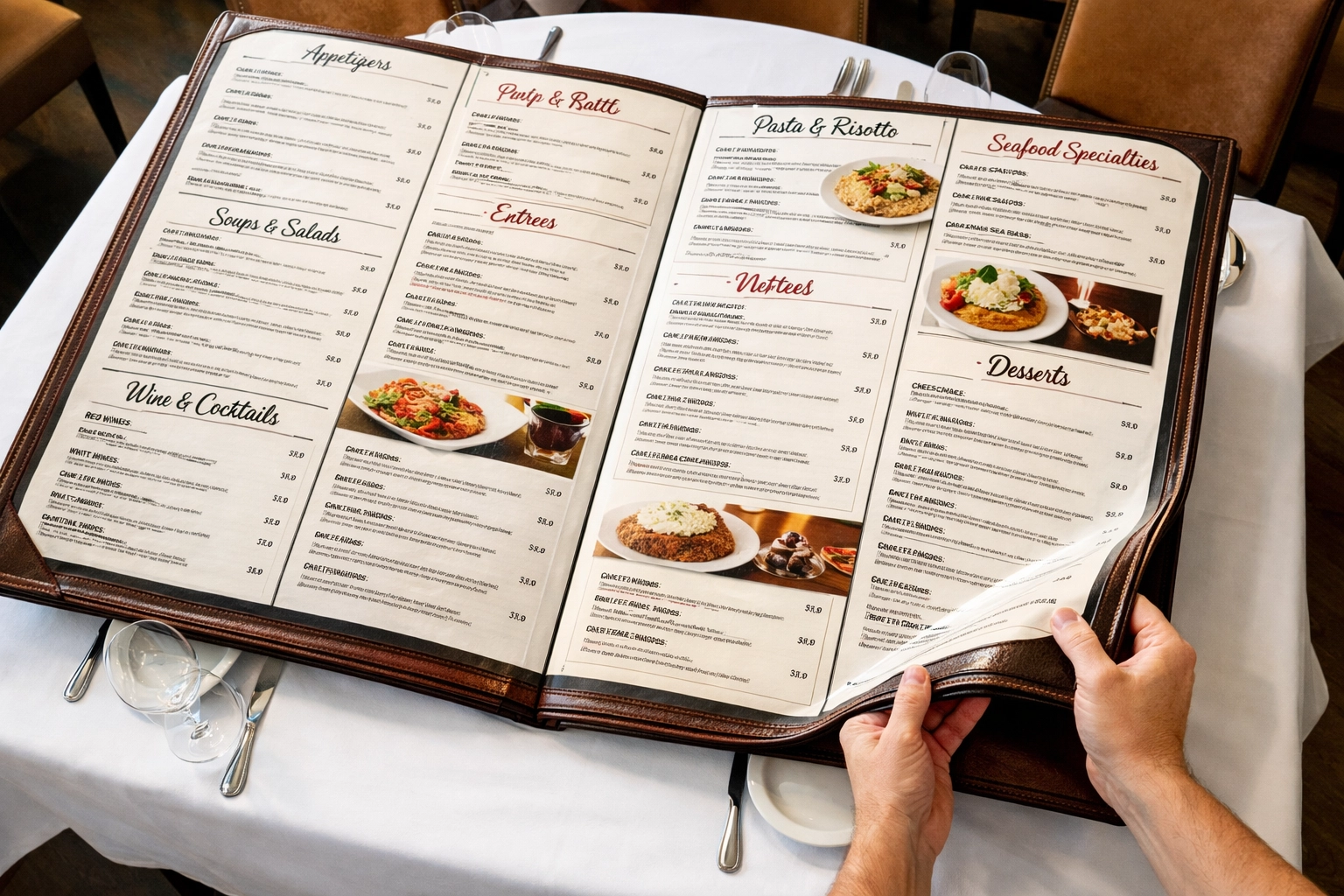
But here's the kicker: nobody reads the whole thing anyway.
According to research from industry consultants, diners rarely read past the first 4-5 pages of a 14-page menu. That's right: restaurants are spending a fortune printing, updating, and wrestling with these behemoths, and most of that real estate is getting completely ignored. It's like buying a mansion and only living in the bathroom.
The National Restaurant Association has noted that streamlined operations lead to better guest experiences. Turns out, that includes not requiring your customers to develop deltoid muscles just to order lunch.
The Historical Absurdity
Here's where it gets interesting. Oversized menus were originally a status symbol. Back in the 19th and early 20th centuries, fancy restaurants wanted to show off their abundance and variety. Having 300 items on your menu meant you were a big deal. You had resources. You had staff. You had walk-in coolers the size of Wyoming.
But here's what they didn't know back then: choice paralysis is real, and it's killing your bottom line.
Studies show that 60-70% of restaurant revenue comes from fewer than 18-24 items. Yet many restaurants are still listing 80, 100, even 150 options. That's not a menu: that's a novel with a plot nobody can follow. When I was managing a gastropub, we cut our menu from 62 items to 28, and guess what happened? Sales went up. Ticket times went down. Kitchen stress decreased. It was like we'd discovered fire, except fire had been there the whole time and we'd just been too busy laminating pages to notice.
Enter the QR Code: A New Circle of Hell
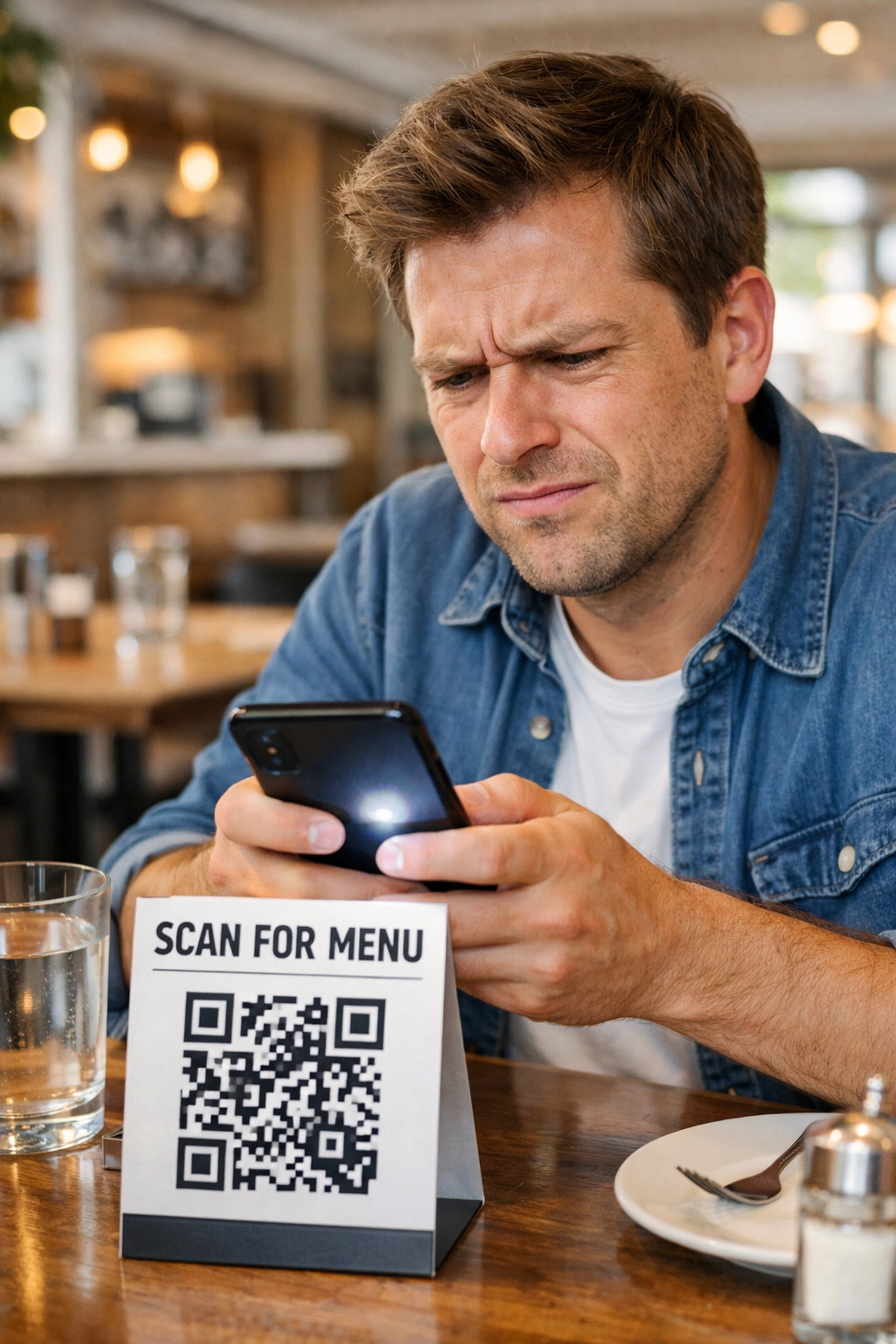
So the pandemic hits, and restaurants think, "Aha! We'll solve the giant menu problem with technology!" Enter the QR code menu: that little digital square that promises convenience and delivers frustration like a pro.
Picture this: You sit down, hungry, maybe you've had a long day. You spot the QR code on the table tent. You pull out your phone. You open the camera. You scan. Nothing happens. You scan again. Still nothing. You download a QR reader app. You scan again. Your phone asks if you want to connect to Wi-Fi. You realize you need the restaurant's Wi-Fi password to access their menu. You flag down your server to ask for the password. The server doesn't know the password. The manager has to come over. By this point, you're no longer hungry: you're just angry.
Or my personal favorite: the QR code works, but it opens a PDF that's completely unreadable on a phone screen. You're pinching and zooming, scrolling left and right, trying to figure out if that's a chicken sandwich or a piece of modern art. Meanwhile, your dinner companion is doing the same thing, and now you're both just two people staring at phones instead of having a conversation. Romantic.
As Food & Wine has pointed out, the best menu is one that actually enhances the dining experience, not complicates it. Revolutionary concept, I know.
The Ordering Experience Has Become Work
Remember when going out to eat was supposed to be relaxing? Now it feels like preparing for the SATs. You need to:
– Navigate the physical menu (requires upper body strength and spatial reasoning)
– Decode the descriptions (Is "deconstructed" fancy talk for "we didn't finish making it"?)
– Remember the specials your server rattled off at the speed of a tobacco auctioneer
– Cross-reference dietary restrictions (gluten-free, dairy-free, joy-free)
– Check prices without looking like you're checking prices
– Make a decision under time pressure while your server stands there with a forced smile
By the time you actually order, you're exhausted. You need a vacation from your vacation.
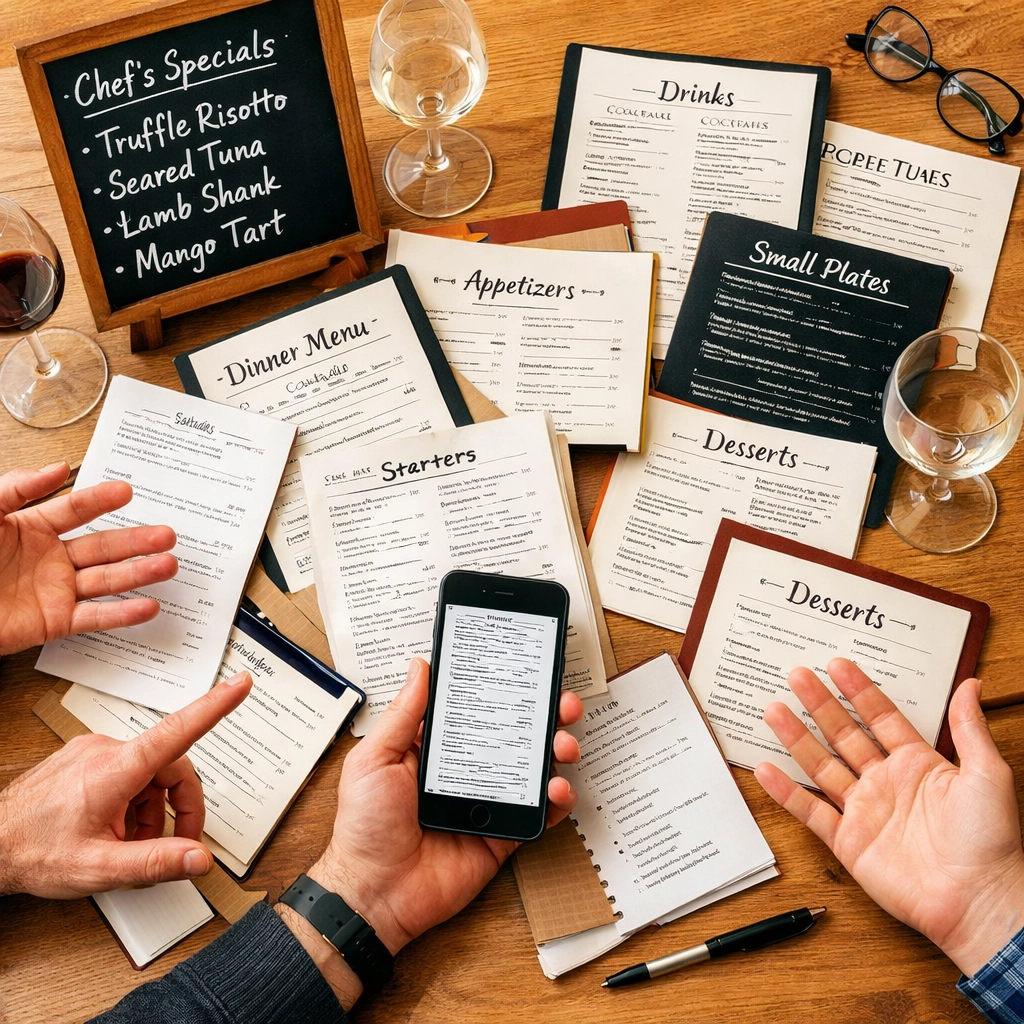
I remember working as a cook in a restaurant that had a 14-page menu. The prep work alone took three people an entire day. We had ingredients expiring before we could use them. The walk-in looked like a hoarder's apartment. And the waste? Don't get me started on the waste. We were throwing away food that had never even been ordered because someone in 2003 decided we needed seven different types of fish on the menu.
The Modern Menu Solution: Less Is Actually More
Here's what smart restaurant operators have figured out: smaller, focused menus are better for everyone.
– Better for customers – They can actually make a decision without needing a flowchart
– Better for kitchen staff – They can perfect a smaller number of dishes instead of being mediocre at everything
– Better for inventory – Fresh product turnover, less waste, lower food costs
– Better for training – New staff can learn the menu in a week, not a semester
– Better for profits – Higher quality dishes command premium prices and generate customer loyalty
Industry legend Danny Meyer built an empire on the principle of "enlightened hospitality," which includes not overwhelming guests with unnecessary choices. As detailed by Bon Appétit, the most successful restaurants focus on doing a few things exceptionally well rather than attempting culinary omniscience.
The pandemic actually did restaurants a favor here. Over 60% of restaurateurs who streamlined their menus during lockdowns kept them smaller permanently. IHOP went from 12 pages to 2 pages. Turns out, customers didn't miss the 47 varieties of pancakes they never ordered anyway.
What This Means for Restaurant Operations
This menu madness is really a symptom of a larger problem: operational complexity that doesn't serve the bottom line.
Too many restaurant owners and operators get caught up in adding more: more menu items, more promotions, more services: without stopping to ask if all that "more" is actually making them more money. Usually, it's not. Usually, it's just making them more stressed.
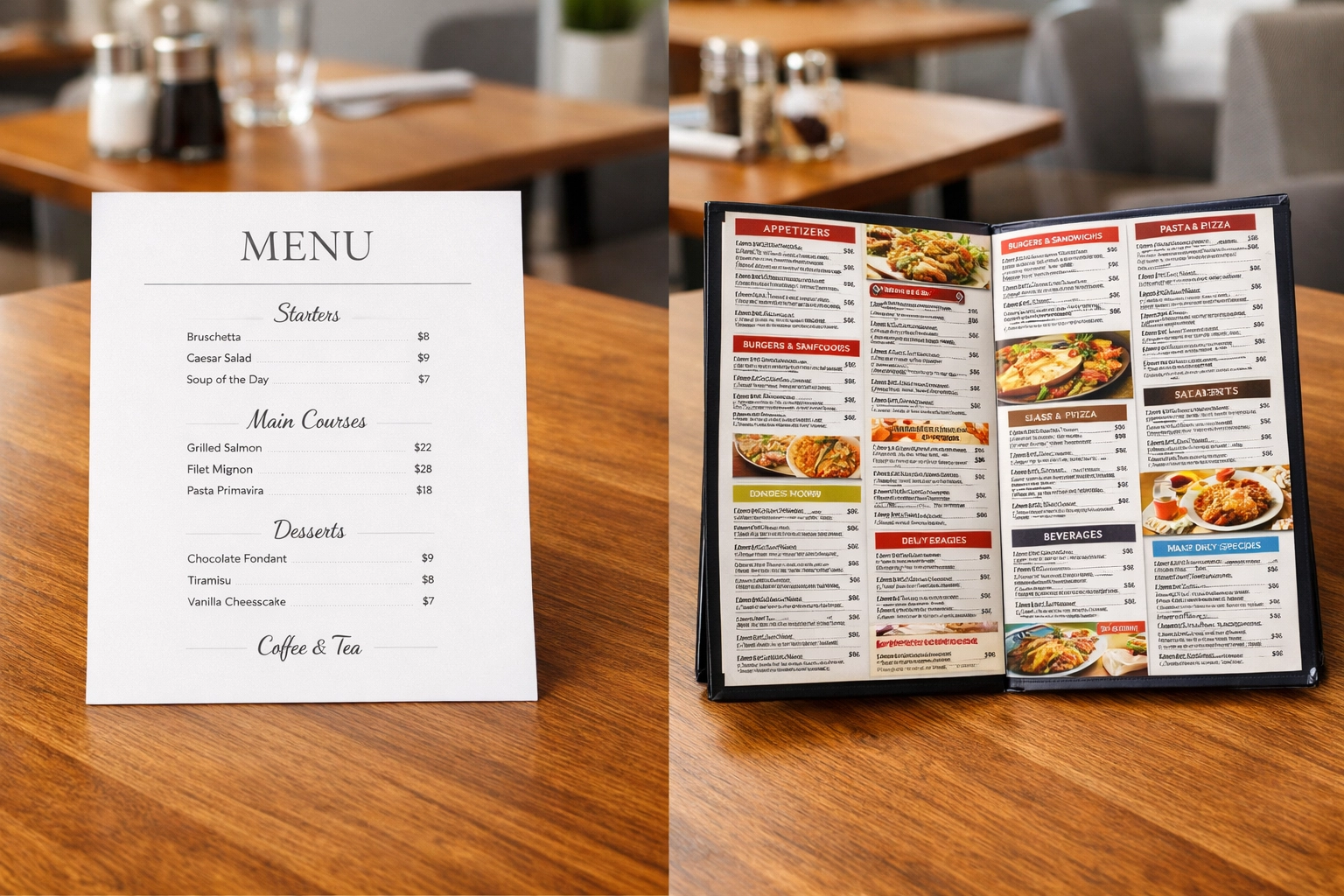
When I consult with restaurants now through my work, one of the first things we look at is operational simplification. Where are you bleeding money on complexity? Where could you streamline and actually improve the guest experience while cutting costs?
– Menu engineering – Identifying your profit drivers and eliminating the dead weight
– Inventory optimization – Reducing SKU counts without reducing perceived variety
– Process improvement – Making ordering, prep, and service smoother for staff and guests
– Technology that actually helps – Not QR codes that require a PhD to operate
The restaurant business is hard enough without making it harder on yourself. Every complicated system is a drain on your time, your team's energy, and your profit margins.
The Bottom Line
Maybe we've been thinking about this all wrong. The menu isn't just a list of food: it's a promise to your customer about what kind of experience they're going to have. A massive, unwieldy menu promises confusion and decision fatigue. A sleek, focused menu promises confidence and expertise.
What do you want to promise?
As someone who's worked every role from the dish pit to the director's office (connect with me here if you want to talk shop), I can tell you that the best restaurants aren't the ones with the most options: they're the ones that make excellent choices for you, so you can relax and enjoy your meal.
At Restaurant Finance Advisors, we help restaurant owners cut through the complexity and focus on what actually drives revenue. Whether it's menu optimization, operational consulting, or finding capital for growth, we're in the business of making your restaurant business simpler and more profitable.
Because life's too short to read a menu the size of a yacht manual.
Visit us at www.restaurantfinanceadvisors.com to learn more about maximizing your revenue and book a call today to start making more money.
Target Keywords: restaurant consulting, restaurant investment, restaurant new business, restaurant growth, find money your restaurants
Meta Description: A Sunday morning look at the lighter side of the restaurant industry: specifically, why can't we just get a menu that fits on the table?


