Restaurant Intelligence
Square Just Put a Conversational AI Employee in a $1,999 Box: The Kiosk Math Every QSR Operator Should Run First
By Robert W. Kuypers · Updated
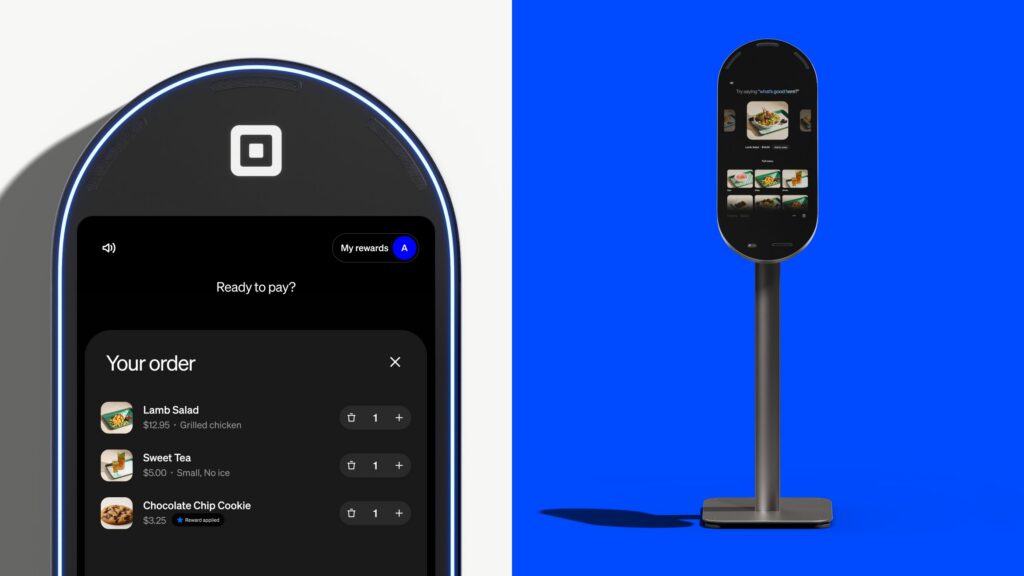
A kiosk earns its place in a QSR when it improves a measurable operating result, not simply because it has AI in the spec sheet.
Square unveiled its new Square Kiosk on October 14, 2026. The device combines a conversational AI voice layer, a 21.5-inch touchscreen and presence detection that welcomes guests as they approach. Its promise is straightforward: help guests order, surface relevant add-ons and give employees more time for other work.
For operators, the decision is less futuristic: Can the kiosk generate enough incremental gross profit or usable labor capacity to cover its full cost? We believe restaurant technology should change a number on the P&L. Here’s the practical math to run before buying.
What Square Kiosk does
Conversational ordering, payments and loyalty in one device
Square says its agentic voice layer understands the restaurant’s menu and responds in real time. Guests can ask questions, request substitutions or modifications, and get recommendations based on factors such as what is popular at that location, the time of day and what is already in their cart. The idea: make suggestions naturally, “the way an experienced staff member would.”

Other features include integrated payments for tap, dip and gift-card scanning, plus personalized check-in through a Neighborhoods profile or Square Loyalty account. Square says packaged-goods scanning is coming soon. The kiosk’s menu can also answer questions about allergy information and vegetarian options; operators should keep menu and allergen information accurate and ensure guests can reach a staff member when they need confirmation.
The launch also includes a multi-account solution for QSR franchises. Franchisors can manage menus, reporting and gift cards across locations while franchisees retain autonomy. That may matter to a growing brand trying to maintain consistency without making every local decision at headquarters.
Square’s broader 2026 restaurant push includes drive-thru capabilities and integrations intended to help sellers with discovery through Google Maps, ChatGPT, Claude and Apple Business. The kiosk is part of a wider effort to connect ordering, service and visibility, not a standalone screen.
Start with the real price
Separate the hardware headline from the ongoing commitment
The advertised device price is $1,999, including a counter stand; total price varies by stand type. Square Kiosk also requires a Square Plus plan at $49 per location per month or Square Premium at $149, plus a $99 monthly software fee per kiosk.
– Annual device software: $99 × 12 = $1,188 per kiosk.
– Hardware in year one: Add the $1,999 device price to the software cost, for $3,187 before the required plan, taxes or other operating costs.
– Required plan: If you’re not already paying for an eligible plan, add $588 per year for Plus or $1,788 per year for Premium.
– Hardware amortization: For planning only, if you spread the $1,999 device cost over three years, that is about $666 per year. With the $1,188 software fee, the kiosk’s annualized cost is about $1,854, before any required plan or other costs.
That three-year period is an example for budgeting, not a Square estimate of a kiosk’s useful life. Your actual investment analysis should use your expected replacement cycle and the location’s existing Square subscription. If the plan is already part of your tech stack budget, don’t count it twice. If it is new, include it.
Ask what one labor hour is worth
Model cash savings and labor capacity separately
A kiosk does not automatically eliminate a scheduled position. It may free an employee from taking orders, but the financial value depends on whether you can reduce paid hours or redeploy them to work that improves service and throughput.
– Use fully loaded labor cost: Include wages and applicable payroll costs in your hourly figure. At one genuinely saved hour per week, the $1,188 annual kiosk software fee alone requires about $22.85 in value per hour to break even ($1,188 ÷ 52). Hardware, the required plan and other costs raise the hurdle.
– Separate savings from redeployment: If the cashier moves to the expo line during a rush, that may improve order flow. It is valuable only if you measure the result, such as more orders handled, less queue pressure or fewer missed tasks. It is not the same as removing an hour of payroll.
– Count the work that remains: Guests may need help with a complicated modification, an accessibility need or an order exception. Plan for the employee who supports the kiosk; don’t schedule as though the machine has taken a shift and gone home.
We’ve worked every position in a restaurant: from busser and server to cook, manager, brewer and Director of Marketing. We know that when the line gets long, “labor savings” can quickly become “the same team doing three more jobs.” The right test is what changes on the schedule and in service, not the staffing promise in a product pitch.

Test whether upsells can cover the gap
Measure added gross profit, not just larger checks
Square says its AI can recommend items based on location-specific popularity, time of day and items already in the cart. That could make an add-on feel more relevant than a generic “Would you like fries with that?”- a question that has powered many a drive-thru, but not every guest’s imagination.
The operator’s calculation should use incremental gross profit, not the full selling price of an add-on:
Kiosk orders × change in add-on attachment rate × gross profit per add-on
For example, frame the test as a question: if one additional percentage point of kiosk orders adds an item, how many extra items would that mean at your actual kiosk volume, and what is the gross profit on each after food cost? Then compare that contribution with the kiosk’s annualized cost. Don’t treat revenue as profit, and don’t assume a lift before measuring it.
Customer preferences support testing, not guaranteed results. EMARKETER reports that 67% of Gen Zers and 58% of millennials prefer ordering from self-service kiosks, citing a Revenue Management Solutions survey. Separately, Modern Restaurant Management reports that 45% of Gen Zers said they visited QSRs more frequently during Q2 2026, compared with 30% of millennials, 17% of Gen X and 7% of boomers. Those figures describe reported preferences and visits; they don’t predict the response at your location.
Run a disciplined pilot
Use store-level data to separate promise from performance
Square’s launch includes testimonials from operators who say they were initially skeptical or plan to expand after testing. Those are useful signals, but they are vendor-reported experiences, not a forecast for your restaurant. Validate performance in your own store before scaling.
– Set a baseline: Record labor hours in order-taking roles, average ticket, add-on attachment, order volume and relevant service measures during comparable shifts.
– Choose a clear test: Start with one device in a location and daypart where ordering pressure is real. Keep other variables as consistent as practical.
– Track exceptions: Note how often employees assist, correct an order or step in to answer a menu question. A technology that speeds up some orders but creates a new queue for help needs a fuller review.
– Review the P&L impact: Compare the change in labor cost or redeployed capacity and incremental gross profit with software, hardware amortization and any new subscription cost.
NielsenIQ’s Agentic Commerce Tracker reports that 51% of consumers now move to AI tools to facilitate shopping. That points to a wider shift toward AI-assisted discovery and decisions; it does not establish how a particular restaurant’s guests will use a voice-enabled kiosk. The store-level pilot is still essential.
Make the kiosk prove its place in your tech stack
Buy the outcome, not the novelty
Square Kiosk brings conversational AI, touchscreen ordering, payments and loyalty into one QSR device. For operators, the decision should come down to a few numbers: what the full cost is, whether paid labor hours can truly be saved or more productively redeployed, and whether measured incremental gross profit closes the gap.
That’s the standard we bring to restaurant operations optimization: technology should support the guest experience and improve restaurant margins with results the operator can see. RobertWKuypers, William Kuypers and Robert Kuypers believe restaurant growth is strongest when profit optimization is grounded in practical operating data, not hype. If you’re weighing a kiosk against other investments in your restaurant tech stack, our restaurant consulting team can help you evaluate the opportunity alongside your broader growth priorities.
Visit us to learn more about maximizing your revenue, book a call to start making more money.
Sources
– Square: Introducing the New Square Kiosk
– QSR Web: Square launches AI-powered kiosk for QSRs
– EMARKETER: Square brings conversational AI to restaurant kiosks as Gen Z favors self-service
– Modern Restaurant Management: How the income divide is shaping restaurant traffic and guest spend
– NielsenIQ Agentic Commerce Tracker announcement
See what your restaurant could gain: run the free Restaurant Savings Calculator for an estimate of savings, new revenue and retention value in one place.
Is cash getting tight?
Run your numbers in the free RFA Opportunity Analysis. Two minutes, no email required.
Explore Build More → Find My Hidden Money →