

The restaurant financing game has fundamentally changed. While most operators are still fighting over the same old bank loans and equity deals that drain cash flow and dilute ownership, a smarter class of investors and operators have quietly pivoted to something completely different: capital that shows up as buying power, not debt.
I've watched this shift happen in real-time over the past 18 months, and it's not subtle anymore. The operators winning in 2026 aren't the ones with the best bank relationships or the most persuasive pitch decks for venture capital. They're the ones who figured out how to find money their restaurants already have access to: without signing away equity or strapping themselves to interest payments that kill margins before the doors even open.
Let's talk about why this matters, and more importantly, how you actually access this kind of capital.
The Old Playbook Is Officially Broken
Here's what traditional restaurant investment looked like for decades: You needed growth capital, so you either borrowed money (and paid 9% to 25% interest depending on your credit), or you gave up a chunk of your business to investors who wanted board seats and exit timelines that didn't align with yours.

Both options suck for different reasons:
– Bank loans require perfect timing and perfect credit. Most traditional lenders want 650+ credit scores, two years of financials, and collateral. If you're a newer concept or you're still recovering from 2020-2022, you're basically locked out. Even SBA loans, which offer competitive 9.75% rates according to recent industry reports, require 24 months in business and extensive documentation.
– Equity investors want control and exits. Private equity and VC money sounds great until you realize you're now answering to someone else's growth timeline. They want 3x returns in 5 years, which means aggressive expansion that often compromises the fundamentals that made your concept work in the first place.
– Interest rates are still brutal. Alternative lenders will fund you fast (24-72 hours), but they're charging 14% to 99% APR for short-term capital. Do that math on $250K for new equipment or a buildout, and you'll see why so many concepts stumble before they scale.
I remember opening my third location back in 2011 and sitting across from a bank VP who wanted three years of tax returns, a personal guarantee, a lien on my house, and a 12% rate "because restaurants are risky." I walked out thinking, "There has to be a better way to fund growth without mortgaging everything."
Turns out, there is.
Smart Funding: Capital Without Debt or Dilution
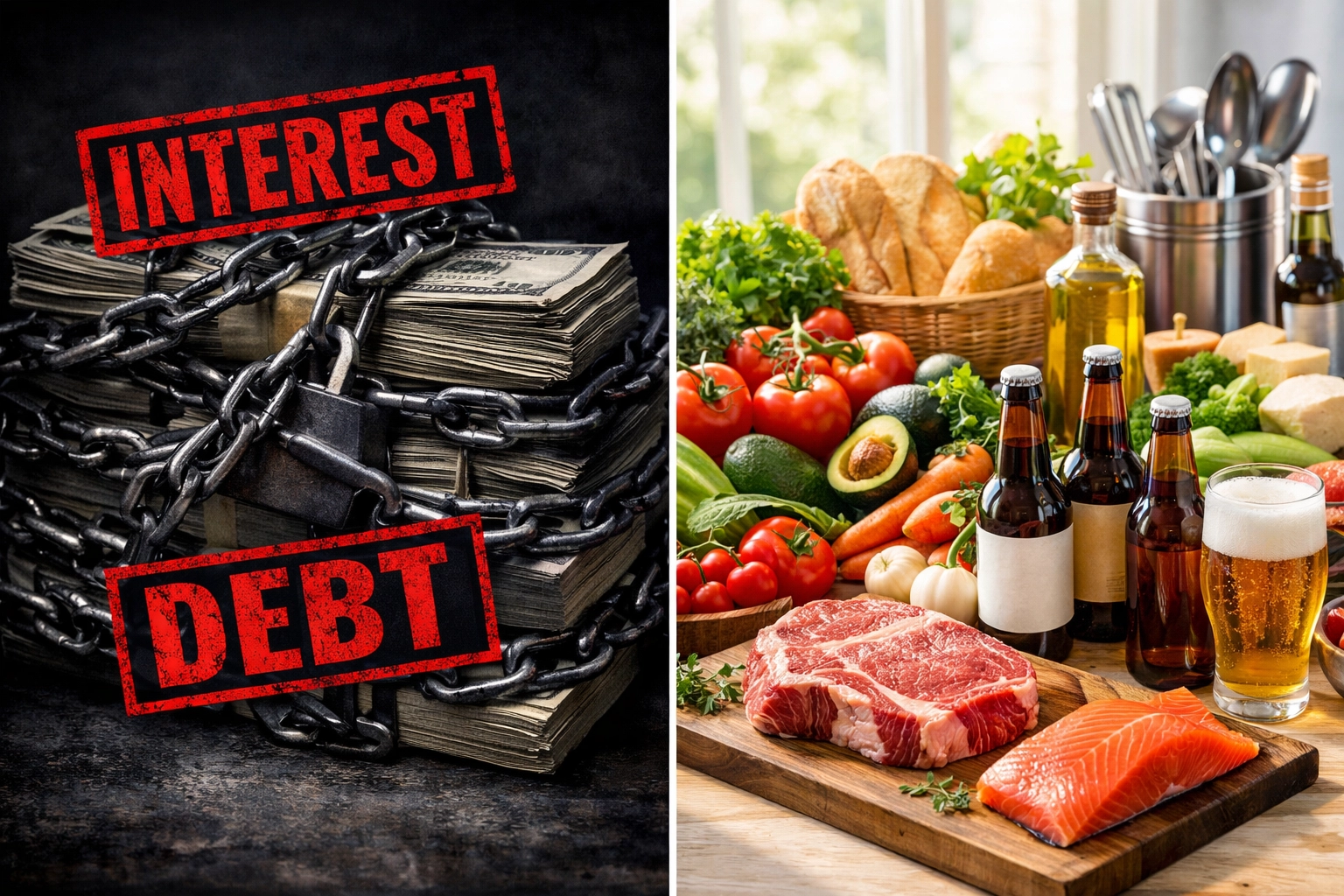
The smartest operators in 2026 are accessing growth capital through food and beverage credits instead of loans. Here's how this works and why it's quietly becoming the dominant financing model for restaurants looking to scale without losing control.
Instead of borrowing cash and paying it back with interest, you're getting buying power for the things you're already purchasing: protein, produce, beverages, packaging, smallwares. The capital shows up as credit with your existing suppliers or preferred vendor networks, which means:
– Zero interest payments. You're not servicing debt every month. Your cash flow stays intact.
– Zero equity dilution. You keep 100% ownership and control. No board seats, no exit pressure, no investor phone calls.
– Immediate operational impact. The capital goes directly into inventory and supplies that drive revenue, not into loan repayments that drain your P&L.
This model works particularly well for restaurant new business ventures and expansion projects because it addresses the two biggest capital challenges: high upfront costs and uncertain cash flow in the first 12-18 months.
When Chili's parent company Brinker reported a 31% earnings jump in Q4 2025, CEO Kevin Hochman credited simplification and operational efficiency: exactly the kind of focus that Smart Funding enables. You're not bleeding cash on debt service, so you can invest in what actually moves the needle: better product, faster service, cleaner operations.
Why This Model Is Winning Right Now
The shift toward food credit as a financing mechanism isn't random. It's a direct response to three major trends reshaping restaurant growth in 2026:
1. Prime Cost Pressure Is Relentless
Labor and food costs are consuming 65-70% of revenue for most concepts right now. Adding debt service on top of that math is suicide. Every dollar you pay in interest is a dollar that can't go toward wages, product quality, or marketing. Smart operators are realizing that capital that doesn't require cash repayment is the only capital that makes sense when margins are this tight.
2. Speed Matters More Than Ever
Traditional bank loans take 30-90 days to close if you're lucky. That's an eternity when you're trying to lock in a lease, secure equipment, or launch a new location before competition moves in. Alternative lenders are faster (24-72 hours), but they're charging predatory rates. Food credit financing can often be structured in two weeks or less, giving you the speed of alternative financing without the crushing interest.
3. Control Is Non-Negotiable
Private equity money sounds appealing until you're sitting in a boardroom explaining why you don't want to cut your signature dish to save $0.14 per plate. The best concepts in this industry are deeply personal: they reflect a specific vision, a specific community, a specific culinary point of view. Giving up control to hit someone else's growth targets kills that magic. Smart Funding lets you scale on your terms, at your pace, without external pressure to compromise.
How to Actually Get Smart Funding (The 2-Week Blueprint)
Here's the part most articles skip: the actual process. How do you go from "this sounds interesting" to "I have capital to deploy"?
We've structured our approach at Restaurant Finance Advisors around speed and results, not endless consultations. Here's what the process actually looks like:
Week 1: Financial Assessment and Opportunity Identification
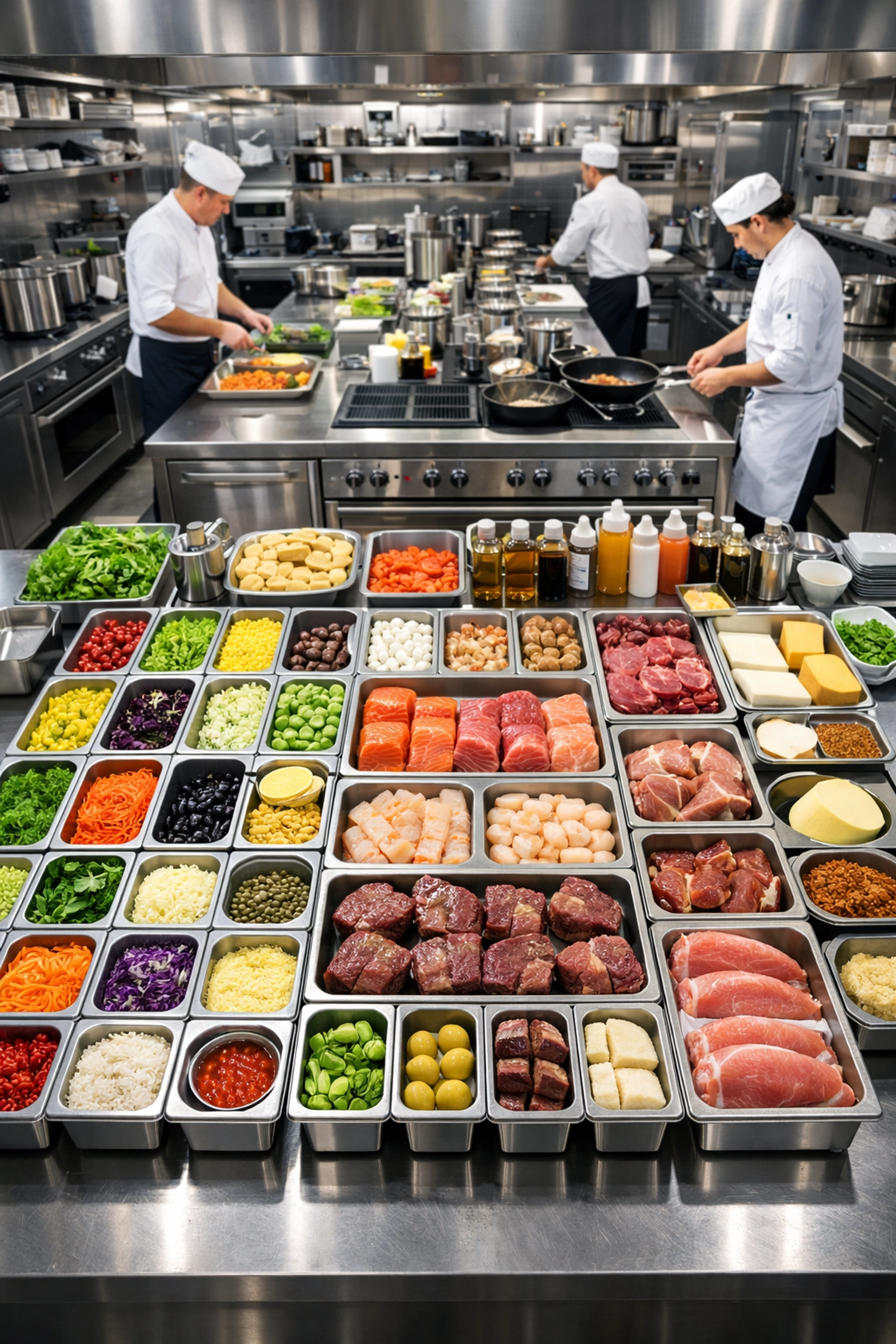
We dig into your current vendor relationships, supply chain, and purchasing patterns. Most operators are shocked to discover they're already sitting on $50K to $500K in untapped buying power through existing supplier networks: they just don't know how to access it.
This isn't theoretical consulting work. We're looking at your invoices, your contracts, your volume commitments. We're identifying exactly where capital can be deployed most effectively: protein, beverages, disposables, equipment, whatever drives the highest ROI for your specific concept.
– No upfront fees. We don't get paid unless we find you money. Period.
– 50+ years of combined experience. Our team has held every position from line cook to CFO. We've been in your walk-in at 2 AM doing inventory. We know where the inefficiencies hide.
Week 2: Capital Deployment and Vendor Coordination
Once we've identified the opportunities, we coordinate directly with your supplier network to structure the credit. This isn't a loan application with 47 forms and a credit committee. It's a direct negotiation leveraging volume, relationships, and payment terms to unlock capital that's already available: you just needed someone who knows how to access it.
By the end of week two, you have buying power deployed. No interest accruing, no equity diluted, no personal guarantees hanging over your head.

Real Talk: Who This Works For (And Who It Doesn't)
Smart Funding isn't for everyone. If you're pre-revenue or you don't have established vendor relationships, traditional SBA loans or equity might still be your best bet despite the downsides.
But if you're an operating restaurant looking to:
– Expand to new locations without taking on high-interest debt
– Upgrade equipment without draining working capital
– Increase inventory capacity for catering or wholesale growth
– Launch a new concept with proven restaurant experience behind you
…then food credit financing is probably the most efficient capital you can access in 2026.
This model is particularly powerful for restaurant consulting engagements where operators need capital to implement operational improvements. It's one thing to identify that you need better POS integration or walk-in reorganization: it's another to actually fund those changes without borrowing.
The Bottom Line: Risk-Free Growth Actually Exists
I spent 15 years thinking that restaurant growth always required risk: debt risk, equity risk, cash flow risk. But watching operators implement Smart Funding over the past two years has completely changed my perspective.
When your growth capital shows up as buying power instead of debt, you're not taking on risk: you're unlocking efficiency. You're using the same supply chain you'd use anyway, but now it's funded in a way that preserves cash and control.
That's not just smart financing. That's the future of restaurant investment for operators who want to scale without sacrificing what made their concept special in the first place.
If you're serious about growth in 2026 and you're tired of choosing between bad bank loans and worse equity terms, let's talk. We'll spend two weeks finding money in your existing operations, and if we don't deliver results, you don't pay us a dime.
That's not a sales pitch. That's just how we work.
Visit Restaurant Finance Advisors to get started.
Meta Description:
Discover why Smart Funding through food credits is replacing traditional bank loans for restaurant growth in 2026. Learn how to access capital without debt or equity dilution in just 2 weeks.
Target Keywords:
restaurant consulting, restaurant investment, restaurant new business, restaurant growth, find money your restaurants, food credit financing, restaurant capital, alternative restaurant financing, restaurant expansion funding, smart funding for restaurants
Outbound Links:


