
Look, I've been on every side of the kitchen, from scraping plates as a busser to brewing beer to directing marketing campaigns. And here's what nobody tells you about culinary dreams: passion gets you through the dinner rush, but financial discipline gets you through the next decade.
Today's spotlight shines on Chef Maria Castellano (name changed for privacy), who transformed a 42-seat neighborhood bistro into a five-location regional powerhouse generating $8.7 million annually. Her journey isn't just inspiring, it's a masterclass in balancing creative excellence with cold, hard numbers. And trust me, having worked every position from line cook to manager, I can tell you the chefs who make it aren't always the ones with the best mise en place, they're the ones who understand their prime costs.
The Creative Vision That Started Everything
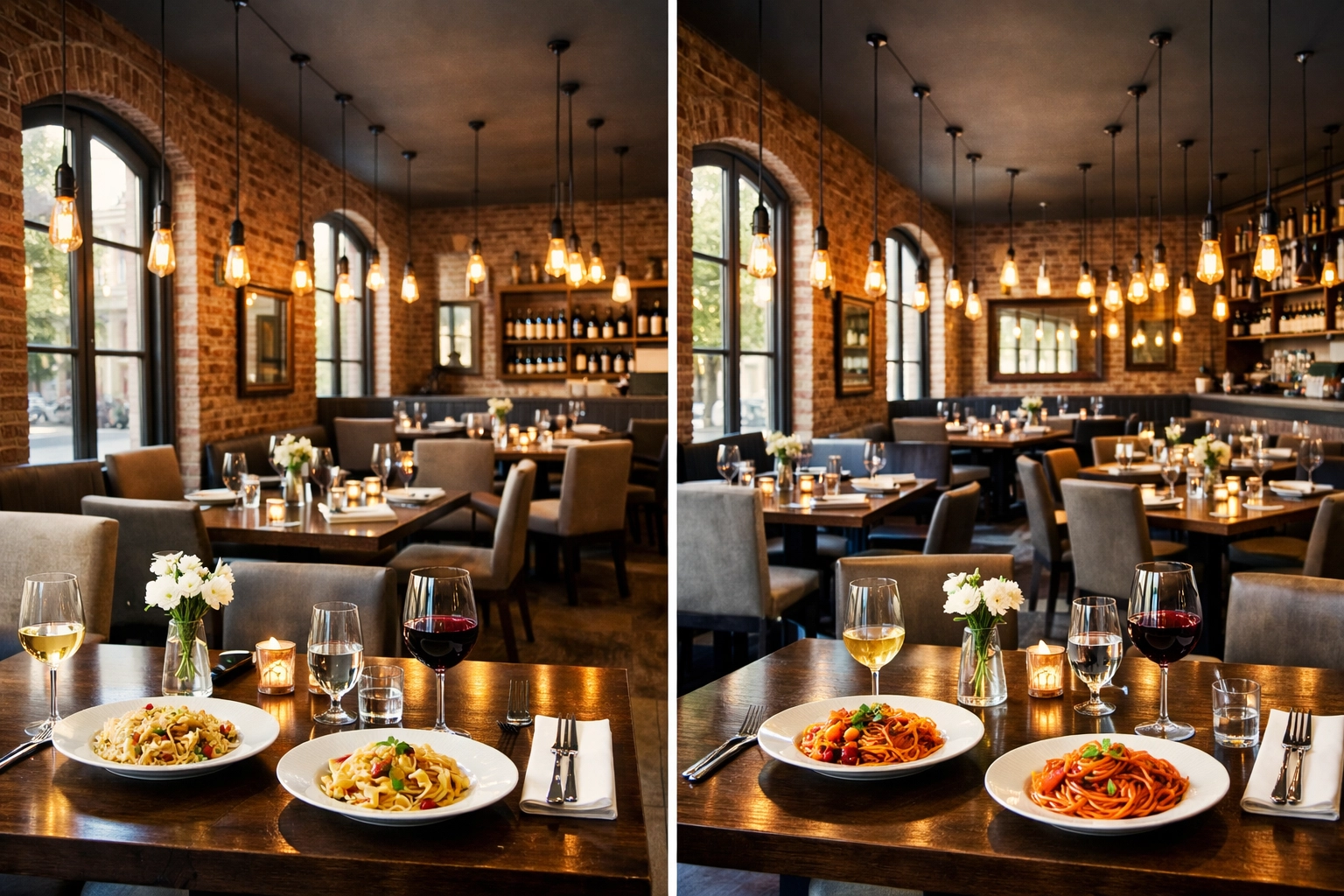
Maria's culinary journey began like many others, working doubles at acclaimed restaurants, developing her palate, and dreaming of her own concept. After years perfecting modern Italian technique under renowned chefs, she opened Stellina in 2018 with $180,000 scraped together from personal savings, family loans, and a small SBA loan.
The initial concept was pure passion: house-made pasta, locally-sourced ingredients, and a seasonal menu that changed weekly. Diners loved it. Food critics praised it. But six months in, Maria was hemorrhaging cash.

The problem? Her food cost ran 38%, labor hit 42%, and she was personally working 90-hour weeks just to keep the doors open. Sound familiar? That's because most restaurant concepts start as love letters to food rather than sustainable business models.
The Financial Wake-Up Call
Here's where Maria's story gets interesting, and where most passionate chefs either evolve or exit the industry.
After her accountant showed her a projected burn rate that would close her doors within nine months, Maria made a decision that saved her business: she brought in restaurant consulting expertise to audit every aspect of her operation.
The findings were brutal but necessary:
– Menu engineering disasters – Her signature handmade ravioli took 45 minutes of prep time per order and sold for $22, generating essentially zero profit margin
– Purchasing chaos – She was placing orders with 17 different vendors, missing volume discounts and paying premium delivery fees
– Labor mismanagement – No proper scheduling system meant she was either overstaffed on Mondays or drowning on Saturdays
– Zero financial visibility – Maria couldn't tell you her daily break-even or which menu items actually made money versus which ones just made Instagram look good
Listen, I've been the manager trying to schedule servers around their drama and availability constraints. I get it, running a restaurant feels like herding cats while the building is on fire. But Maria's willingness to face these uncomfortable truths separated her from the 60% of restaurants that fail within three years.
The Transformation: Marrying Art with Analytics
The turnaround didn't mean abandoning her culinary vision, it meant making that vision financially sustainable. With professional restaurant consulting and strategic capital deployment, Maria implemented changes that would become the foundation of her scalable concept:
Menu Optimization and Strategic Pricing
She cut her menu from 34 items to 18, focusing on dishes with overlapping ingredients and efficient prep-to-plate workflows. That beloved ravioli? Now it's a weekend special at $32, creating scarcity-driven demand while protecting margins. Her food cost dropped to 28% within three months.
Systems Over Hustle
Maria invested $12,000 in restaurant management software integrating POS, inventory, scheduling, and accounting. Suddenly she could see real-time metrics, not just gut feelings. Her labor cost dropped to 34% through data-driven scheduling, and she reclaimed 30 hours per week of her life.
Vendor Consolidation and Purchasing Power
By narrowing to four strategic vendors and leveraging volume commitments, she saved $2,400 monthly on the same inventory. These aren't sexy changes, nobody writes Eater articles about vendor negotiations, but they're how restaurants actually make money.

Financial Discipline and Capital Strategy
This is where restaurant investment and growth solutions entered the picture. With a now-profitable single location, Maria secured $450,000 in growth capital to open her second location. But here's the critical part: she didn't expand because she could, she expanded because the numbers told her she should.
Scaling the Concept: From One Location to Five
The transition from a single successful restaurant to a scalable concept requires a fundamental mindset shift. Maria wasn't just opening new locations, she was building a replicable system.
The Second Location: Testing the Model
Location two opened 18 months after implementing her financial reforms. But unlike the original Stellina, this one launched with:
– Standardized recipes and portion controls – Every dish replicated exactly, regardless of which chef was cooking
– Pre-negotiated vendor relationships – Volume discounts kicked in immediately across both locations
– Management structure and training protocols – Maria couldn't be in two kitchens simultaneously, so systems had to replace her presence
– Financial benchmarks and KPIs – Each location had daily/weekly/monthly targets with accountability built in
Location two reached profitability in month four (compared to month 19 for the original). That's the power of financial discipline meeting operational excellence.
The Role of Capital and Growth Solutions
Here's something I learned during my years in restaurant operations: cash flow kills more restaurants than bad food. Maria's expansion required strategic capital deployment at every stage:
Initial Restaurant Investment ($450,000 for location two):
– $180,000 buildout and equipment
– $120,000 working capital and inventory
– $90,000 pre-opening expenses (permits, staff training, marketing)
– $60,000 operating reserve (crucial safety net)
Subsequent Growth Financing:
For locations three through five, Maria secured a combination of traditional restaurant financing and private investment, totaling $1.8 million. But she maintained strict criteria: each location had to show a clear path to 20%+ ROI within 24 months.
This disciplined approach to restaurant new business development meant turning down "perfect" locations that didn't meet financial thresholds. It meant sometimes saying no to passion projects that looked amazing but wouldn't pencil out. And it's precisely why her concept thrived while competitors struggled.
Key Lessons for Chef-Entrepreneurs
Maria's journey from overwhelmed single-unit operator to confident multi-location restaurateur offers actionable insights for any chef-entrepreneur:
Financial literacy isn't optional – Understanding P&L statements, prime costs, and cash flow projections is as fundamental as knife skills. If you can't read your numbers, you can't improve them.
Systems enable creativity – Paradoxically, strict operational systems freed Maria to be more creative, not less. When she wasn't drowning in administrative chaos, she could focus on culinary innovation.
Capital accelerates, but discipline sustains – Restaurant growth capital opened doors, but financial discipline kept those doors open. Access to money without operational excellence just means you fail bigger and faster.
Consulting isn't admitting defeat – Bringing in restaurant consulting expertise was Maria's smartest investment. Outside perspective identified blind spots she couldn't see from inside the kitchen.
Scalability requires letting go – The dishes Maria personally crafted had to become recipes anyone could execute. That's hard for chefs, but essential for growth.
Finding Money for Your Restaurant Vision
Whether you're launching your first concept or scaling from one to many, accessing capital remains a critical challenge. The restaurant investment landscape includes:
– SBA loans – Traditional but time-consuming, typically 10-12 weeks
– Equipment financing – Specific to kitchen equipment purchases
– Working capital lines – Short-term cash flow management
– Private investment – Strategic partners who bring more than just money
– Alternative lending – Faster but often more expensive options
The key is matching the right capital source to your specific growth stage and needs. Maria's first location used an SBA loan because she had time and needed favorable terms. Her expansion locations used a mix of private investment and alternative lending because speed and strategic partnerships mattered more than lowest rates.
Having worked every position in restaurants, yes, including that glorious stint brewing beer: I can tell you the industry has never been more challenging or more full of opportunity. The chefs who thrive understand that financial excellence isn't the enemy of culinary passion: it's the foundation that makes passion sustainable.
Maria's story proves you don't have to choose between creative vision and profitable reality. You just need the right systems, the right capital, and the willingness to treat your restaurant like the serious business it is.
Ready to turn your culinary passion into profitable reality? Visit us at www.restaurantfinanceadvisors.com to learn more about maximizing your revenue and book a call today to start making more money. Whether you're launching your first concept or scaling to multiple locations, we provide the restaurant consulting and capital solutions that bridge the gap between creative excellence and financial success.
Connect with our CEO Robert Ancill on LinkedIn to discuss your restaurant growth strategy.
External Resources:
Target Keywords: restaurant consulting, restaurant investment, restaurant new business, restaurant growth, find money your restaurants
Meta Description: This Monday's spotlight focuses on how top chefs bridge the gap between creative excellence and financial profitability.


