

The back-of-house is no longer the forgotten stepchild of restaurant operations. Modern technology has turned what used to be a chaotic maze of grease traps, temperamental walk-ins, and hand-scribbled prep lists into a profit-generating machine that rivals the efficiency of your best line cook on a Saturday night.
We've worked every position from busser to director of marketing, and we can tell you with absolute certainty: the back-of-house has always been where money is made or lost. The difference now? Technology finally caught up to what operators have known for decades.
The Real Cost of Flying Blind
Equipment failures aren't just inconvenient: they're profit killers. Nearly half of restaurant leaders report significant downtime from equipment breakdowns, and here's the kicker: 24% experience revenue losses between $1,001-$5,000 per hour during these disruptions. That's not a typo. One busted fryer can cost you more than your rent payment before lunch service even ends.
Anyone who's ever stood in a walk-in at 5 a.m., frantically calculating whether you have enough protein to make it through dinner service, knows that manual inventory systems are about as reliable as that prep cook who always calls out on Sundays. But beyond the frustration, this operational blindness creates massive financial leakage through over-ordering, spoilage, and emergency purchases at premium prices.
The labor shortage compounds everything. When you're running short-staffed (and let's be honest, who isn't?), every manual task becomes a bottleneck. Every minute spent counting stock or troubleshooting equipment is a minute not spent on revenue-generating activities.
The Technology Redefining Kitchen Operations
Modern back-of-house technology isn't about replacing humans: it's about freeing them from the soul-crushing repetitive tasks that make talented cooks want to leave the industry entirely.
Automation That Actually Works
Remember when "kitchen automation" meant a fancy mixer? Those days are long gone:
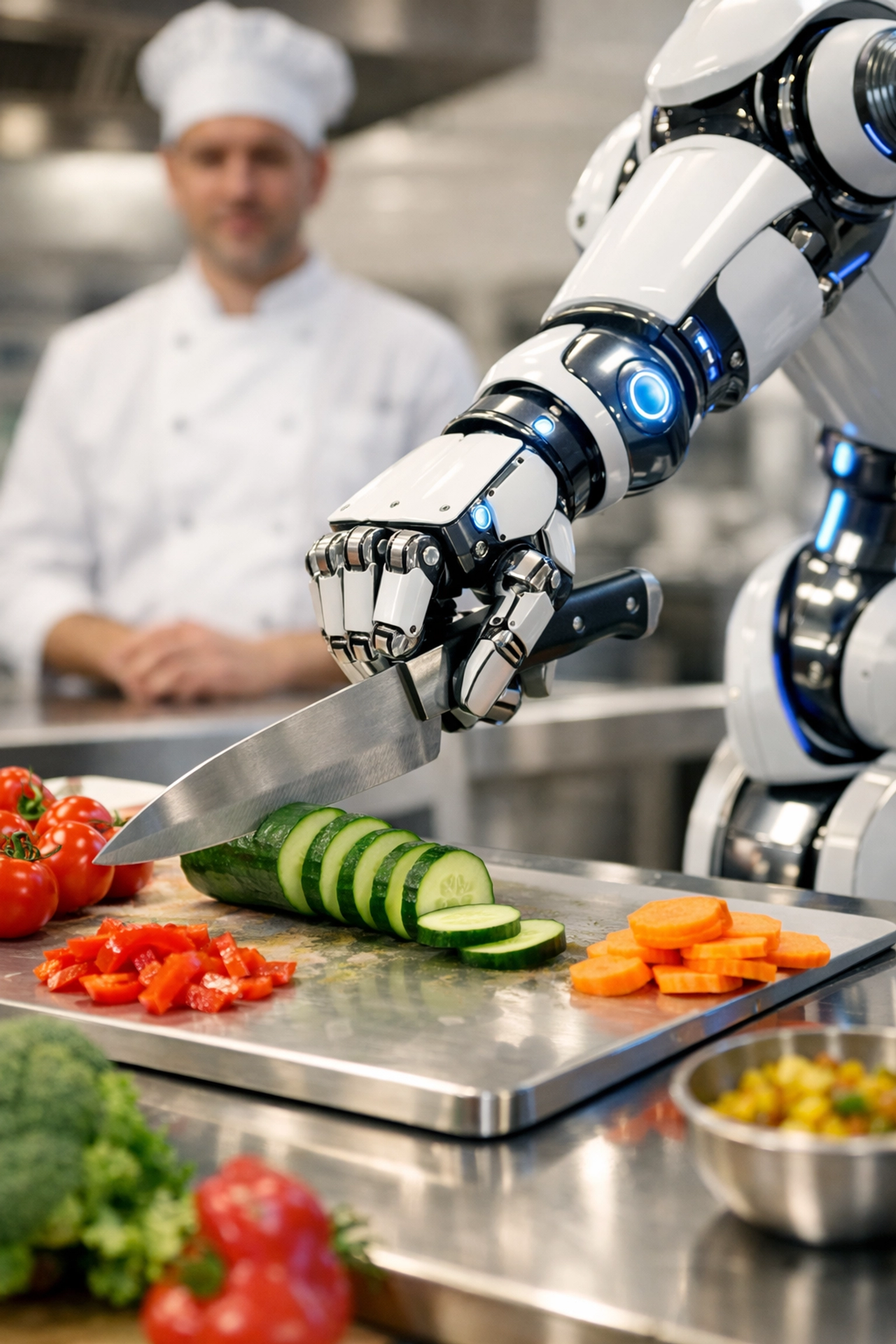
– Precision prep equipment handles the monotonous work of slicing, dicing, and measuring with accuracy that would make your most meticulous sous chef jealous. No more variance in portion sizes. No more prep cooks developing carpal tunnel syndrome by age 25.
– Robotic cooking systems manage everything from burger stations to salad assembly, using temperature sensors and timers to deliver consistency that's impossible to achieve with rotating shifts and varying skill levels. Roughly one in four limited-service operators are investing in kitchen automation this year, and they're not doing it for fun: they're doing it because the ROI is undeniable.
– Commercial cleaning robots handle the end-of-shift scrubbing that nobody wants to do. We've closed restaurants at 2 a.m. enough times to know that exhausted line cooks doing final cleaning is a recipe for shortcuts and health code violations.
IoT: The Nervous System of Modern Kitchens
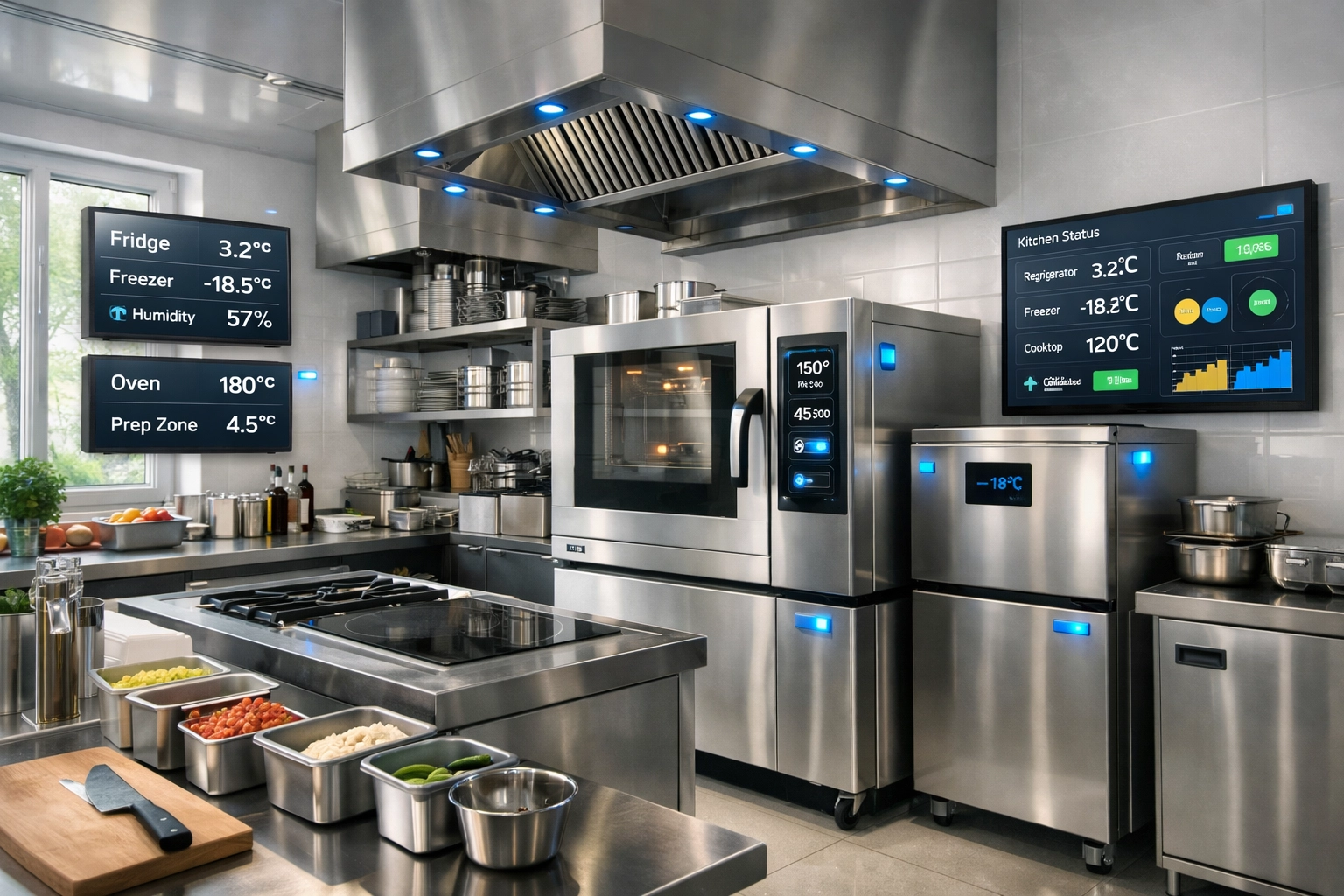
Real-time visibility transforms reactive management into predictive strategy. A staggering 63% of operators believe real-time monitoring of energy and equipment usage would reduce expenses and support sustainability goals: and they're absolutely right.
IoT systems create a digital nervous system throughout your kitchen:
– Temperature monitoring prevents the nightmare scenario of discovering your walk-in failed overnight and you're staring at $5,000 of spoiled inventory. These systems alert you the moment temperatures drift, often before equipment fully fails.
– Predictive maintenance analyzes usage patterns and performance data to schedule repairs before breakdowns occur. No more "it was working fine yesterday" emergencies that derail your entire operation.
– Energy tracking identifies waste patterns and inefficiencies that slash utility costs. That fryer that runs all night because nobody remembers to turn it off? The system catches it and either alerts you or shuts it down automatically.
Over 33.5% of restaurants already use IoT systems, with another 52.5% planning implementation within two years. For chains managing 50+ locations, that confidence jumps to 70%: because they've seen the returns firsthand.
Kitchen Display Systems: The Central Command
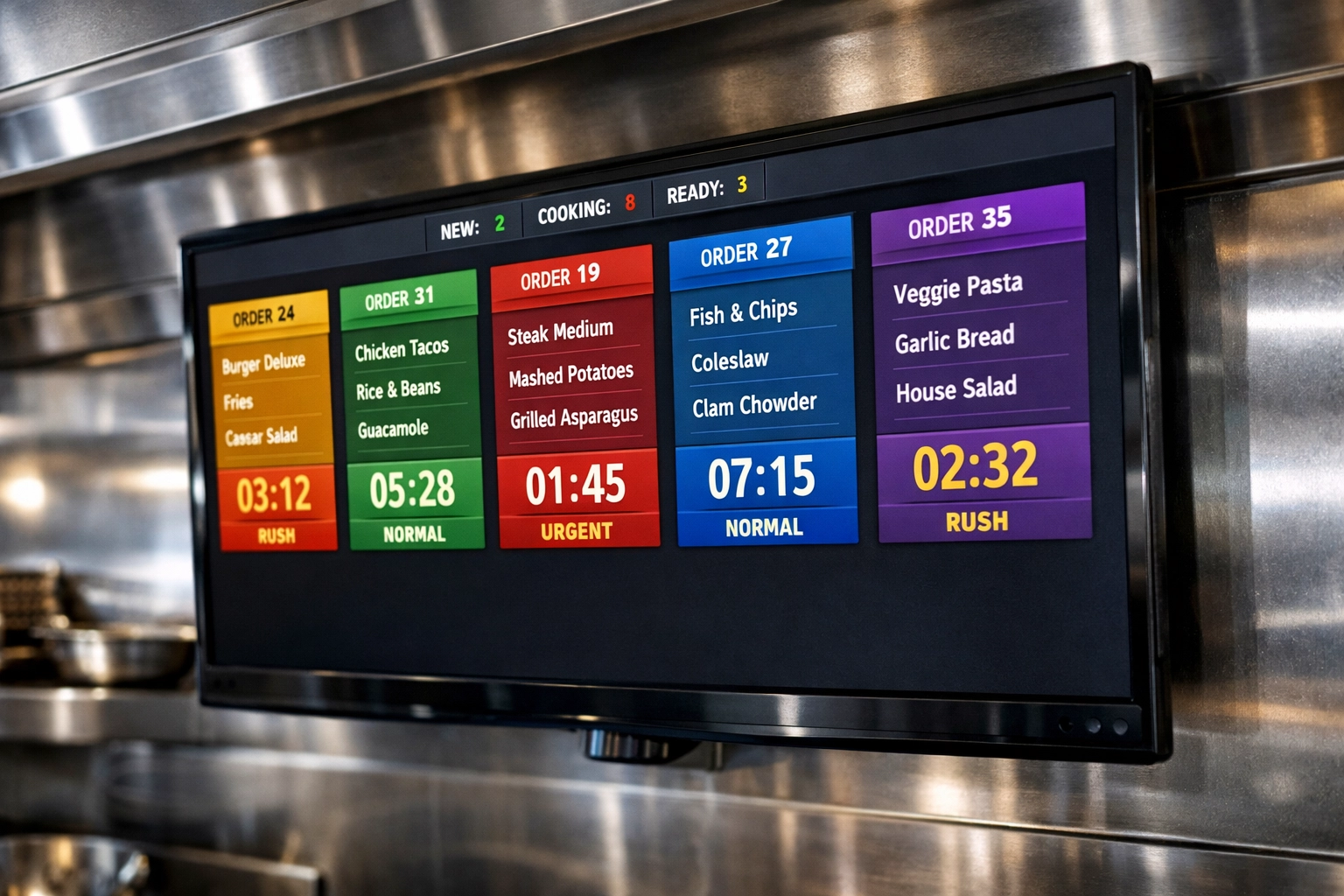
Paper tickets are relics that belong in restaurant museums, not modern kitchens. Contemporary kitchen display systems organize orders across every channel: dine-in, takeout, delivery, online ordering: with customizable layouts and timers that synchronize front and back-of-house operations seamlessly.
We've worked expo stations where you're juggling paper tickets like a street magician while trying to time 12 tables and coordinate with servers. It's chaos masquerading as a system. Modern KDS eliminates that chaos, routing orders by station, priority, and timing to ensure every component of every order hits the pass simultaneously.
AI-Driven Intelligence
Artificial intelligence handles the analytical heavy lifting that used to require spreadsheet warriors and educated guessing:
– Invoice processing and cost validation automatically catch pricing discrepancies, quantity errors, and unauthorized substitutions that slowly bleed profit margins. The system cross-references purchase orders, contracts, and delivery receipts instantly: work that would take a person hours daily.
– Demand forecasting analyzes historical sales data, weather patterns, local events, and dozens of other variables to predict what you'll need and when. No more over-prepping on slow nights or running out during unexpected rushes.
– Personalization engines track guest preferences and purchase history to enable targeted promotions and menu recommendations that boost check averages and return visits.
The Investment Case That Writes Itself
Restaurant operators aren't known for frivolous technology spending: every dollar must justify itself. The fact that 46% of operators plan to increase technology budgets this year, outpacing investments in staffing or equipment, tells you everything you need about proven returns.
The profitability drivers are concrete and measurable:
– Reduced food costs through precise inventory management, waste reduction, and cost validation. For most operations, this alone covers the technology investment within months.
– Lower labor costs by automating repetitive tasks and enabling skeleton crews to accomplish what previously required full teams. Not through layoffs, but by reducing turnover from burnout and redistributing talent to higher-value activities.
– Prevented downtime saves thousands per incident while protecting reputation and customer relationships. One avoided equipment failure during peak service justifies months of monitoring costs.
– Enhanced food safety and compliance reduces liability exposure while meeting increasingly stringent regulatory requirements. The documentation and traceability these systems provide is invaluable during health inspections or, worse, food safety incidents.
The hospitality industry has historically lagged in technology adoption, but that's changing rapidly as operators realize that back-of-house optimization is no longer optional: it's survival. According to Modern Restaurant Management, restaurants that implement comprehensive back-of-house technology see operational cost reductions of 15-25% within the first year, with continued improvements as systems mature and data accumulates.
Implementation Without the Headaches
The gap between technology potential and operational reality often comes down to implementation quality. Clean data inputs, consistent protocols, and proper staff training separate transformative systems from expensive paperweights.
We've seen operators invest six figures in technology platforms that fail because nobody took the time to map existing workflows, train staff properly, or establish standard operating procedures. The technology is only as good as the operational foundation supporting it.
Start with your biggest pain point: whether that's inventory management, equipment maintenance, or labor scheduling: and build from there. Technology vendors who understand restaurant operations (not just software) will design implementations around your reality, not their ideal scenarios.
Resources like Hospitality Tech provide valuable insights into vendor selection, implementation best practices, and case studies that help separate marketing hype from operational value.

The Competitive Advantage You Can't Ignore
Your competitors are implementing these systems right now. Every day you delay, you're falling further behind operators who can serve more customers with fewer resources while maintaining higher quality and generating better margins.
The restaurant business has always been brutally competitive, but technology is creating a divide between operators who embrace data-driven decision-making and those clinging to gut instinct and tradition. Both approaches worked for decades: but only one works in 2026.
Back-of-house technology isn't about becoming a tech company. It's about being a better restaurant company by leveraging tools that make your operation more efficient, more profitable, and more sustainable. It's about giving your team the support systems they deserve so they can focus on what humans do best: creating exceptional experiences and building relationships.
The back-of-house has always been the engine that powers great restaurants. Modern technology simply gives that engine the fuel efficiency, performance monitoring, and reliability it needs to run at peak capacity day after day, shift after shift, without breaking down or burning out the talented people who keep it running.
We help restaurant operators identify, implement, and optimize the technology solutions that drive measurable profitability improvements. Whether you're exploring back-of-house automation, need guidance selecting the right systems for your operation, or want to maximize returns from existing technology investments, we bring decades of hands-on restaurant experience and financial expertise to guide every decision.
Visit us at www.restaurantfinanceadvisors.com to learn more about maximizing your revenue and book a call today to start making more money. Connect with our team on LinkedIn to stay updated on the latest restaurant technology trends and financial strategies.
Target Keywords: restaurant consulting, restaurant investment, restaurant new business, restaurant growth, find money your restaurants
Meta Description: Our Wednesday spotlight looks at how modern tech companies are revolutionizing restaurant operations and profitability.


