
You're a brilliant chef with a packed dining room and a waitlist that stretches into next month. Your signature dishes are Instagram-famous, your food costs are tight, and you've finally mastered the delicate dance of kitchen operations. Then someone drops the S-word at your bar: scale.
Suddenly, you're lying awake at 3 AM wondering if your grandmother's secret pasta recipe can survive in a commissary kitchen, and whether your soul will survive the transition from artist to entrepreneur.
We've seen this movie before, and we know how it can end beautifully or disastrously. The difference? Understanding that scaling a chef-driven concept isn't about cloning yourself across multiple kitchens. It's about translating your culinary vision into a replicable system while maintaining the magic that made people fall in love with your food in the first place.
The Chef-to-CEO Journey Nobody Warns You About
Most culinary school programs teach you how to brunoise a carrot, not how to read a balance sheet. When I worked the line years ago, I could tell you the exact temperature of my sauté pan by sound alone, but ask me about EBITDA? I would have guessed it was a new type of molecular gastronomy technique.
Here's the uncomfortable truth: being an exceptional chef doesn't automatically make you an exceptional business owner. The skills that got you a Michelin star, obsessive attention to detail, creative perfectionism, and hands-on control, can actually become liabilities when you're trying to scale.
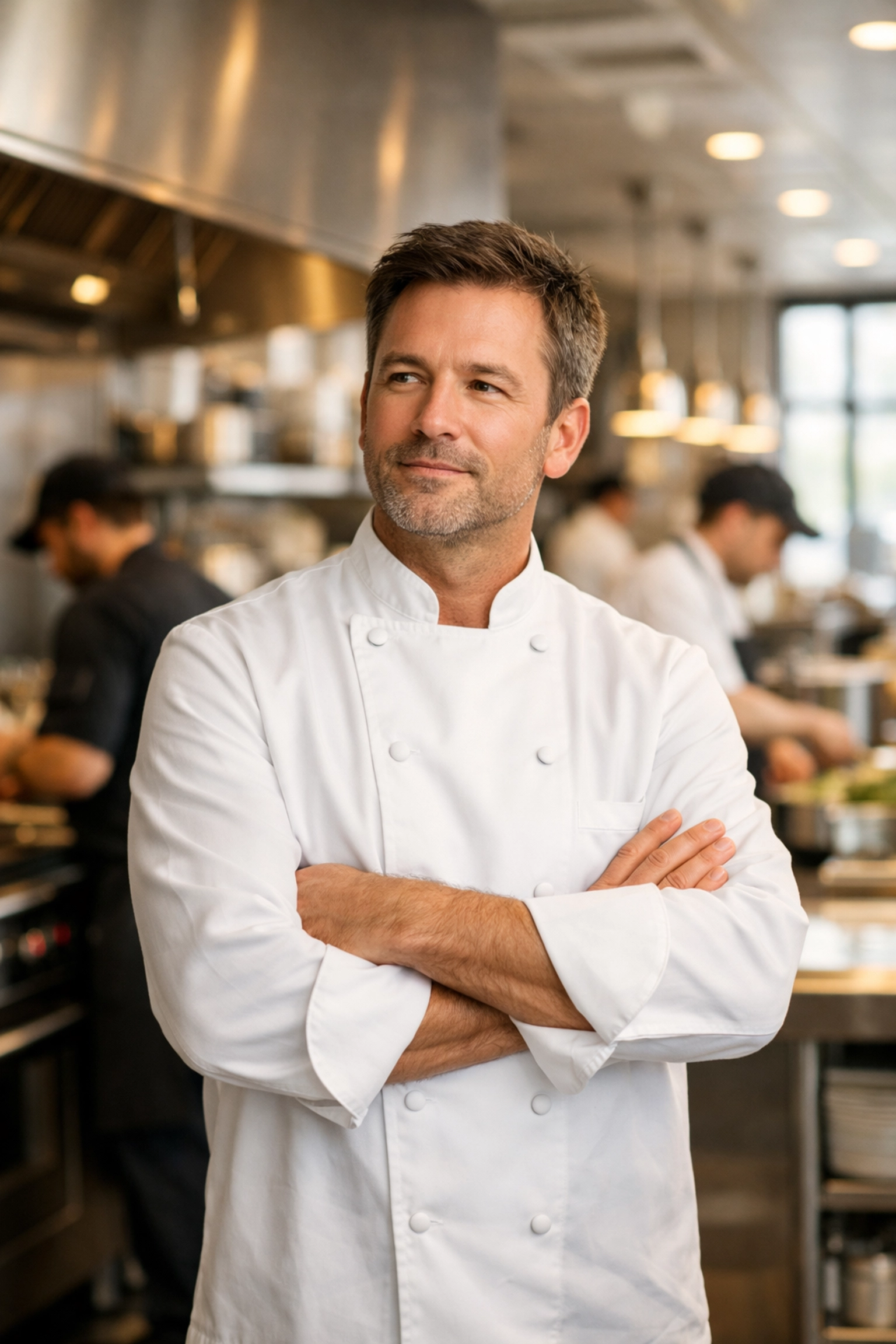
The transition from chef to business owner requires a fundamental mindset shift:
– From doing to delegating – Your signature duck confit doesn't need your hands on every bird at every location. It needs a documented process that captures your technique and standards so trained cooks can execute it consistently.
– From intuition to systems – That "pinch of salt" your grandmother taught you? It needs to become 2.3 grams if you want it to taste the same in Kansas City as it does in your flagship location.
– From artist to architect – Your role evolves from creating dishes to designing frameworks that protect your culinary vision while enabling others to execute it.
The most successful chef-driven concepts understand this distinction. Nobu Matsuhisa isn't personally preparing miso black cod at all 47 worldwide locations, yet each plate carries his distinctive fusion of Japanese technique and Peruvian influences. The secret? He built systems that scale his philosophy, not just his physical presence.
Why Financial Partners Matter More Than You Think
Let's talk about the elephant in the kitchen: money. Specifically, smart money versus dumb money, and why the difference can make or break your expansion dreams.
I've watched talented chefs accept investment from well-meaning friends, family, or silent partners who write checks but contribute nothing else. Six months later, they're drowning in operational challenges they never anticipated, burning through capital with no strategic guidance, and wishing they'd partnered with someone who actually understands restaurant economics.
The right financial partner brings more than capital to the table:
– Strategic restaurant consulting expertise – They've navigated multi-unit expansion before and can help you avoid expensive mistakes that first-time scalers typically make.
– Network effects – Access to vetted vendors, proven operational systems, and connections to other successful restaurant operators who've already solved the problems you're about to face.
– Financial discipline – Someone who can tell you "no" when your chef brain wants to install a $45,000 custom pizza oven at location three before location two is profitable.
– Growth capital at the right pace – Smart partners understand that responsible scaling means growing within your operational capacity, not just throwing money at aggressive expansion timelines.

Charles Pan-Fried Chicken scaled from one location to four in just 13 months not because they had unlimited capital, but because they built operational systems early and prioritized quality consistency above expansion speed. Every new location opened with documented processes, trained staff, and financial metrics that made sense: not just culinary ambition.
According to industry experts at Fine Dining Lovers, chef-driven concepts that scale successfully maintain a critical balance between preserving the chef's creative vision and implementing commercial viability frameworks.
Building Systems That Scale Your Soul, Not Just Your Sales
Here's what keeps me up at night when we consult with chef-driven concepts: the fear that scaling means sacrificing the authenticity that made the original location special. That somehow systemization equals soulless corporate food.
It doesn't have to be that way.
Effective scaling preserves your culinary identity through intentional design:
– Define your non-negotiables upfront – What elements absolutely cannot change? Maybe it's your house-made pasta, your 48-hour stock, or your locally-sourced protein standards. Document these sacred cows before expansion conversations begin.
– Identify what can flex regionally – Your Nashville location might need different local partnerships than your Denver location. Smart systems allow for regional adaptation within brand guardrails.
– Create training that transfers passion, not just procedures – Your opening teams need to understand why you rest your steaks for exactly seven minutes, not just that you do it. Context creates buy-in.
– Design with purpose – Every operational detail should reinforce your brand story. If you're a farm-to-table concept, your vendor relationships, menu descriptions, and even your kitchen layout should communicate that commitment.
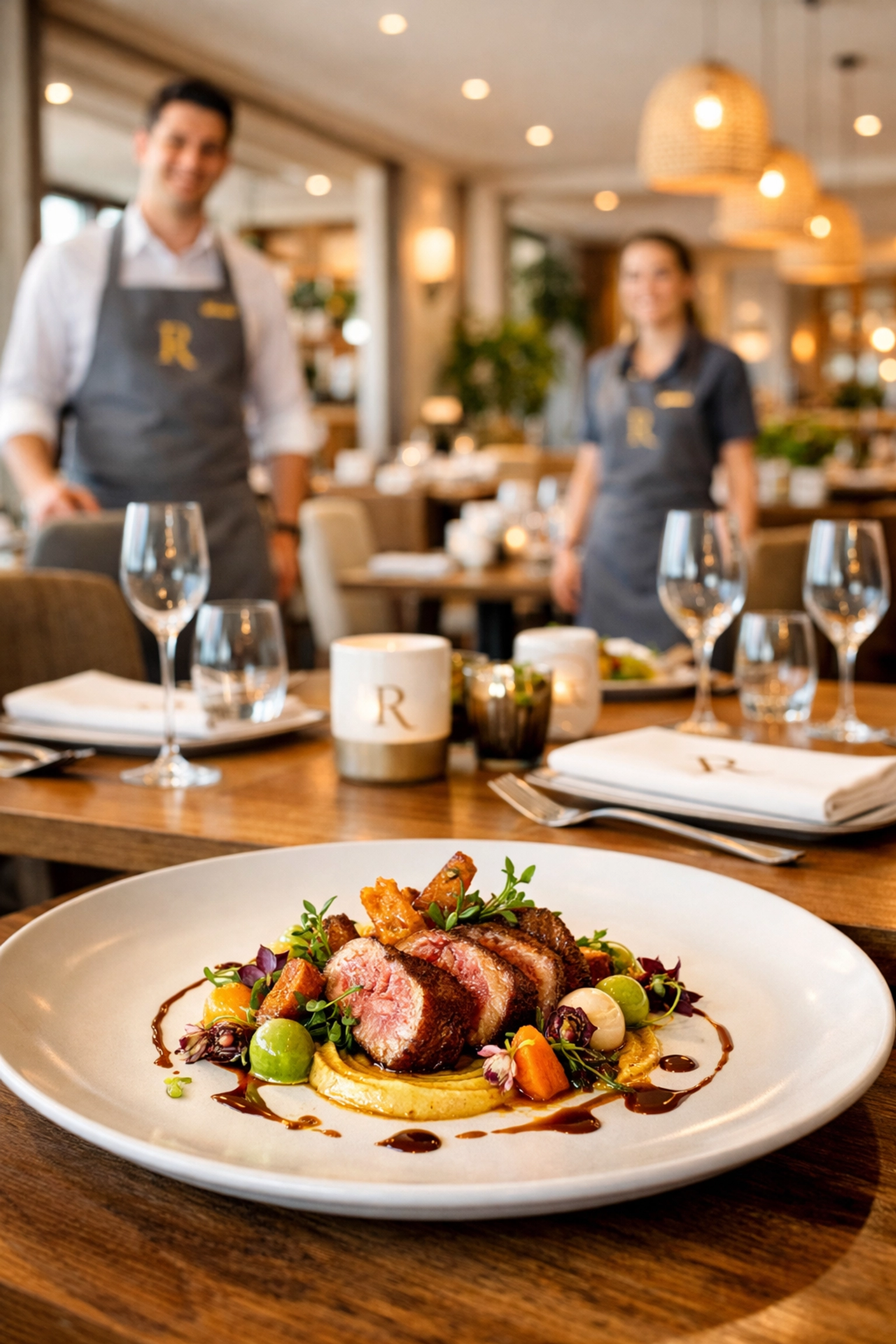
When we work with growing restaurant concepts, we emphasize that you cannot scale what you haven't clearly defined. Before opening location two, you need documented answers to questions like: What makes your brand distinctive? How do you measure quality? What experience should every guest receive? What training ensures consistency?
Eater regularly features stories of chef-driven concepts that scaled successfully by treating their culinary vision as the blueprint rather than the bottleneck: translating creative intuition into replicable excellence.
The Financial Reality Check Nobody Wants to Hear
Opening a second location costs more than doubling your first location's startup costs. Significantly more. We see it constantly: talented chefs with successful flagships who underestimate expansion capital requirements by 40-50%.
Before scaling, conduct an honest financial audit:
– Confirm your current operation is actually scalable – If your flagship restaurant is only profitable because you're working 80 hours weekly at below-market compensation, that model won't work across multiple locations.
– Analyze historical performance rigorously – Review at least 12-24 months of sales trends, food and labor costs, and true profitability. A concept that struggles financially in one location won't magically succeed in several.
– Build conservative financial projections – New locations typically take 6-18 months to reach stabilized revenue. Can your balance sheet absorb that ramp-up period while continuing to operate existing locations?
– Diversify revenue streams early – Delivery, takeout, catering, branded retail products, and even meal kits can strengthen your brand presence and improve unit economics before you tackle brick-and-mortar expansion.
Smart restaurant investment means matching your growth pace to your operational and financial capacity. We'd rather see you open three locations over five years that all thrive than seven locations in two years where half are struggling.
My friend Robert Ancill always reminds me that growth without profitability is just expensive ego.
Your Team Makes or Breaks Multi-Unit Success
You can have perfect systems and unlimited capital, but if you don't have leaders who can execute your vision independently, scaling becomes impossibly expensive. This is where most chef-driven concepts stumble.
Building a scalable team requires intentional investment in people:
– Identify high-potential managers early – Who on your current team could run their own location? Start grooming them now with expanded responsibilities and structured training.
– Create comprehensive training programs – Document everything from your recipe specs to your service philosophy. New team members should understand both the "what" and the "why" behind your operations.
– Develop operational leaders, not just great cooks – Your sous chef might be brilliant with proteins but terrible with P&Ls. Multi-unit success requires leaders who understand business fundamentals, people management, and brand standards: not just culinary excellence.
– Build culture deliberately – The intangible elements that make your flagship special: team dynamics, guest interactions, energy: need intentional cultivation at new locations through hiring, training, and leadership modeling.
When I worked as a manager before transitioning into restaurant consulting, I learned that culture doesn't automatically transfer when you open location two. It requires active reinforcement through systems, incentives, and leadership presence.
The Path Forward: Growing Without Losing Yourself
Scaling a chef-driven concept successfully means accepting that you're building something bigger than yourself while ensuring that "something" still carries your DNA. It's the difference between becoming Nobu and becoming another forgettable chain restaurant with a chef's name slapped on the sign.
The restaurants we're most proud to partner with understand this balance. They've maintained their culinary integrity while implementing financial discipline. They've translated creative vision into operational excellence. They've built teams that execute consistently across markets. And they've grown at a pace that strengthens rather than dilutes their brand.
If you're a chef contemplating expansion, ask yourself these critical questions before signing any leases or accepting any investment:
– Can I articulate exactly what makes my concept distinctive in a way my managers can execute?
– Do I have documented systems that preserve quality without requiring my physical presence?
– Have I built financial projections that reflect realistic ramp-up timelines and conservative revenue assumptions?
– Do I have or can I develop leaders capable of running locations independently?
– Have I partnered with advisors who understand both restaurant operations and growth capital?
Your answers will tell you whether you're ready to scale: or whether you need to strengthen your foundation first.
We specialize in helping chef-driven concepts navigate exactly this transition. From financial planning and restaurant investment structuring to operational systems design and growth strategy, we understand what it takes to scale without sacrificing your soul or your margins.
Because at the end of the day, your restaurant growth strategy should amplify what makes you special, not dilute it.
Visit us at www.restaurantfinanceadvisors.com to learn more about maximizing your revenue and book a call today to start making more money.
Target Keywords: restaurant consulting, restaurant investment, restaurant new business, restaurant growth, find money your restaurants
Meta Description: This Saturday's spotlight explores how chef-driven concepts can scale without losing their soul or their margins.
External Links/Sources:


