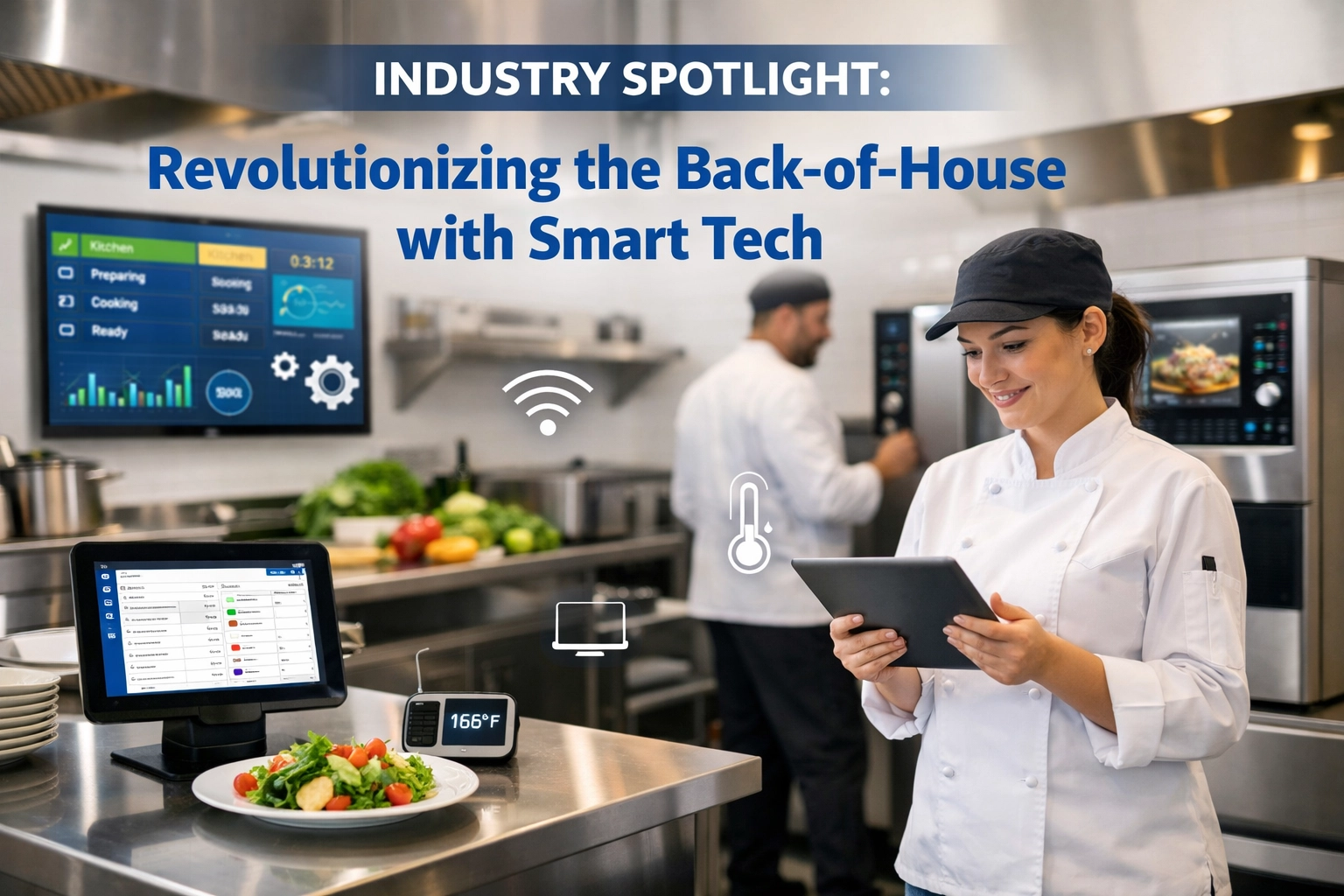
The back-of-house is the engine room of your restaurant, and right now, that engine is being asked to run faster on less fuel than ever before. For decades, the kitchen was the one place where "old school" was a badge of honor. We relied on clipboard checklists, handwritten prep sheets, and the gut instinct of a kitchen manager who had been there for twenty years. But instinct doesn't pay the bills when food costs are hovering at historic highs and the labor market is tighter than a pair of chef pants after Thanksgiving.
At Restaurant Finance Advisors, we’ve seen the inside of thousands of kitchens. I personally have worked every seat in the house: from sweating it out as a busser and line cook to managing the floor, brewing the beer, and eventually sitting in the corporate seat as a Director of Marketing. I know the chaos of a Friday night rush when the printer won't stop screaming. I also know the sinking feeling of looking at a P&L statement and seeing your margins evaporate into "waste" and "overtime."
The good news? The "Smart Kitchen" revolution is no longer a futuristic concept found only in tech-innovation journals. It is here, it is affordable, and it is the primary lever we use to drive restaurant growth strategy for our clients.
The AI Revolution in Inventory Management
Food waste is the silent killer of restaurant profitability. Most operators estimate their waste, but very few actually measure it with precision. Smart technology is changing the game by taking the guesswork out of the walk-in.
– Precision Demand Forecasting – Modern AI-driven inventory platforms analyze years of historical sales data, local weather patterns, and even neighborhood events to predict exactly how many pounds of chicken or heads of lettuce you’ll need for the coming Tuesday. This prevents the "over-ordering" trap that leads to spoilage.
– Automated Variance Tracking – By integrating directly with your POS system, these tools compare what should have been used against what is actually on the shelf. This highlights "shrinkage" (the polite term for theft) and portion control issues in real-time, rather than at the end of the month when it’s too late to fix.
– Dynamic Par Levels – Instead of static par levels that stay the same regardless of seasonality, smart systems adjust inventory targets based on current industry trends, ensuring you aren't sitting on capital that is literally rotting in the fridge.
When we step into a turnaround situation, fixing the inventory process is often the first place we "find money for your restaurants." It’s not about buying less food; it’s about buying the right food at the right time.

Solving the Labor Shortage with Automated Scheduling
If inventory is your biggest variable cost, labor is your biggest headache. We are currently facing a structural shift in the workforce that makes traditional scheduling impossible. You can't just "hire your way" out of a labor shortage anymore; you have to optimize your way out.
– Algorithm-Based Scheduling – Automated platforms take your sales forecasts and generate optimal schedules that align labor hours with peak traffic. This eliminates the "dead hour" bloat where four servers are standing around folding napkins while the restaurant is empty.
– Employee Self-Service Portals – These tools allow staff to swap shifts, request time off, and view schedules from their phones. This reduces the administrative burden on managers by up to 80%, allowing them to spend more time on the floor coaching staff and less time in the office playing Tetris with the schedule.
– Compliance and Overtime Alerts – Smart scheduling systems flag potential overtime before it happens and ensure you are meeting local labor laws regarding break times and "clopenings." This protects your bottom line from unnecessary premium pay and legal risks.
In our work with team leadership and culture, we’ve found that staff morale actually improves when technology handles the scheduling. It provides transparency and fairness that a human manager: often stressed and playing favorites: simply can’t match.
IoT and the Connected Kitchen: Beyond the POS
The "Internet of Things" (IoT) sounds like a buzzword until you realize it can save you $10,000 in spoiled Wagyu beef. Smart sensors and connected equipment are the new frontier of back-of-house efficiency.
– 24/7 Temperature Monitoring – Bluetooth and Wi-Fi sensors in your walk-ins and freezers alert you the second a compressor fails or a door is left ajar. According to reports in Eater, food safety tech is becoming a non-negotiable for modern brands looking to scale.
– Intelligent Equipment Maintenance – Imagine a fryer that tells you exactly when the oil needs to be filtered or a dishwasher that monitors chemical concentration to ensure every plate is sanitized without wasting soap. This preventative approach extends the life of your expensive equipment.
– Kitchen Display Systems (KDS) – Moving away from paper tickets to digital screens allows for better data-analytics. You can track "ticket-to-table" times with millisecond precision, identifying bottlenecks in the kitchen line that are slowing down your table turns.

How RFA Integrates Tech into Your Growth Strategy
At Restaurant Finance Advisors, we don't just recommend tech because it's shiny. We recommend it because it drives ROI. When we take on a new client, we look at technology as a fundamental pillar of their branding and identity: because a brand that is efficient and tech-forward is a brand that is built to last.
We integrate these cutting-edge solutions into our turnaround strategies by first identifying the "leaks" in your bucket. If your food cost is 4% higher than the industry average, we implement AI inventory. If your labor cost is eating your net income, we deploy automated scheduling. We don't just tell you what to buy; we show you how to use it to maximize your revenue.
Our approach is rooted in real-world experience. We know that if a tool is too complicated, your kitchen staff won't use it. That’s why we vet every platform for "kitchen-readiness." If it can’t survive a grease-covered thumb or a hectic shift, it doesn’t make it into our playbook.
Funding Your Future Without Dilution
The biggest barrier to adopting smart tech is often the upfront cost. Many operators feel they have to choose between upgrading their kitchen and keeping their equity. We believe you should be able to do both.
We utilize a smart funding model that offers "no interest or equity dilution." This allows you to finance your tech upgrades, equipment overhauls, and even digital marketing pushes without giving up a piece of the company you worked so hard to build. By using future revenue to fund today's growth, you can stay ahead of the competition without the predatory terms of traditional high-interest loans.
Whether you are looking for a restaurant consultant to fix a struggling location or a partner for a restaurant new business venture, the goal is the same: operational excellence.

The Bottom Line
The era of managing by "gut feeling" is over. To thrive in the modern hospitality landscape, you must embrace the data and the tools that make that data actionable. Smart technology doesn't replace the "hospitality" in your restaurant: it clears away the administrative clutter so your team can focus on what actually matters: the food and the guest.
We are here to help you navigate this transition. From selecting the right software to securing the funding to pay for it, Restaurant Finance Advisors is your strategic partner in the kitchen and the boardroom.
Visit us at www.restaurantfinanceadvisors.com to learn more about maximizing your revenue and book a call today to start making more money.
Meta Description: Our Wednesday spotlight looks at how smart technology is transforming back-of-house operations and boosting restaurant margins.
Keywords: restaurant consulting, restaurant investment, restaurant new business, restaurant growth, find money your restaurants.
Sources & External Links:


