

The restaurant landscape has fundamentally shifted, and choosing between a ghost kitchen and traditional restaurant isn't just about preference anymore – it's about strategic business growth and finding money for your restaurant expansion plans.
Having worked every position from busser to director of marketing, I've seen restaurants succeed and fail with both models. The truth is, ghost kitchens aren't just a pandemic trend that's fading away. They're a legitimate restaurant investment strategy that's reshaping how we think about restaurant new business development in 2025.
But here's what most restaurant consulting experts won't tell you: the binary choice between ghost kitchen versus traditional restaurant is becoming obsolete. Smart operators are creating hybrid models that maximize restaurant growth while minimizing the financial risks that kill most new ventures.
The Ghost Kitchen Revolution: More Than Just Delivery
Ghost kitchens represent the most significant shift in restaurant operations since the invention of the drive-through window. These delivery-only operations eliminate the massive overhead costs that traditionally crush restaurant dreams before they even start.
Financial Advantages That Actually Matter
– 30-50% lower startup costs – We're talking $20K-$100K instead of the $275K-$1M+ required for traditional restaurants, making it easier to find money for your restaurant without selling your soul to investors
– Faster break-even timeline – Most ghost kitchens reach profitability within 6-12 months versus the 18-36 month struggle most traditional restaurants face
– Multiple revenue streams from one kitchen – Operate 3-5 different brand concepts simultaneously, maximizing your kitchen's earning potential during peak and off-peak hours
– Elimination of front-of-house labor costs – No servers, hosts, or managers needed, cutting your payroll by 40-60%
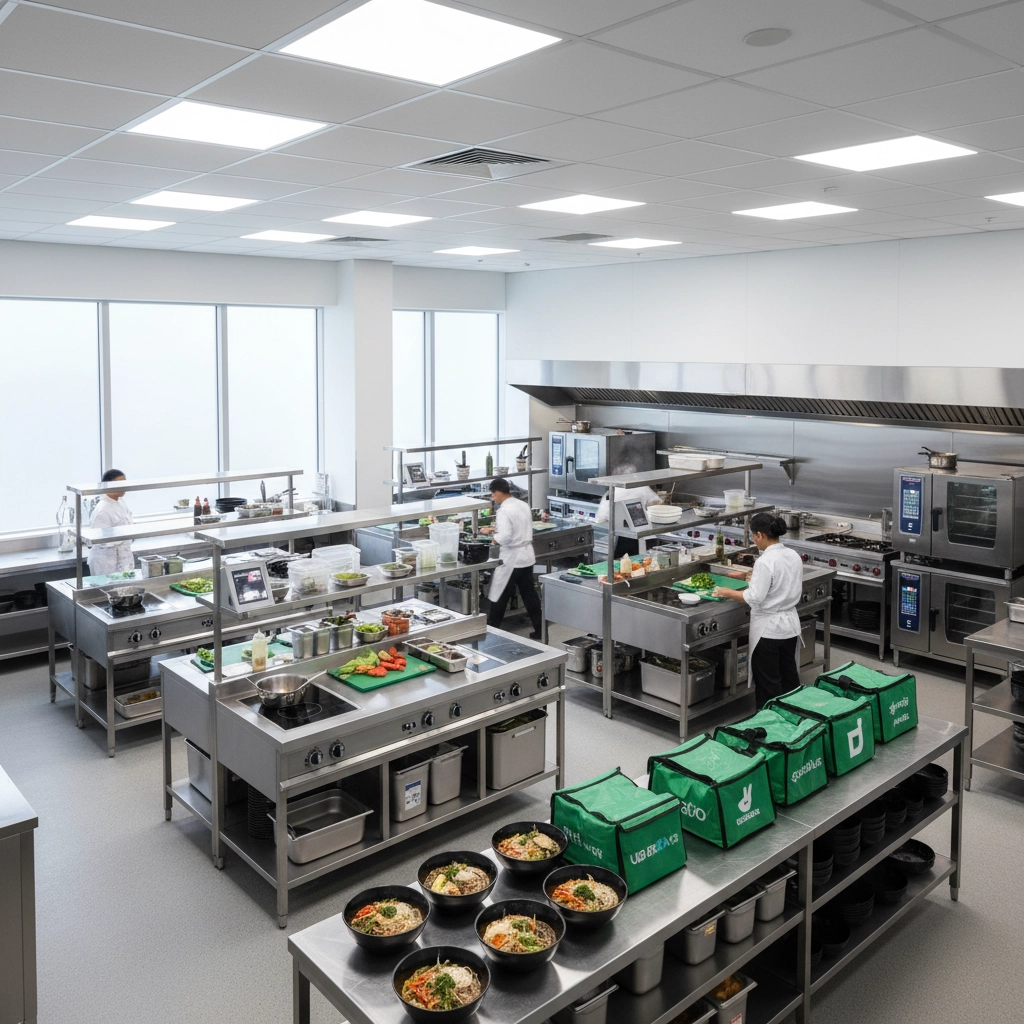
Operational Flexibility That Traditional Restaurants Envy
The beauty of ghost kitchens lies in their adaptability. You can pivot your menu, test new concepts, and expand geographically without the structural limitations of a physical dining room.
I remember managing a traditional restaurant where changing a single appetizer required committee meetings, staff training, and customer education. In a ghost kitchen, menu optimization happens in real-time based on delivery platform data and customer feedback.
– 24/7 operation capability – Your kitchen works when demand exists, not when your dining room is open
– Rapid menu testing and iteration – Launch new items within days, not months
– Geographic expansion without real estate investment – Partner with shared kitchen spaces in new markets instantly
– Data-driven decision making – Delivery platforms provide detailed analytics that most traditional restaurants never access
The Hidden Challenges Nobody Talks About
Ghost kitchens aren't a magic bullet for restaurant success. The lack of direct customer interaction creates unique challenges that can hurt long-term restaurant growth if not properly addressed.
– Brand invisibility in crowded delivery marketplaces – Standing out among hundreds of options requires exceptional marketing and food quality
– Complete dependence on third-party platforms – Algorithm changes can destroy your business overnight
– Difficulty building customer loyalty – Without face-to-face interaction, you're just another option in an app
– Higher per-order acquisition costs – Delivery platform fees and marketing expenses can eat 25-35% of gross revenue
Traditional Restaurants: The Relationship Advantage
Despite the ghost kitchen hype, traditional restaurants still offer something irreplaceable: human connection and experiential dining. These advantages become critical for building sustainable, long-term restaurant investment value.
Revenue Diversification That Creates Stability
Traditional restaurants generate income from multiple channels that ghost kitchens simply cannot access. This diversification provides stability during economic downturns and platform disruptions.
– Dine-in service premium pricing – Customers pay 20-30% more for the full dining experience versus delivery
– Walk-in and impulse purchase capture – Physical presence generates sales that no delivery app can replicate
– Event hosting and catering opportunities – Private parties, corporate events, and special occasions create high-margin revenue streams
– Alcohol sales margins – Beverage programs can contribute 25-40% of total profits in traditional restaurants
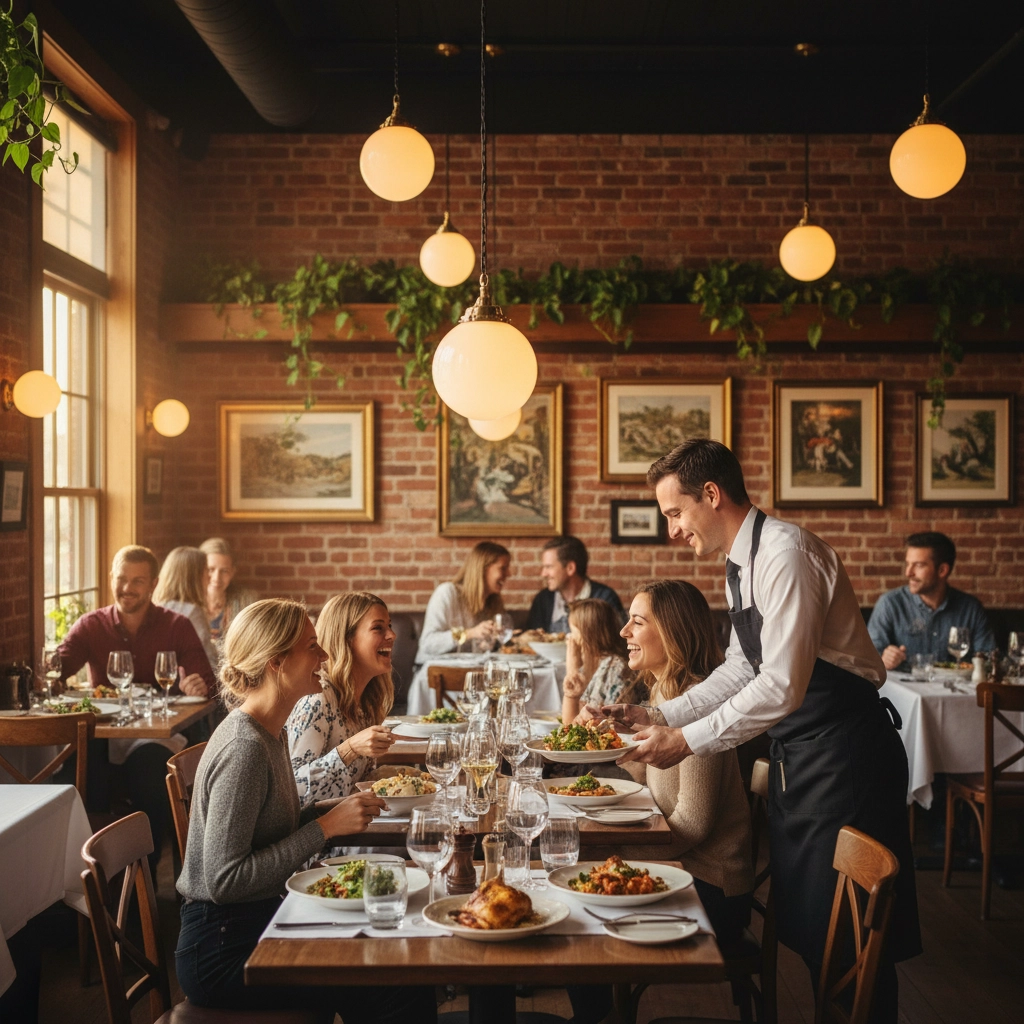
Brand Building That Delivery Apps Can't Replicate
The emotional connection created through in-person dining experiences drives customer lifetime value that ghost kitchens struggle to achieve. These relationships become your competitive moat.
After years of working front-of-house positions, I learned that customers don't just buy food – they buy experiences, memories, and relationships. That regular who knows your name, remembers your anniversary, and brings friends for special occasions? That's worth more than any delivery platform algorithm.
– Direct customer feedback and relationship building – Real-time service recovery and personalization
– Community presence and local marketing opportunities – Sponsorships, partnerships, and word-of-mouth marketing
– Staff as brand ambassadors – Trained servers who can upsell, cross-sell, and create memorable experiences
– Ambiance and atmosphere as differentiators – Lighting, music, décor, and energy that can't be delivered
The Traditional Restaurant Reality Check
Traditional restaurants require significantly more capital, expertise, and operational complexity. These challenges eliminate many potential operators before they even start.
– Higher initial investment requirements – Real estate deposits, build-out costs, equipment, and working capital demands
– Complex labor management – Front-of-house scheduling, training, and retention challenges
– Fixed overhead costs regardless of revenue – Rent, utilities, and insurance continue whether you're busy or empty
– Slower adaptation to market changes – Physical constraints limit menu flexibility and concept pivots
The 2025 Hybrid Model: Best of Both Worlds
Smart operators are abandoning the either-or mentality and creating hybrid models that capture the advantages of both approaches. This strategy represents the future of restaurant new business development.
Successful Hybrid Strategies We're Seeing
– Ghost kitchen brands opening small retail locations – Serve walk-up customers while maintaining delivery focus
– Traditional restaurants licensing concepts to ghost kitchens – Expand reach without additional real estate investment
– Shared kitchen spaces with customer pickup areas – Reduce overhead while maintaining some customer interaction
– Technology-first operations with physical presence – Centralized ordering and delivery management with multiple touchpoints
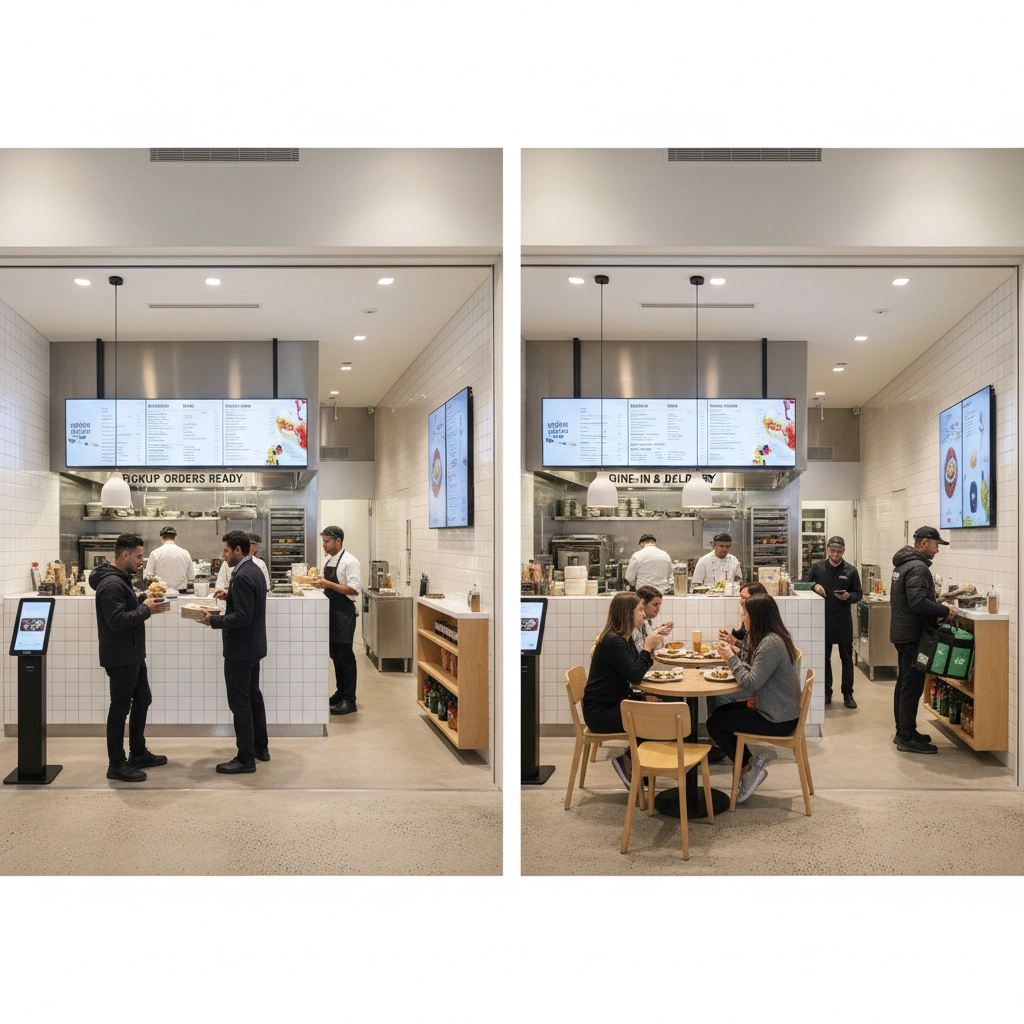
Major brands like Wendy's, Ruby Tuesday, and Wingstop are testing these hybrid approaches, recognizing that the future isn't about choosing sides – it's about optimizing for both efficiency and customer experience.
Making the Right Choice for Your Restaurant Growth Strategy
Your decision should be driven by your specific goals, available capital, and market conditions – not industry trends or consultant recommendations.
Choose Ghost Kitchens When:
– Limited startup capital ($25K-$100K range) forces focus on efficiency over experience
– Market testing multiple concepts before committing to major real estate investments
– Geographic expansion into markets where traditional restaurants aren't financially viable
– Maximizing short-term profitability takes priority over long-term brand building
– Operational simplicity matches your management experience and capabilities
Choose Traditional Restaurants When:
– Sufficient capital ($300K+) allows for comprehensive concept development
– Building long-term brand equity and customer relationships drives your strategy
– Creating unique experiences that justify premium pricing and customer loyalty
– Diversified revenue streams provide stability and growth opportunities
– Community presence aligns with your personal and business values
Choose Hybrid Models When:
– Balancing growth speed with brand building represents your optimal strategy
– Testing scalability before major traditional restaurant investments
– Maximizing market reach while maintaining operational efficiency
– Capital constraints require creative approaches to expansion
– Technology integration can enhance both delivery and dine-in experiences
Finding Money for Your Restaurant: Investment Considerations
Regardless of which model you choose, securing adequate funding remains the biggest challenge for restaurant operators. Ghost kitchens require less capital but still need proper funding for success.
Restaurant consulting data shows that undercapitalized operations fail at similar rates regardless of model. The key is matching your funding strategy to your operational approach:
– Ghost kitchens – Focus on equipment financing, shared kitchen partnerships, and revenue-based lending
– Traditional restaurants – Pursue SBA loans, investor partnerships, and equipment financing packages
– Hybrid models – Consider phased funding approaches that start lean and scale with proven success
For detailed funding strategies and restaurant investment guidance, explore our comprehensive resources at Restaurant Finance Advisors.
The restaurant industry rewards operators who adapt quickly, execute consistently, and focus relentlessly on customer value. Whether you choose ghost kitchens, traditional restaurants, or hybrid models, success depends on understanding your market, managing costs effectively, and delivering exceptional food experiences.
The choice isn't about which model is better – it's about which model aligns with your goals, resources, and definition of restaurant success.
Keywords: restaurant consulting, restaurant investment, restaurant new business, restaurant growth, find money your restaurants, ghost kitchen vs traditional restaurant, restaurant startup costs, restaurant business model, delivery-only restaurants, restaurant funding
Meta Description: Discover whether ghost kitchens or traditional restaurants are better for your restaurant growth in 2025. Compare costs, ROI, and hybrid models to make the right investment decision.
Outbound Links:


