
Your restaurant isn't dying from one fatal wound, it's bleeding from a thousand paper cuts you can't see.
After working every position from busser to director of marketing (yes, including a stint as a brewer, beer costs are their own special nightmare), I've learned this: the difference between a profitable restaurant and one barely scraping by isn't usually the food, the location, or even the competition. It's the invisible money drain happening in your back office, walk-in, and vendor invoices every single day.
Welcome to our Friday Strategy Session, where we're putting on our financial detective hats and hunting down the revenue leaks that are quietly eating 10-15% of your profits. Spoiler alert: they're everywhere, and most operators don't even know they're there.
The Invisible Profit Killer: Why Traditional Accounting Misses the Mark
Here's the uncomfortable truth: your P&L statement is a liar. Well, not technically: but it's telling you what happened last month, not what's happening right now. By the time you notice your food cost crept from 32% to 36%, you've already lost thousands of dollars.
Revenue leakage in restaurants averages between 10-15% across operations, according to industry benchmarks tracked by the National Restaurant Association. That means if you're doing $2 million annually, you're potentially leaving $200,000-$300,000 on the table. That's not a rounding error: that's a new location, a full renovation, or your retirement fund.

The Big Four: Where Your Money Actually Goes Missing
1. Inventory Leakage and the Ghost Food Phenomenon
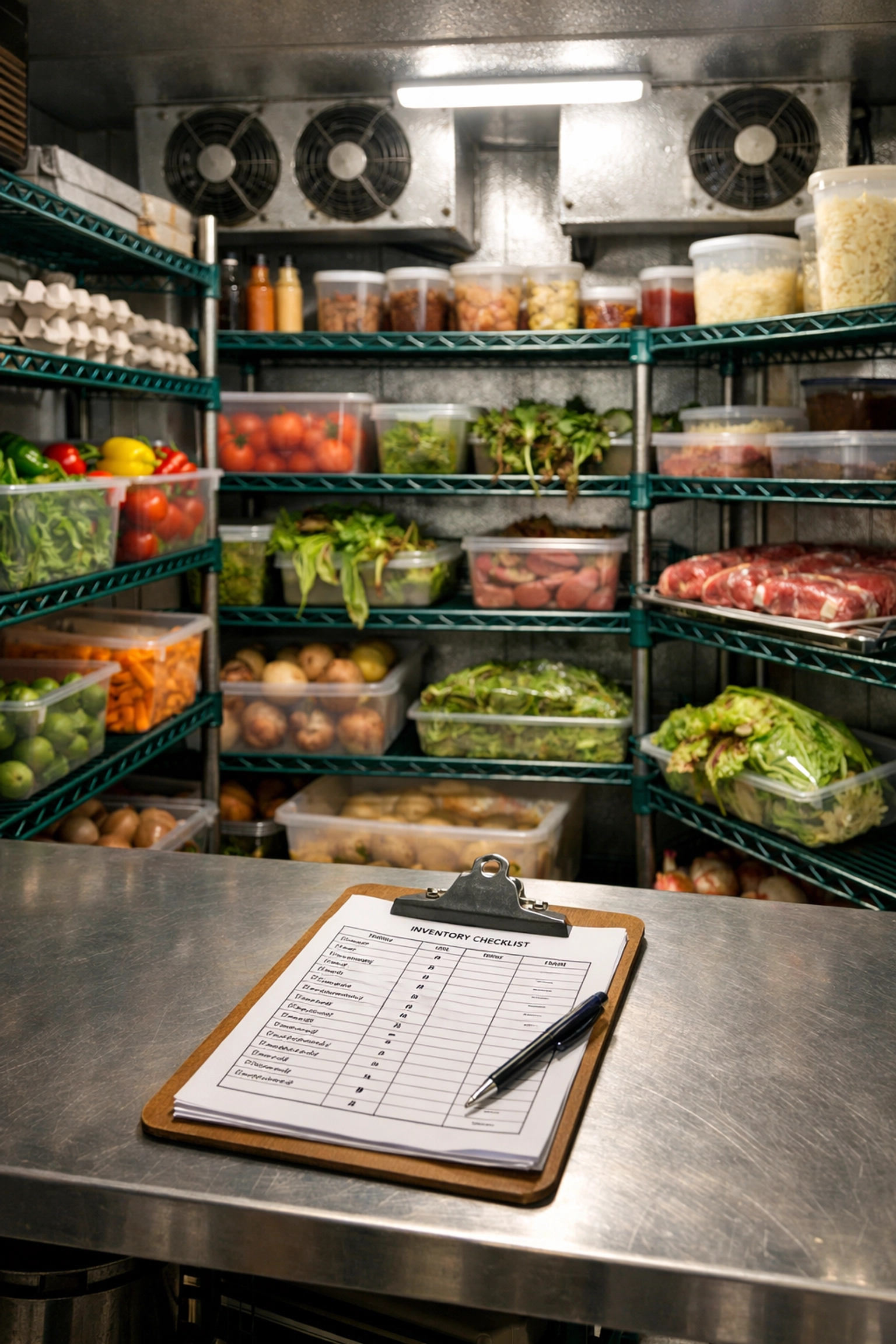
Remember when you were a line cook and the chef would yell about over-portioning? He wasn't being cheap: he was trying to stop the bleeding. Inventory leakage happens when what your system says you sold doesn't match what actually left your walk-in.
The usual suspects:
– Over-portioning – Your grill cook thinks he's being generous with that 8oz steak by making it 10oz. Multiply that by 100 steaks per week, and you've just given away thousands in protein
– Spoilage blindness – That produce sitting in the back corner didn't magically disappear; it rotted because nobody tracked first-in-first-out properly
– The comp problem – Every "kitchen mistake" or "manager comp" that doesn't get logged is pure profit walking out the door
– Ghost inventory – Your system says you have 30 ribeyes; you actually have 23. Where did the other 7 go? Nobody knows, and that's the problem
Industry data suggests food costs should range between 28-35% depending on your concept, but we regularly find restaurants operating at 38-42% without realizing it because these micro-leaks hide within the overall percentage.
2. Billing Errors and the Death by a Thousand Transactions
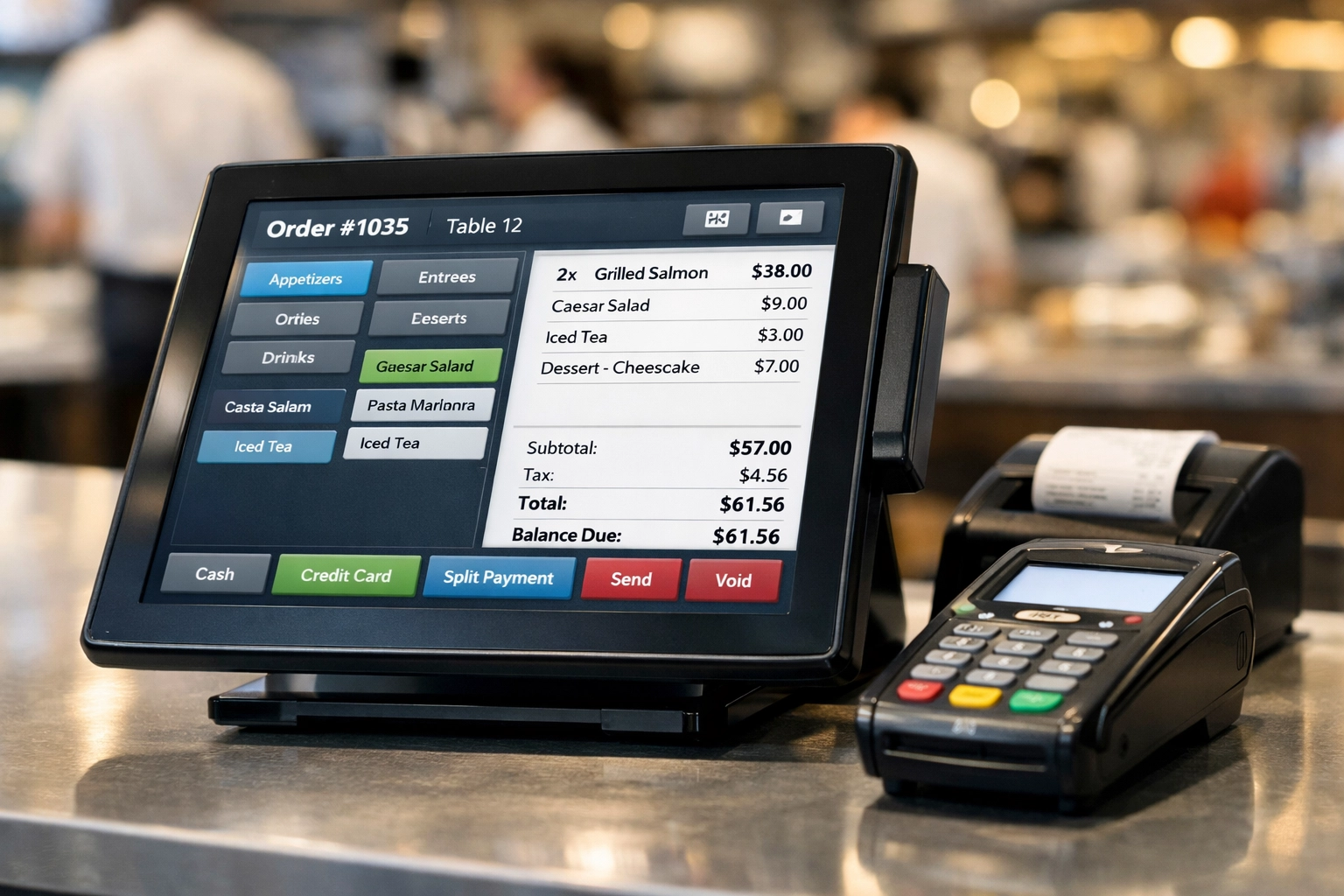
I once worked at a restaurant where we discovered our POS system had been undercharging for a popular appetizer by $2 for six months. Six. Months. That single error cost us over $15,000 in lost revenue.
Common billing black holes:
– Missed items during rush periods when servers are too busy to input everything correctly
– Discount abuse – That 50% "friends and family" discount being used way too liberally
– Third-party delivery disputes – According to Nation's Restaurant News, up to 5% of third-party orders result in disputes that often go unresolved, costing high-volume restaurants between $200,000 to $500,000 annually
– Cash handling mysteries – Old-school cash registers are breeding grounds for "honest mistakes" that somehow always favor the house losing money
3. Labor Inefficiencies and the Overtime Monster
Payroll is typically your second-largest expense after food costs, hovering around 25-35% of revenue. But here's what most operators miss: it's not just about total hours: it's about when those hours happen and how they're managed.
The hidden payroll drains:
– Accidental overtime – When your closing server hits 40.5 hours because nobody's tracking in real-time, that half-hour suddenly costs you 1.5x
– Ghost hours – Manual time clock punches that get "rounded up" or mysteriously add 10 minutes here and there
– Inefficient scheduling – Having six servers on during a slow Tuesday lunch when four would suffice
– Administrative time waste – Reconciling third-party transactions manually can consume 200+ hours per week for multi-unit operators, according to industry automation studies
As someone who managed schedules for years, I can tell you: if you're not using data-driven demand forecasting, you're either overstaffed (losing money) or understaffed (losing customers and money).
4. Vendor Overcharges and Contract Drift
This is my personal favorite because it's so preventable yet so common. Vendors are counting on you being too busy to notice when prices creep up or when they deliver 48 cases instead of 50.
Where vendors quietly take your money:
– Price increases without notification – Your chicken breast just went from $3.20/lb to $3.65/lb, but did anyone catch it?
– Short deliveries – You ordered 10 cases; they delivered 9.5 but charged for 10
– Product substitutions – You get charged premium pricing for standard-grade product
– Contract drift – That negotiated price from two years ago has quietly been adjusted upward
The RFA Difference: Finding Money in Under Two Weeks
Here's where our approach at Restaurant Finance Advisors fundamentally differs from traditional restaurant consulting: we don't get paid unless we find you money. Period.
Our risk-free forensic process:
We come in with zero upfront fees and perform a comprehensive financial audit focusing specifically on these hidden leak points. Within 10-14 days, we'll show you exactly where money is disappearing and how much we can recover.
What we actually do:
– Deploy integrated software systems that consolidate your scheduling, payroll, inventory, and billing into one connected dashboard: no more data scattered across five different platforms
– Implement automated dispute management for third-party delivery with an average 82% win-back rate (that's real recovered revenue hitting your account)
– Install real-time inventory tracking that flags over-portioning, spoilage risks, and discrepancies the moment they happen
– Conduct vendor invoice audits using data analytics to catch overcharges, short deliveries, and contract violations
– Create labor optimization models based on your actual sales patterns, not gut feelings
The performance-based model:
We only get paid a percentage of what we save or recover. If we find nothing (which has never happened, but theoretically could), you owe us nothing. This isn't consulting theater: this is putting our money where our mouth is.

Real Talk: The Two-Week Revenue Recovery Sprint
I've done this enough times to make a promise: within two weeks of engagement, we'll identify at minimum $50,000-$150,000 in annual recoverable revenue for a mid-sized operation ($2-5M annually). For larger or multi-unit operations, we regularly find $500,000+.
Why so fast? Because these leaks aren't hiding in some obscure corner of your operation: they're happening every single day in plain sight. The problem isn't complexity; it's visibility.
Think about it from my days working the line: if I could see the grill cook over-portioning every steak in real-time, I'd fix it immediately. But if I only found out at the end of the month when food costs were calculated, the money was already gone. That's the difference between reactive accounting and proactive revenue protection.
The Friday Reality Check
It's Friday afternoon, and you're probably looking at this week's sales numbers feeling pretty good about that Thursday rush. But here's the question that should keep you up tonight: How much money did you actually make versus how much you think you made?
The restaurants that dominate their markets aren't necessarily serving better food: they're running tighter operations with better visibility into their numbers. They know within 24 hours if something's off, not 30 days later when it's too late to fix.
Want to know what's really costing you? We built our entire business model around answering that question with zero risk to you. Because honestly, after working every position in restaurants and seeing operators kill themselves for single-digit margins while leaving double-digit revenue on the table, I got tired of watching good restaurants fail for preventable reasons.
Visit us at www.restaurantfinanceadvisors.com to learn more about maximizing your revenue and book a call today to start making more money.
Connect with me directly on LinkedIn to discuss your specific situation, or check out thought leaders like Danny Meyer who've built empires by sweating the operational details most people ignore.
Your restaurant deserves to keep every dollar it earns. Let's make that happen.
Target Keywords: restaurant consulting, restaurant investment, restaurant new business, restaurant growth, find money your restaurants, revenue leakage, restaurant profitability, food cost management, restaurant financial management, inventory control
Meta Description: Stop the bleed. Discover the hidden revenue leaks that are eating your margins and how to fix them in under 2 weeks.
Sources:
- National Restaurant Association – Industry benchmarks and operational standards
- Nation's Restaurant News – Third-party delivery dispute data and restaurant industry trends
- QSR Magazine – Quick-service and fast-casual operational insights


