

When a restaurant chain announces massive closures following a major buyout, most operators see only doom and gloom. We see the real story: one where smart restaurant professionals can capitalize on market disruption while avoiding the pitfalls that sink unprepared operators.
Denny's recent $620 million sale to TriArtisan Capital Advisors, Treville Capital Group, and Yadav Enterprises came with plans to close up to 90 underperforming locations in 2025. While industry headlines focus on the "up to 150" figure being thrown around, the reality is that every major buyout creates a ripple effect of both risk and opportunity that extends far beyond the initial closure announcements.
The Denny's Deal: What Really Happened Behind the Scenes

Private equity doesn't buy restaurant chains to watch them fail: they buy them to extract maximum value through strategic restructuring. The $620 million Denny's acquisition tells a story we've seen countless times: new ownership immediately identifies underperforming assets and eliminates them to boost overall profitability.
Here's what the headlines missed:
– Yadav Enterprises, Denny's largest franchisee, is now an owner : This creates an unprecedented alignment between franchisor and franchisee interests that could reshape how the brand operates
– The simultaneous $115 million Del Taco acquisition signals aggressive portfolio expansion, not contraction
– Strategic closures target specific demographics and locations that drain resources from profitable units
Having worked my way up from busser to director of marketing, I've witnessed firsthand how ownership changes ripple through every level of restaurant operations. The servers who used to joke about "corporate suits" suddenly find themselves part of a more aggressive, metrics-driven organization. The shift is jarring: but it's also where opportunities emerge.
Hidden Risks: What Restaurant Operators Must Watch For
The Domino Effect of Competitive Displacement
When major chains close locations, they don't just disappear: they create market vacuums that reshape entire restaurant ecosystems. Those 90+ Denny's closures represent thousands of displaced customers, unemployed staff, and available real estate that will fundamentally alter local competition dynamics.
The risks include:
– Oversaturation in remaining markets as competitors rush to capture displaced customer traffic without properly analyzing market capacity
– Talent poaching wars that inflate labor costs as operators compete for experienced staff from closed locations
– Lease liability exposure for restaurant owners in shopping centers where anchor tenants like Denny's create foot traffic
– Supply chain disruptions when major buyers exit regional markets, potentially affecting pricing and availability for smaller operators
The Private Equity Acceleration Trap
Private equity ownership changes everything about how restaurant chains operate, and the effects trickle down to every competitor in the market. PE firms typically operate on 3-5 year exit timelines, creating pressure for rapid results that can destabilize entire market segments.
We've observed these patterns repeatedly:
– Aggressive pricing strategies that force competitors into unsustainable price wars
– Rapid expansion into previously stable markets as PE owners seek quick growth
– Technology and automation investments that create competitive pressure for labor-intensive operators
– Brand repositioning efforts that can cannibalize customer segments across multiple concepts
Hidden Opportunities: How Smart Operators Capitalize

Real Estate Gold Rush
Every closed restaurant location represents potential gold for operators with vision and capital. The Denny's closures will release prime real estate in established markets: often with existing kitchen infrastructure, parking, and proven foot traffic patterns.
Strategic acquisition opportunities include:
– Below-market lease assumptions from landlords eager to avoid vacancy periods
– Turnkey kitchen equipment often available at liquidation prices
– Established customer traffic patterns that reduce marketing investment for concept pivots
– Proven parking and accessibility in locations that have supported restaurant operations for years
I remember when a local Perkins closed in our market: we analyzed the traffic patterns for six months before a smart operator converted it into a successful breakfast and lunch concept. The key was understanding why the previous concept failed while the location fundamentals remained strong.
Talent Acquisition Advantage
Mass closures create temporary labor market imbalances that benefit prepared operators. Experienced restaurant professionals suddenly become available, often eager for stability after corporate upheaval.
The talent opportunities include:
– Management-level professionals with multi-unit experience and corporate training
– Cross-trained staff familiar with high-volume operations and systematic processes
– Regional expertise in local market dynamics and customer preferences
– Established vendor relationships that can provide operational advantages
Market Share Capture
Customer displacement creates immediate revenue opportunities for operators positioned to serve abandoned market segments. The key is identifying which customer needs aren't being met by remaining competitors.
Strategic positioning approaches:
– Value proposition targeting displaced budget-conscious customers
– Service level differentiation for customers seeking upgraded experiences
– Convenience positioning in markets where closure reduced accessibility
– Menu innovation that captures unmet culinary demands
Lessons From the Trenches: What We've Learned
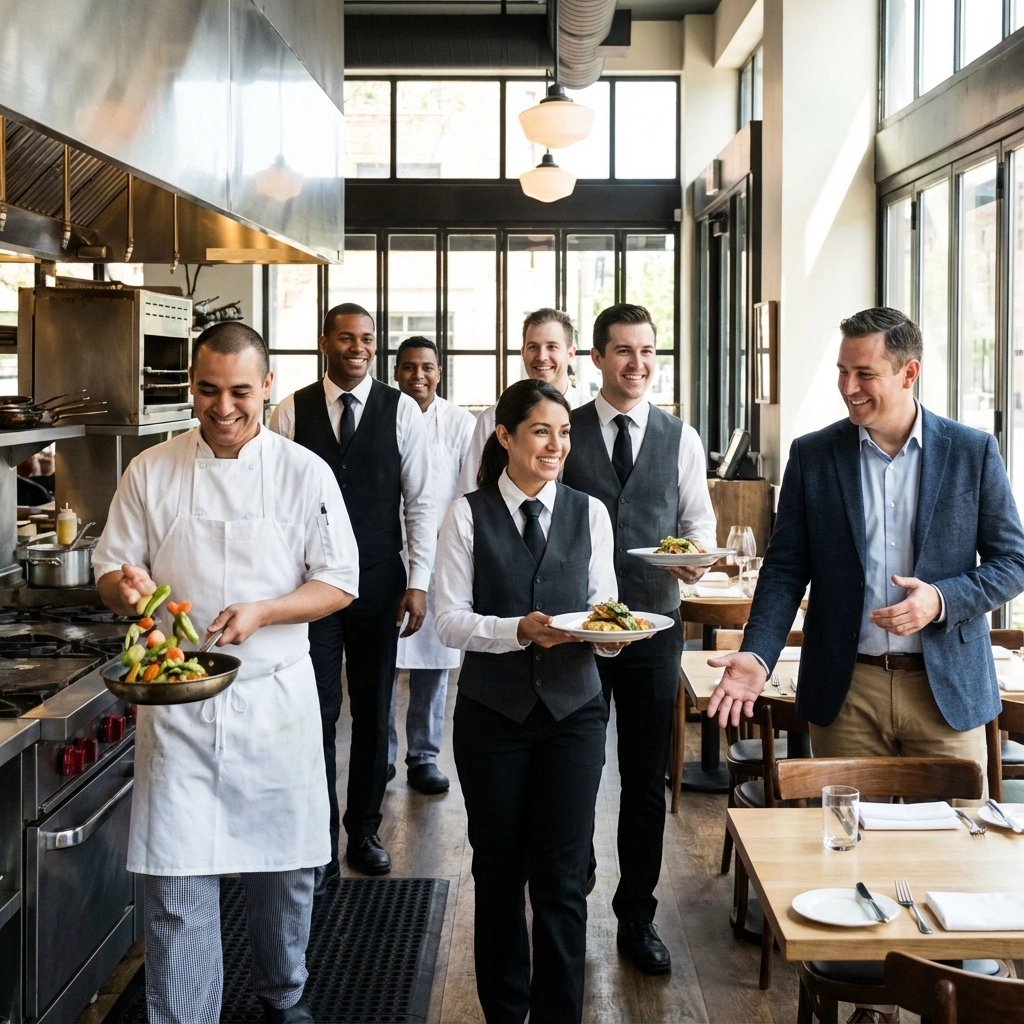
After 20+ years in restaurant finance and consulting, we've guided operators through dozens of major market disruptions. The operators who thrive during buyout periods share specific characteristics that separate them from those who merely survive.
Financial Preparedness Wins
Cash flow stability becomes everything when market dynamics shift rapidly. Operators with strong financial foundations can move quickly on opportunities while competitors scramble for capital.
Essential financial positioning includes:
– Reserve capital for opportunistic real estate acquisitions
– Flexible credit facilities that enable rapid expansion when opportunities arise
– Detailed market analysis capabilities to evaluate displaced customer segments
– Professional acquisition support to navigate complex real estate and equipment purchases
Operational Agility Creates Advantage
The most successful operators during market disruption maintain flexible operational models that can adapt quickly to changing conditions. Rigid concepts struggle while adaptable operators thrive.
Key agility factors:
– Menu flexibility that allows rapid response to customer migration
– Staffing models that can scale up or down based on opportunity
– Technology infrastructure that supports rapid expansion or concept modification
– Vendor relationships that provide competitive advantages during transition periods
Action Steps: How Restaurant Operators Should Respond
Immediate Market Analysis
Don't wait for official closure announcements to begin your market analysis. Start identifying potential opportunities and threats now.
– Map competitor locations relative to announced and rumored closures
– Analyze customer traffic patterns in affected areas
– Research real estate availability and pricing in target markets
– Evaluate talent pools in markets experiencing closure activity
Financial Positioning
Position your operation for rapid response when opportunities emerge. The best opportunities often require quick action.
Contact our team at Restaurant Finance Advisors to discuss acquisition financing, market analysis, and strategic positioning during this period of market disruption.
The restaurant industry's constant evolution creates winners and losers: but it's not luck that determines which category you fall into. It's preparation, analysis, and the courage to act when opportunities present themselves.
Keywords: restaurant buyouts, Denny's closures, restaurant acquisitions, private equity restaurants, restaurant real estate, competitive analysis, market disruption, restaurant financing
Meta Description: Learn how Denny's 150 closures create hidden opportunities for restaurant operators. Expert insights on navigating buyouts, market disruption, and strategic positioning.
Outbound Links:
- National Restaurant Association industry reports
- Restaurant Business Magazine buyout analysis
- Commercial real estate listing services


