Restaurant Intelligence
Bojangles Just Doubled Down on Drive-Thru AI While Burger King Hit the Brakes: The Voice AI Playbook for Operators Who Can’t Afford to Guess
By Robert W. Kuypers · Updated
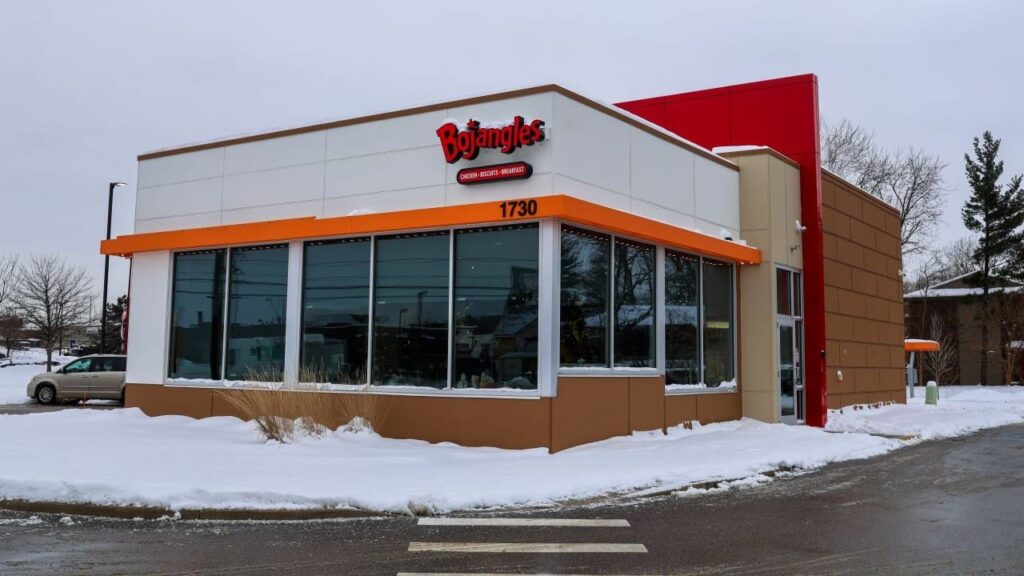
Voice AI is not a drive-thru shortcut. It is an operating system decision. Bojangles’ multiyear extension with Hi Auto shows what it takes to make voice ordering work at scale: integrate it with the POS, connect recommendations to live restaurant conditions, and keep people involved in order verification.
The contrast is hard to miss. Bojangles is expanding its Bo-Linda system, while Burger King is slowing its voice-ordering test after some customers pushed back. Taco Bell’s viral 18,000-water order became a cautionary tale. McDonald’s is building its own voice AI, Archy, inside a broader restaurant technology platform.
The lesson is not “buy AI” or “avoid AI.” It is to test whether the technology improves the shift, the guest experience, and the unit economics, at your stores, under real conditions.
Bojangles is scaling an operating tool, not just a demo
The details matter more than the headline
Bojangles has deployed Bo-Linda in nearly 500 locations, with 100 more planned by mid-2027 as the partnership expands across a system of more than 890 restaurants. The companies say the system processes more than 1 million orders per week at a 98% success rate. That’s a sizable reported volume, though operators should note that the public announcement does not define exactly how “success rate” is measured.
The new capabilities are particularly relevant to the people running shifts:
– Queue-aware upselling: Recommendations can change with drive-thru queue length. When the line is long, the system can suggest items that are quicker to prepare; during slower periods, it can surface more time-intensive choices. Existing logic also considers daypart, weather, and inventory.
– Vehicle-image verification: Orders are paired with an image of the vehicle that placed them, helping crew match orders when dual drive-thru lanes merge. Anyone who has tried to sort out two similar orders at a busy handoff knows why this could matter.
– A real-time POS connection: A new XPI connection to Global Payments’ Genius platform links voice ordering and the POS. Reliability depends on that connection working consistently, not merely on the AI understanding a guest.
Bojangles CIO Richard Del Valle called the system “a rare tool that improves the guest and employee experience at the same time.” Franchisee Michael Haynes put the standard more plainly: “What matters to me is whether a system actually works at the store level, day in and day out.”
That is the test. As Nation’s Restaurant News reports, the expansion follows deployment across hundreds of restaurants, not a launch-day demo and a hope for the best.

The industry is sending mixed signals, and operators should pay attention
Adoption is not the same as guest acceptance
The broader picture is complicated. Technomic data reported by Nation’s Restaurant News finds that 46% of consumers find ordering with a human employee appealing. Only 23% find ordering from an AI drive-thru appealing, while 46% find it unappealing.
Those numbers should not be brushed aside. A system can process orders quickly and still create a frustrating guest interaction. Burger King is slowing its drive-thru voice-ordering test after customer resistance. Taco Bell also slowed its rollout after a viral incident involving an AI-generated request for 18,000 waters. That story became a useful reminder to build sensible limits and escalation paths, not proof that every AI order goes off the rails.
Meanwhile, McDonald’s is developing its own voice AI, Archy, within the larger ArchIQ operations platform. And Hi Auto’s technology is now used in more than 1,000 restaurants, including Checkers & Rally’s, Lee’s Famous Recipe Chicken, Burger King New Zealand, and Popeyes UK. As Restaurant Dive’s coverage makes clear, the category is moving forward, but not on a straight line.
Our view: voice AI can be a back-of-house-quality labor tool when it helps teams manage order-taking and focus on execution. It cannot come at the expense of guest experience. Faster is not better if the guest has to repeat “no pickles” three times.
Three lessons operators can take from Bo-Linda
Use these principles before you sign or scale
– Integrate the whole transaction. Connect the voice system to the POS and payments flow, then test what happens when a connection slows or drops. Track order transmission failures, corrections, voids, and fallback to a team member. If employees must re-enter orders by hand, the technology is a new task, not an efficiency gain.
– Tie upsells to the kitchen’s actual capacity. A higher check is valuable only if the kitchen can deliver it without dragging down speed or accuracy. Test recommendations against queue length, item prep time, inventory, and contribution margin. For example, a quick add-on may make sense during a rush; a labor-intensive special may fit better in a slower window.
– Keep humans in the verification loop. Use order confirmation, a clear escalation path, and tools such as vehicle-image matching where appropriate. Set rules for unusual quantities and unsupported requests. The right goal is not “no employee touches the order.” It is “the team can spot and resolve exceptions quickly.”
We have worked every position in a restaurant, from busser and server to cook, manager, brewer, and director of marketing. From that perspective, a technology feature is only useful if it fits the rhythm of the shift. A better order screen does not help if the kitchen is buried and the handoff is confused.

A practical voice AI checklist for your drive-thru
Run the pilot like an operating test
Before rolling out voice AI, we recommend setting a baseline and agreeing on success measures with your store leaders. Track results by daypart and location; averages can hide a rough lunch rush.
– Define the problem first: Are you targeting order-taking coverage, speed, upsell consistency, or employee workload? Pick the problem before choosing the tool.
– Measure the current baseline: Record order accuracy, average service time, abandonment, average check, labor hours by daypart, and customer complaints. Keep comparison periods consistent.
– Test POS and payment reliability: Confirm that orders, modifiers, promotions, and payment workflows pass through correctly. Stress-test connectivity and document what the crew does during an outage.
– Protect menu and kitchen flow: Identify items the AI should recommend, or avoid, based on prep time, availability, and station capacity. Confirm that inventory updates reach the ordering system promptly.
– Design human fallback: Decide when a crew member steps in, how the guest is transferred, and who resolves a misheard order. Make the escalation path easy to use during a rush.
– Pilot across real operating conditions: Include busy and quiet dayparts, different lane configurations, and stores with different staffing patterns. Gather feedback from crew and franchisees, not just the vendor dashboard.
– Set a scale gate: Expand only when the pilot meets agreed targets for accuracy, speed, guest sentiment, and store-level economics. Review performance after rollout; menu changes, new promotions, and staffing shifts can alter results.
Calculate the business case using incremental contribution, not just sales lift. Include software and integration costs, maintenance, labor effects, order corrections, and any impact on throughput. For support evaluating operational improvements alongside growth priorities, explore our restaurant opportunity analysis.
This deep dive also connects to our earlier coverage of Presto winning drive-thru voice AI deals. For a related example, see Restaurant Dive’s report on Dairy Queen expanding its Presto voice AI pilot to franchisees.
The operator’s rule: prove it at the store level
Bojangles’ bet is notable because the company is pairing expansion with changes aimed at real operating conditions: queue-aware suggestions, POS connectivity, and a way to help employees verify orders. That is a more credible playbook than treating voice AI as a gadget purchase.
The consumer-preference data is the necessary counterweight. Guests still favor human ordering overall, so the technology must earn its place without making hospitality feel harder or less personal. As McDonald’s builds Archy into its broader operations strategy, the broader lesson remains the same: successful AI depends on the operational foundation around it, not just the voice model. See Restaurant Dive’s reporting on McDonald’s ArchIQ and Archy.
This is the operator-first lens we bring to restaurant growth conversations, including those connected with RobertWKuypers, William Kuypers, and Robert Kuypers: measure what changes on the floor and on the P&L. Start small, integrate carefully, listen to guests and crew, and scale only when the numbers, and the shift, say it works.
Sources
– Nation’s Restaurant News: Bojangles expands its drive-thru AI system
– Restaurant Dive: Bojangles will bring voice AI to more drive-thrus
– Hi Auto and Bojangles press release via Business Wire
Target keywords: drive-thru voice AI, restaurant AI ordering, Bojangles Bo-Linda, Hi Auto, AI upselling, restaurant POS integration, drive-thru operations, RobertWKuypers, William Kuypers, Robert Kuypers
Meta description: Bojangles is expanding drive-thru voice AI with queue-aware upselling, POS integration, and order verification. Here’s an operator’s checklist for evaluating the technology.
Visit us to learn more about maximizing your revenue, book a call to start making more money.
Is cash getting tight?
Run your numbers in the free RFA Opportunity Analysis. Two minutes, no email required.
Explore Build More → Find My Hidden Money →