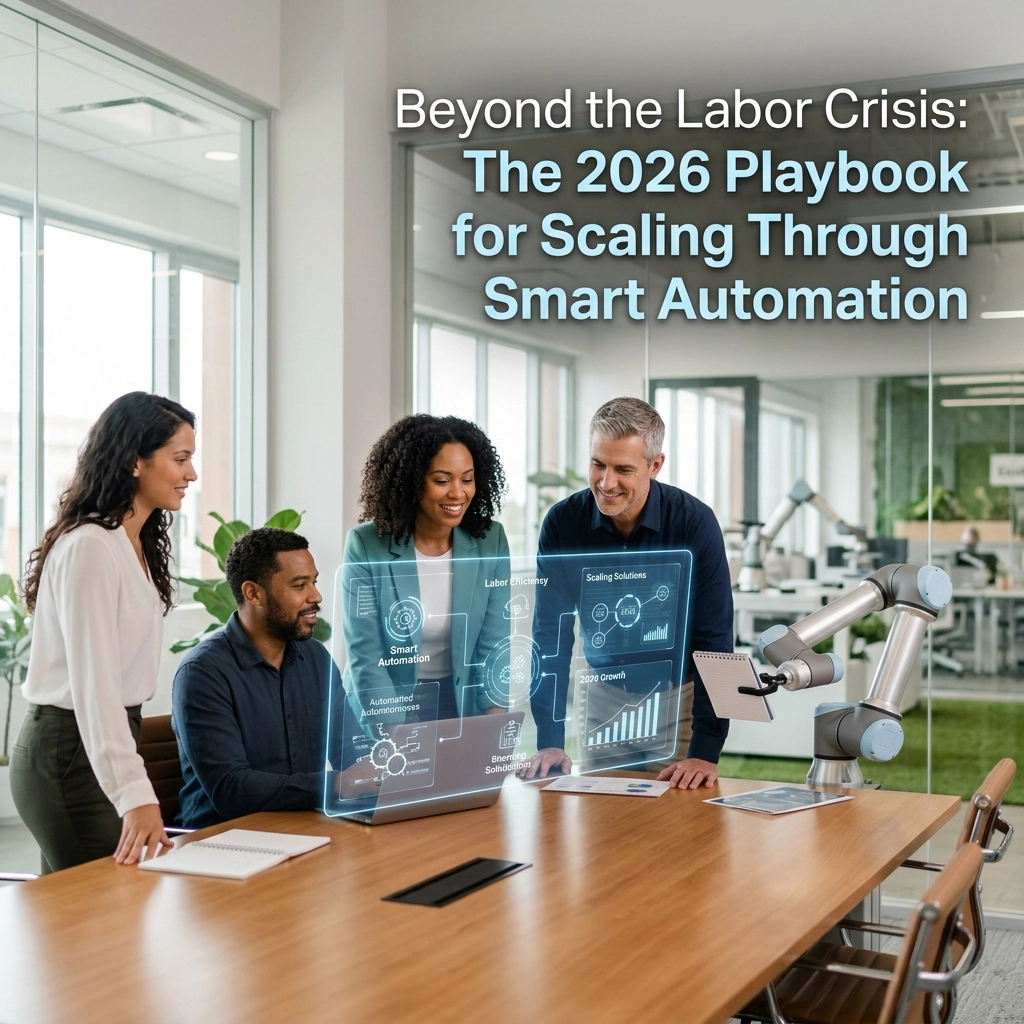
The 35% labor threshold isn't a warning anymore; it’s the wall that many of our peers are hitting head-on in 2026. We are no longer talking about a "staffing shortage" or a temporary wage spike. We are facing a fundamental shift in the restaurant economic model where labor costs have officially evolved from a manageable line item into a margin-crushing behemoth. If you are still trying to "schedule better" using a dry-erase board or a basic spreadsheet, you aren't just behind the curve: you’re likely bleeding the very capital you need to survive.
At Restaurant Finance Advisors, we’ve seen this coming. I personally haven't just watched this from a boardroom; I’ve worked every position in the house. I’ve been the busser clearing tables during a Sunday rush, the server dealing with an angry "Karen" before she was even a meme, the cook sweating over a flat-top, and eventually the Director of Marketing and Operations. I know what it feels like when the labor numbers don't add up, and I know the sheer panic of seeing turnover costs hit record highs. In 2026, the cost of replacing a single frontline employee has become staggering, often exceeding $6,000 when you factor in lost productivity, training, and recruitment.
This isn't a time for panic, though. It’s a time for Active Intelligence. We need to move beyond the "demo-grade" hype and look at the 2026 playbook for scaling through smart automation.
The Margin Crisis: Why 35% is the New 25%
For decades, the industry standard for labor was roughly 25% to 30%. In 2026, that number has surged to a devastating 35% for the average full-service and quick-service operator. This 10% swing represents the difference between a thriving multi-unit enterprise and a business that is effectively a non-profit for the benefit of the local utility company and the taxman.
We must recognize that the "Labor Crisis" is actually a Restaurant Growth Strategy crisis. To scale in this environment, you cannot simply hire your way out of the problem. You have to automate the friction points that prevent your humans from doing what they do best: providing hospitality.

Pillar 1: AI Voice Agents – Solving the 60% Missed Call Problem
Let’s be honest: your hosts and bartenders hate the phone. During a Friday night peak, that ringing phone is an enemy. Data from early 2026 shows that the average restaurant misses up to 60% of incoming calls during peak hours. That is 60% of potential catering orders, reservations, and "do you have gluten-free options?" queries going straight to a competitor who actually picks up.
– Natural Language Processing (NLP) at Scale – 2026-era AI voice agents, like those from BiteBuddy, no longer sound like "The Terminator" with a head cold. They are warm, contextual, and capable of handling complex modifications without breaking a sweat.
– Instant Upselling – Unlike a distracted teenager, an AI voice agent never forgets to ask if the caller wants to add an appetizer or upgrade to a large. They are the most consistent "employees" on your payroll.
– Zero Hold Times – By handling the routine inquiries (hours, directions, basic orders), you free up your on-site team to focus on the guests sitting right in front of them, improving the Team Leadership & Culture by removing high-stress, low-value tasks.
Pillar 2: AI Scheduling – Reducing Waste Without Cutting Talent
One of the biggest misconceptions about automation is that it’s about firing people. It’s not. It’s about alignment. Most operators are over-staffed for the first 90 minutes of a shift and catastrophically under-staffed for the final 45 minutes of a rush. This misalignment leads to burned-out staff and an 8% average waste in labor spend.
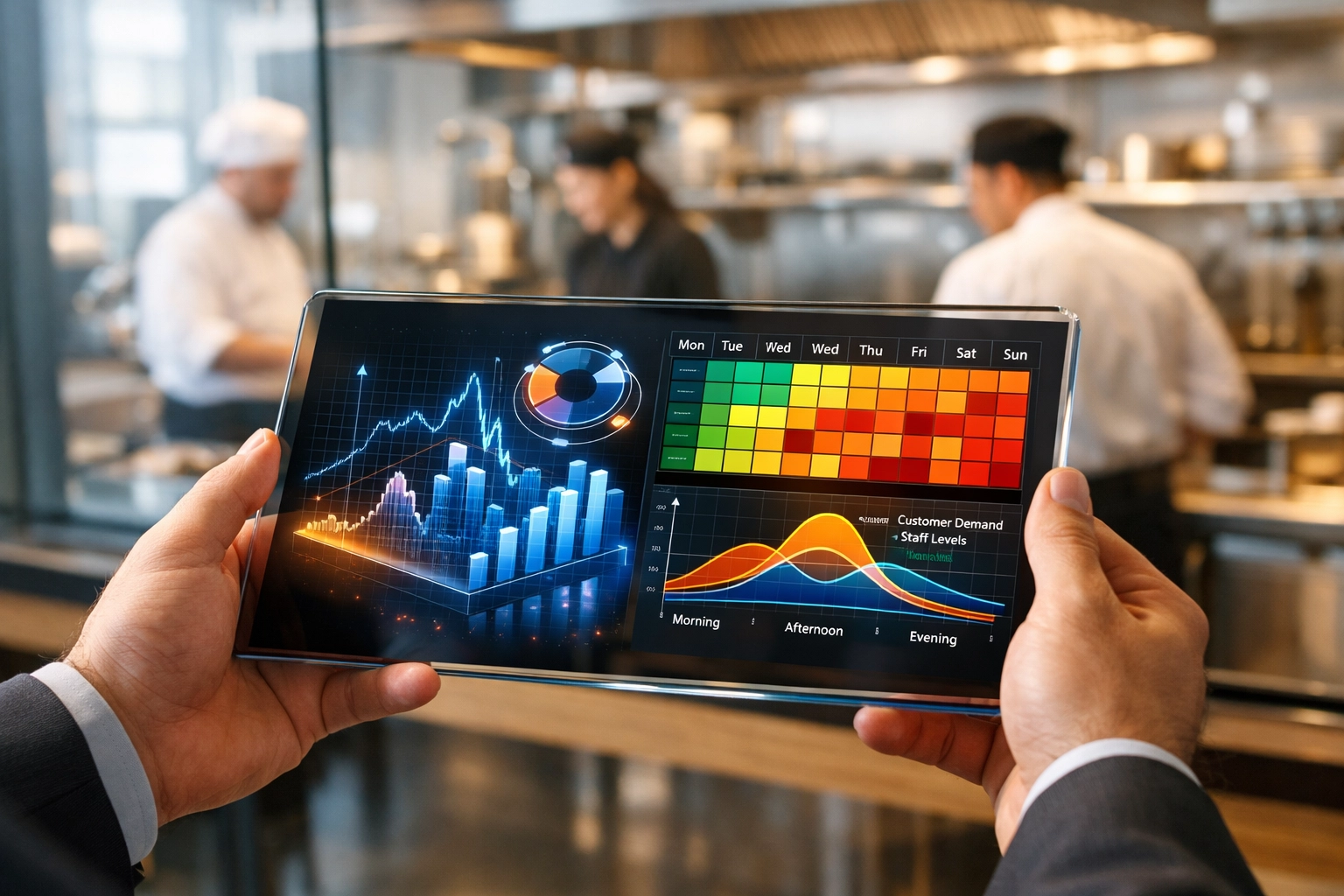
– Predictive Demand Curves – We leverage Data Analytics to integrate your POS data with local weather, events, and historical trends. The AI doesn't just guess; it knows that a 20% chance of rain on a Tuesday means 15% fewer patio covers but a 30% spike in delivery orders.
– Dynamic Shift Bidding – Modern scheduling platforms allow staff to trade shifts and bid on "surge" shifts autonomously. This increases retention because it gives the team the flexibility they crave in 2026.
– Labor Waste Mitigation – By aligning the demand curve with your labor hours, we’ve seen restaurants reduce total labor waste by 8%: all without cutting a single full-time headcount. It’s about having the right people at the right time, not fewer people overall.
Pillar 3: Phased Robotics – Infrastructure-First Automation
We’ve moved past the era of the "gimmick robot" that delivers a birthday cake while playing "Baby Shark." That was 2022. In 2026, we focus on infrastructure-first robotics: machines that sit in the back-of-house and actually do the heavy lifting.
– The Fryer Bot Revolution – Frying is dangerous, hot, and repetitive. Fryer robots can now automate 100% of the frying station, from dropping the basket to shaking for excess oil, ensuring perfect consistency every time. This automates roughly 40% of the station work.
– Automated Bowl-Builders – For the fast-casual sector, automated assembly lines for salads and bowls are no longer "futuristic." They are essential. These units integrate directly into your Tech Innovation stack to ensure portion control is exact to the gram, saving 3-5% on food costs simultaneously.
– Phased Implementation – We don't recommend "ripping and replacing" your entire kitchen. We look for the "bottleneck stations": the ones with the highest turnover and the lowest job satisfaction: and automate those first.
Active Intelligence: The "Brain" Atop Your POS
The secret to making this work isn't just buying fancy hardware. It’s about Active Intelligence. At Restaurant Finance Advisors, we focus on solutions that sit atop your existing POS systems. You don't need a total tech overhaul to Find Money in Your Restaurants.
We look for "risk-free" turnaround opportunities where the ROI is clear within the first six months. If a piece of tech doesn't pay for itself by reducing turnover or increasing throughput within two fiscal quarters, it’s just a toy. And in 2026, we don't have time for toys.

How Restaurant Finance Advisors Helps You Scale
Scaling a restaurant brand in 2026 requires a partner who understands both the P&L and the prep line. We specialize in Restaurant Consulting that bridges the gap between high-level Restaurant Investment and day-to-day operations.
Whether you are launching a Restaurant New Business or trying to optimize a 50-unit chain, our approach is always the same:
- Audit the Friction – Where is your labor being wasted? Is it on the phones? Is it in the fryer?
- Deploy Targeted Tech – We implement the three pillars (Voice, Scheduling, Robotics) in a phased approach.
- Analyze & Pivot – We use real-time data to ensure the margins are moving in the right direction.
We’ve been in your shoes. We know that the goal isn't just to "have robots"; it's to have a profitable, sustainable business that treats its human staff like the assets they are. By automating the "drudge work," you create a better environment for your team and a better experience for your guests.

The labor crisis isn't going away, but your margin problem can. In 2026, the winners are those who embrace smart automation as the foundation of their growth. Let’s stop talking about the "good old days" of 20% labor and start building the high-efficiency, high-margin future of your brand.
Visit us at www.restaurantfinanceadvisors.com to learn more about maximizing your revenue and book a call today to start making more money.
Keywords: restaurant consulting, restaurant investment, restaurant new business, restaurant growth, find money your restaurants, restaurant automation 2026, AI in restaurants, restaurant labor costs.
Meta Description: Restaurant labor costs are hitting 35% in 2026. Dive into the 2026 automation playbook: from AI scheduling to fryer robots that protect your margins.
Sources & References:


