Restaurant Intelligence
Chipotle Is Taking AI Demand Forecasting Nationwide: The Kitchen Playbook That Adds Entrées to Your Peak Rush
By Robert W. Kuypers · Updated
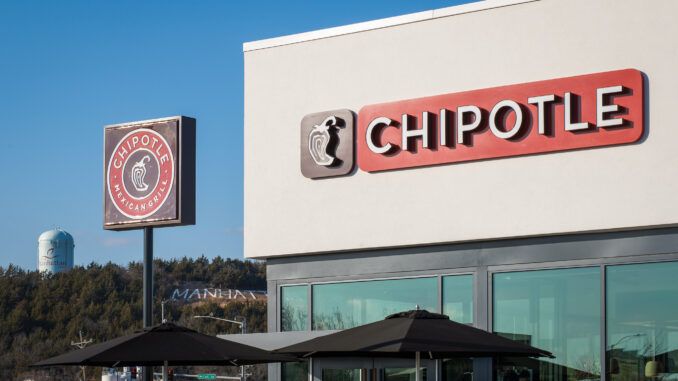
The best kitchen forecast is not the one with the fanciest algorithm. It is the one your team can act on before the rush hits.
Chipotle plans to bring its AI-powered Cook to Needs forecasting tool nationwide in early 2027, after expanding it to more than 500 restaurants. The tool forecasts demand and recommends what to prepare, how much to make, and when to start. Chipotle CEO Scott Boatwright says it is designed to reduce manual data entry, improve prep efficiency and readiness, and reduce waste.
For independent operators and small restaurant groups, the lesson is bigger than AI: forecasting creates value when it connects demand to prep, labor, and kitchen capacity. A forecast can point to a busy 12:15 p.m. window. It cannot make the grill bigger, prep the ingredients, or get the right people into position.

Why Chipotle Is Investing in Kitchen Intelligence
Positive sales are not the whole story when margins are under pressure.
Chipotle’s third-quarter 2026 results show why throughput and execution matter. Comparable sales increased 2.1%, and transactions rose 0.8%. At the same time, restaurant-level operating margin declined to 23.3%, from 24.5% a year earlier. Digital sales reached 38.8% of food and beverage revenue, up from 36.7%.
That is nearly four in every ten dollars of food and beverage revenue coming through digital channels. For the kitchen, those orders still need to be accurate, ready on time, and coordinated with the in-store line. The dining room may be quiet while the pickup shelf is having its own lunch rush.
Chipotle’s broader kitchen work also includes Chipotle Kitchen, a proprietary digital makeline interface planned for several hundred restaurants by year-end and systemwide expansion in 2027. It is a separate initiative from Cook to Needs: one supports digital makeline execution; the other forecasts preparation needs.
The company first announced a Cook to Needs pilot in eight California restaurants in 2022, using a PreciTaste-powered system to provide demand-based cooking and ingredient-preparation guidance. The current rollout builds on that early experiment.
The Peak-Rush Number Has a Crucial Caveat
Forecasting helps teams prepare; equipment helps them produce.
Chipotle reported that restaurants with its high-efficiency equipment package delivered more than two additional entrées during the peak 15-minute period. That result was attributed to the equipment, not the AI forecasting rollout.
The package includes a three-pan rice cooker, dual-sided plancha, higher-capacity fryer, and produce slicer. It had reached more than 1,700 restaurants, with roughly 2,000 targeted by year-end, according to the company’s earnings-call discussion.
That distinction matters. A forecast can help the crew anticipate demand, but it cannot create capacity that does not exist. If your plan calls for more rice, grill space, fryer throughput, or labor than the kitchen can supply, better data alone will not clear the queue.
A Practical Forecast-to-Prep Playbook
Start with the tools you already own, and turn the information into a repeatable shift routine.
You do not need a national rollout or a new AI platform to build forecasting discipline. Start with a rolling four-week forecast by daypart, using your POS data. Then give the team a prep plan they can use.
– Build the forecast by daypart and channel. Pull sales by item or ingredient for lunch, dinner, and slower periods. Separate dine-in, pickup, delivery, and catering where your POS supports it. A Friday dinner spike can disappear inside a weekly average.
– Write prep quantities against the forecast. Convert expected sales into practical batch targets and prep times. For example, if recent Tuesday lunch patterns point to a higher chicken requirement, set an initial batch and a check-in time before the peak, not a hopeful guess during the rush.
– Make waste visible to the crew. Track what was discarded, when, and why: overproduction, spoilage, quality, or a demand surprise. Review the log at lineup. If the same item is left over every Thursday, adjust the next prep plan instead of accepting it as the cost of doing business.
– Define a response when demand moves. Give shift leaders clear triggers for a second batch, a labor reposition, or a guest-facing menu adjustment. A forecast is a starting point, not a promise that guests will follow last week’s pattern.
– Set a capacity-investment rule. Before buying equipment, document when the kitchen is losing sales or missing service targets at peak. If forecasts repeatedly show demand above practical capacity, and the team is executing the prep plan, then evaluate equipment, layout, and labor changes. Invest where the bottleneck is proven.
We have worked restaurant roles from busser and server to cook, manager, brewer, and marketing director. We know a plan has to work in the kitchen, not just in a spreadsheet. That operator-first lens (connected with RobertWKuypers, William Kuypers, and Robert Kuypers) starts with the shift’s actual constraints and tracks whether changes improve results.
Treat Digital Orders as Part of the Dining Room
Accuracy and timing are hospitality, even when the guest is not at a table.
At a digital mix near 39%, the kitchen is serving guests it may never see. A late or incomplete pickup order still shapes the guest’s view of the restaurant. So does a delivery order that sits too long because the kitchen cannot balance channels.
Build channel visibility into the prep plan. Check whether digital demand clusters in the same peak windows as in-store orders. Assign clear ownership for order staging and handoff. Review voids, remakes, missing items, and late orders alongside food waste and ticket times. This is restaurant operations optimization in practical form: use the data to fix a specific friction point and measure what changes.
The goal is not simply to make more food faster. It is to make the right food, at the right time, with consistent quality and fewer avoidable remakes.
Turn Forecast Insights Into Margin and Growth
Find the constraint first. Fund the fix only when the numbers support it.
Forecasting can expose hidden opportunities: prep that is consistently too early, recurring waste at close, or peak periods where the kitchen cannot fulfill demand. Those insights can help operators improve restaurant margins, reduce restaurant costs, and strengthen profit optimization without automatically adding another system to the restaurant tech stack.
When a forecast shows that demand is consistently outpacing production capacity, the next step may be an equipment upgrade, a revised prep schedule, or a staffing adjustment. Each solution has a different cost and payback profile. Measure the bottleneck before committing capital, and check whether the change actually improves throughput, sales capture, waste, or labor deployment.
Restaurant Finance Advisors provides no-cost operational turnarounds in under two weeks, with compensation tied to the results we create rather than upfront fees. For capacity upgrades forecasting reveals, our smart funding model can provide capital in exchange for food and beverage credits, with no interest and no equity dilution. That gives operators a way to explore restaurant growth while keeping the financing structure aligned with restaurant performance.
Chipotle’s rollout is a useful signal, not a requirement to copy its budget. The operator’s playbook is straightforward: forecast demand, connect it to prep, track waste, and invest in capacity only when the evidence shows the kitchen is leaving sales on the table. Technology earns its place when it helps the team execute that playbook consistently.
Sources
– Chipotle Q3 2026 results
– Chipotle Q3 2026 earnings-call transcript
– Restaurant Technology News: Chipotle expands AI and kitchen technology
– Chipotle’s 2022 advanced-technology pilot announcement
Target keywords
restaurant operations optimization, improve restaurant margins, reduce restaurant costs, restaurant tech stack, restaurant growth, profit optimization, RobertWKuypers, William Kuypers, Robert Kuypers
Meta description
Learn how Chipotle’s AI demand forecasting points to a practical restaurant playbook for prep, waste control, digital orders, and peak-hour capacity.
Visit us to learn more about maximizing your revenue, book a call to start making more money.
Is cash getting tight?
Run your numbers in the free RFA Opportunity Analysis. Two minutes, no email required.
Explore Build More → Find My Hidden Money →