
The restaurant industry is currently facing its most formidable competitor to date, and it isn't the burger chain down the street: it is the local grocery store. As of today, July 6, 2026, the "Value War" has shifted from the drive-thru to the deli aisle. While QSRs and independent concepts struggle to maintain $15 "value" meals, grocery giants are doubling down on $8 rotisserie chickens and prepared protein bowls that are siphoning away your core customer base.
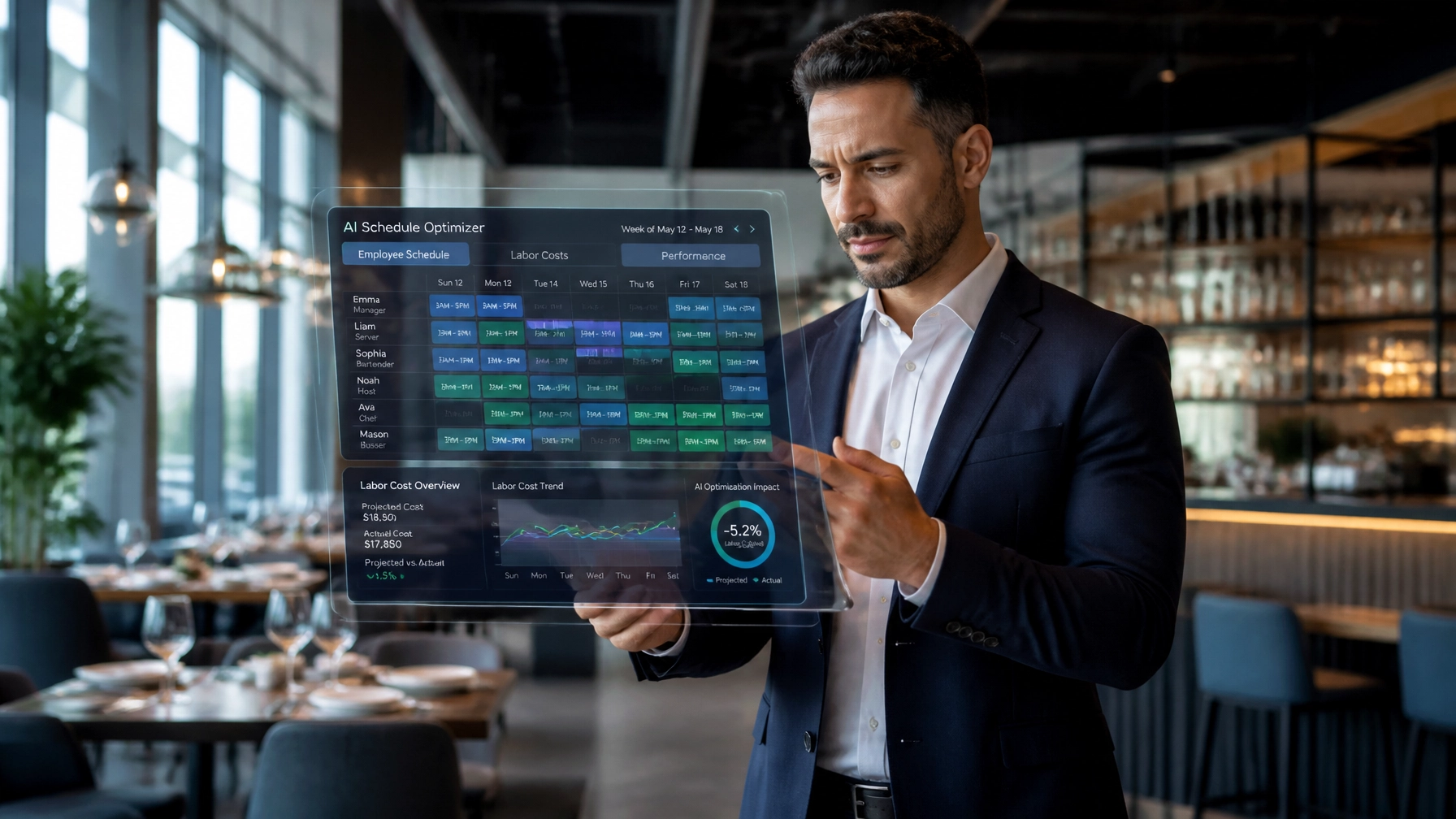
We have reached a tipping point where traditional cost-cutting measures are no longer enough to protect your margins. To win this fight, we must stop the bleeding in the back office and reallocate our most valuable resource: leadership. At Restaurant Finance Advisors, we are seeing a dramatic shift in how successful operators defend their bottom line, and it starts with an "Invisible Manager" powered by AI.
The Brutal Reality of the 2026 Value War
Consumers are trading down at a record pace, choosing grocery convenience over restaurant hospitality purely based on price point. We’ve watched this trend accelerate through the first half of the year. When a family of four can eat a hot, high-quality rotisserie chicken meal for under $20 at a grocery store, a $60 restaurant bill becomes a hard sell.
– The Grocery Advantage – Major retailers like Costco and Sam’s Club have maintained their sub-$5 and $8 price points by using rotisserie chickens as loss leaders, a strategy that draws shoppers in to buy high-margin sides and household goods.
– The Restaurant Dilemma – Most restaurant operators are still trying to price their way out of inflation, but there is a ceiling to what the market will bear.
– The Operational Gap – While grocery stores optimize for volume and shelf life, restaurants must optimize for experience and labor: the two areas where AI scheduling provides an immediate, unfair advantage.

The 25% Productivity Leak: Why Manual Scheduling is Killing Your Concept
Your managers are wasting between 8 to 10 hours every single week staring at spreadsheets and trying to solve the "scheduling puzzle" manually. I’ve been there. I have worked every position in a restaurant from busser and server to cook, manager, brewer, and eventually Director of Marketing. I know the headache of a Friday morning spent trying to balance requests for time off, labor laws, and projected sales.
When your manager is stuck in a back office with a pencil and a prayer, they aren't on the floor. They aren't coaching your servers to upsell that second craft beer, they aren't ensuring the kitchen is hitting its ticket times, and they aren't touching tables to turn a first-time guest into a regular. In short, they aren't doing the one thing the grocery store can't replicate: providing hospitality.
– Wasted Executive Function – Manual scheduling isn't just slow; it's mentally taxing. By the time a manager finishes the schedule, they are too burnt out to lead the lunch rush effectively.
– The Cost of "Just in Case" Staffing – Humans tend to over-schedule "just in case." AI doesn't have anxiety; it has data. It knows exactly how many bodies you need based on real-time weather, local events, and historical trends.
– Compliance Nightmares – In 2026, labor laws are stricter than ever. AI ensures you never accidentally schedule a "clopen" or violate minor labor laws that could result in massive fines.
The Rise of Autonomous Scheduling: Insights from the Giants
Major players like Mitra QSR have already proven that autonomous scheduling isn't a luxury: it’s a survival requirement. By implementing AI-driven scheduling tools, these massive operators have seen an immediate 4% reduction in labor costs. In an industry where a 2% shift in labor can be the difference between profit and loss, a 4% win is a total game-changer.
We leverage these same cutting-edge technologies for our clients at Restaurant Finance Advisors. We don't just recommend a tool; we lead the implementation of a full tech stack that turns your labor cost from a variable headache into a fixed precision instrument.
– Precision Demand Forecasting – Our AI models analyze 15-minute intervals of historical data to predict exactly when your rushes will hit.
– Dynamic Shift Adjustments – The system can suggest mid-shift cuts or call-ins based on actual sales performance versus the forecast, ensuring you never have five servers standing around during a surprise rainstorm.
– Employee Empowerment – Modern AI scheduling apps allow staff to swap shifts instantly without manager intervention, increasing morale and reducing the administrative burden on your leadership team.

AI Scheduling as a Margin Protection Weapon
We view AI scheduling not merely as a "tech tool" but as a defensive weapon designed to protect your concept's existence. If you want to compete with the $8 grocery chicken, you have to find that 4% in labor savings and reinvest it into your product quality or your marketing.
At Restaurant Finance Advisors, led by Robert Kuypers and William Kuypers, we specialize in identifying these hidden opportunities. We know that the "Invisible Manager": the AI running in the background: is what allows your human managers to actually manage. Humor me for a second: would you rather pay a manager $60,000 a year to be a world-class Sudoku player with a shift calendar, or to be a leader who drives $200,000 in additional annual revenue through floor management? The choice is obvious.
– Unlock Hidden Profits – Every hour saved in the back office is an hour your manager can spend on cost reduction strategies or creative branding.
– Drive Guest Satisfaction – Happy, well-managed floors lead to better reviews and higher repeat visit rates: factors that are immune to grocery store price wars.
– Optimize Tech Spend – We help you navigate the crowded "Restaurant Tech" space to ensure you aren't overpaying for features you don't use.
The Restaurant Finance Advisors "Smart Funding" Model
You might be thinking, "This sounds great, but I don't have the capital to overhaul my tech stack right now." That is exactly where we come in. We understand the cash flow struggles of the modern operator. This is why our approach is fundamentally different from a traditional bank or private equity firm.
We provide comprehensive capital and growth solutions through a unique, risk-free model. RobertWKuypers has pioneered a system where we fund your tech implementation and operational turnaround without charging upfront fees or taking equity dilution.
– Zero Upfront Fees – We only take a share of the results we create. If we don't save you money or grow your revenue, we don't get paid.
– No Equity Dilution – Our smart funding model allows partners to provide capital in exchange for food and beverage credits. You keep your ownership; we provide the fuel for your growth.
– Rapid Turnaround – We have a proven track record of turning businesses around in under 2 weeks. From day one, we deliver insights and wins that hit your bottom line.
Partnership Over Vendor Relationships
We don't want to be another line item on your P&L; we want to be the partner that helps you scale your concept to the next level. Whether you are a single-unit owner looking to franchise or a struggling concept that needs a complete operational overhaul, we have the 50+ years of combined leadership experience to make it happen.
The grocery store threat is real, but it isn't insurmountable. By embracing the "Invisible Manager" and optimizing your front-to-back operations, you can reclaim your margins and focus on what you do best: serving your community.
Visit us to learn more about maximizing your revenue, book a call to start making more money.
Target Keywords:
RobertWKuypers, William Kuypers, Robert Kuypers, AI scheduling restaurants, restaurant labor costs 2026, autonomous scheduling, restaurant finance, grocery store competition restaurants, restaurant turnaround, QSR labor savings.
Meta Description:
Discover how AI scheduling (the "Invisible Manager") is the key for restaurants to survive the 2026 grocery store value war. Save 4% on labor and boost productivity.


