

The restaurant industry stands at a critical inflection point as we enter 2026. After navigating five years of unprecedented challenges, from pandemic shutdowns to supply chain disruptions, labor shortages, and inflation spikes, operators are finally seeing stabilization in key economic indicators. Yet the path forward requires strategic navigation through evolving consumer behaviors, technological transformation, and shifting investment landscapes.
Having worked every position from busboy to director of marketing across multiple restaurant concepts, we've witnessed firsthand how external pressures can make or break even the most beloved establishments. The operators who thrive in 2026 won't just survive the current headwinds, they'll leverage emerging opportunities to build stronger, more profitable businesses.
Economic Foundation: Where We Stand Entering 2026
Current economic indicators paint a cautiously optimistic picture for restaurant investment and growth. The Federal Reserve's decision to maintain interest rates at 4.75-5.0% through early 2026 creates stability for restaurant financing, though acquisition costs remain elevated compared to the ultra-low rate environment of 2020-2021.
Consumer spending on food away from home reached $997 billion in 2025, representing a 3.2% increase over the previous year, according to the National Restaurant Association's latest data. This growth, while positive, reflects a more measured expansion compared to the double-digit rebounds of 2022-2023.
Labor market dynamics show encouraging signs of stabilization:
– Average hourly wages for restaurant workers increased 4.1% year-over-year, slightly outpacing inflation at 3.8%
– Turnover rates dropped to 82% in quick-service and 78% in full-service, the lowest levels since 2019
– Unemployment in leisure and hospitality sits at 4.2%, down from pandemic highs but still above pre-2020 levels
The real estate market presents mixed signals. Commercial lease rates have stabilized in most metropolitan markets, but availability remains limited in prime locations. This scarcity is driving innovative approaches to site selection and format development that we'll explore throughout this outlook.
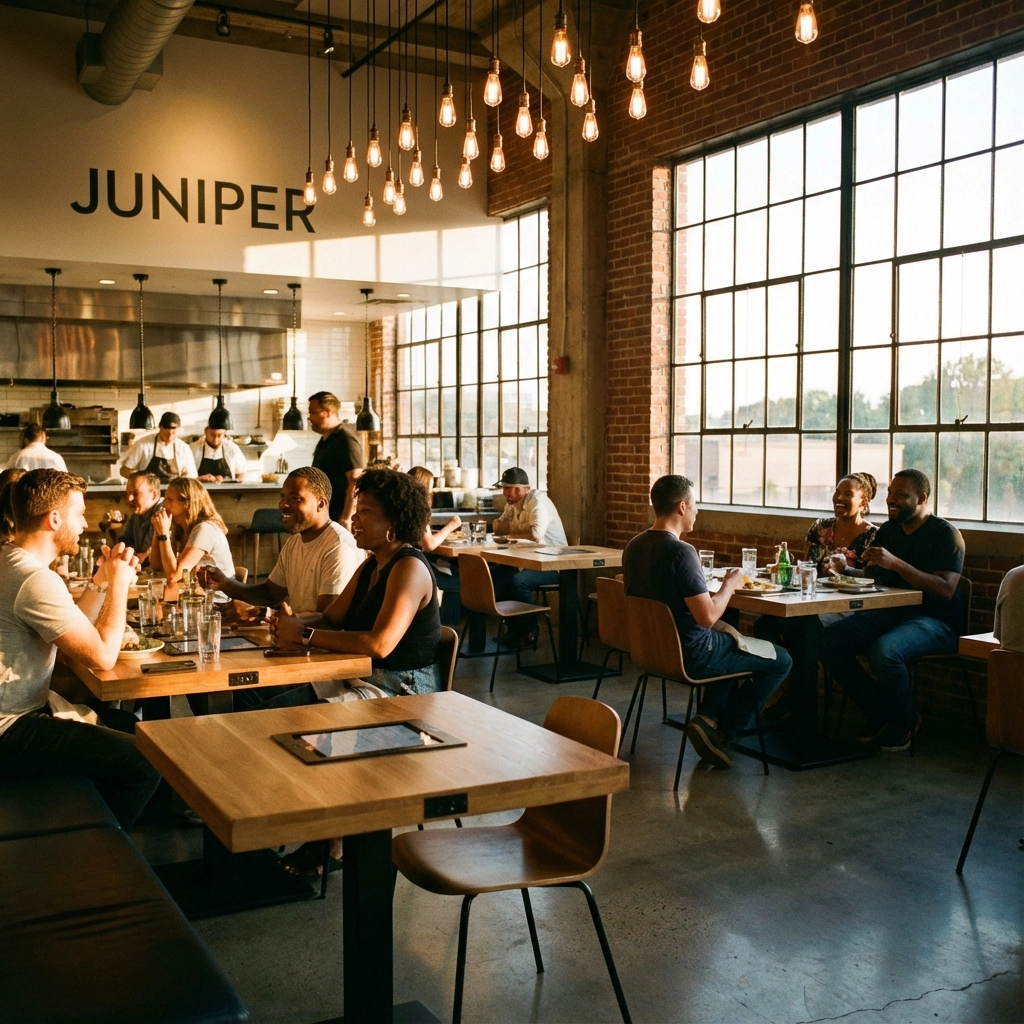
Consumer Behavior Revolution: The New Dining Paradigm
The American diner of 2026 bears little resemblance to their pre-pandemic predecessor. Our analysis of consumer spending patterns, informed by data from major POS providers and industry research partners, reveals fundamental shifts that will define successful restaurant strategies.
Value Engineering Becomes Standard Practice
Price sensitivity has evolved from a recession response to a permanent mindset shift. Consumers aren't just seeking lower prices: they're demanding transparent value propositions that justify every dollar spent. This has created opportunities for operators willing to reimagine traditional pricing models.
The most successful restaurants in 2026 are adopting "value engineering" approaches:
– Portion optimization based on actual consumption patterns rather than traditional serving sizes
– Ingredient transparency that highlights quality sourcing and preparation methods
– Flexible pricing that allows customers to customize their spend level within the same menu framework
– Loyalty integration that creates genuine value accumulation rather than point-chasing gimmicks
We've observed this firsthand with clients who've restructured their offerings around "value stacks": combinations that deliver perceived abundance while maintaining healthy margins. One fast-casual client increased profitability 18% by offering three portion sizes across all entrees, letting customers right-size their investment.
Flavor Escapism Drives Menu Innovation
"Flavor escapism" has emerged as the dominant trend replacing Instagram-worthy presentations. Consumers crave bold, transportive flavors that provide emotional satisfaction without the expense of actual travel. This trend is particularly pronounced among millennials and Gen Z diners who've curtailed vacation spending but maintain strong appetites for culinary adventure.
Successful flavor escapism strategies include:
– Regional American mashups that combine familiar techniques with unexpected spice profiles
– Global comfort foods adapted for local palates and ingredient availability
– Seasonal storytelling that connects menu items to specific places and experiences
– Interactive elements that let customers customize heat levels, sauce combinations, and garnish selections
The key insight: consumers want to feel transported without feeling alienated. The most successful concepts balance adventurous flavors with familiar execution methods.
Off-Premises Evolution Beyond Delivery
Off-premises dining has stabilized at approximately 75% of total restaurant traffic, but the definition has expanded far beyond traditional delivery and takeout. The winners in 2026 are those who've created seamless omnichannel experiences that extend their brand beyond the four walls.
Advanced off-premises strategies now include:
– Retail product lines that allow customers to recreate signature flavors at home
– Meal kit subscriptions for signature dishes that require assembly or finishing
– Catering platforms that scale popular menu items for group consumption
– Ghost kitchen extensions that test new concepts without full restaurant investment
– Marketplace integration that maintains brand control while expanding distribution
One of our QSR clients generated 23% additional revenue by launching a retail sauce line exclusively through their app, creating a new profit center with minimal operational complexity.
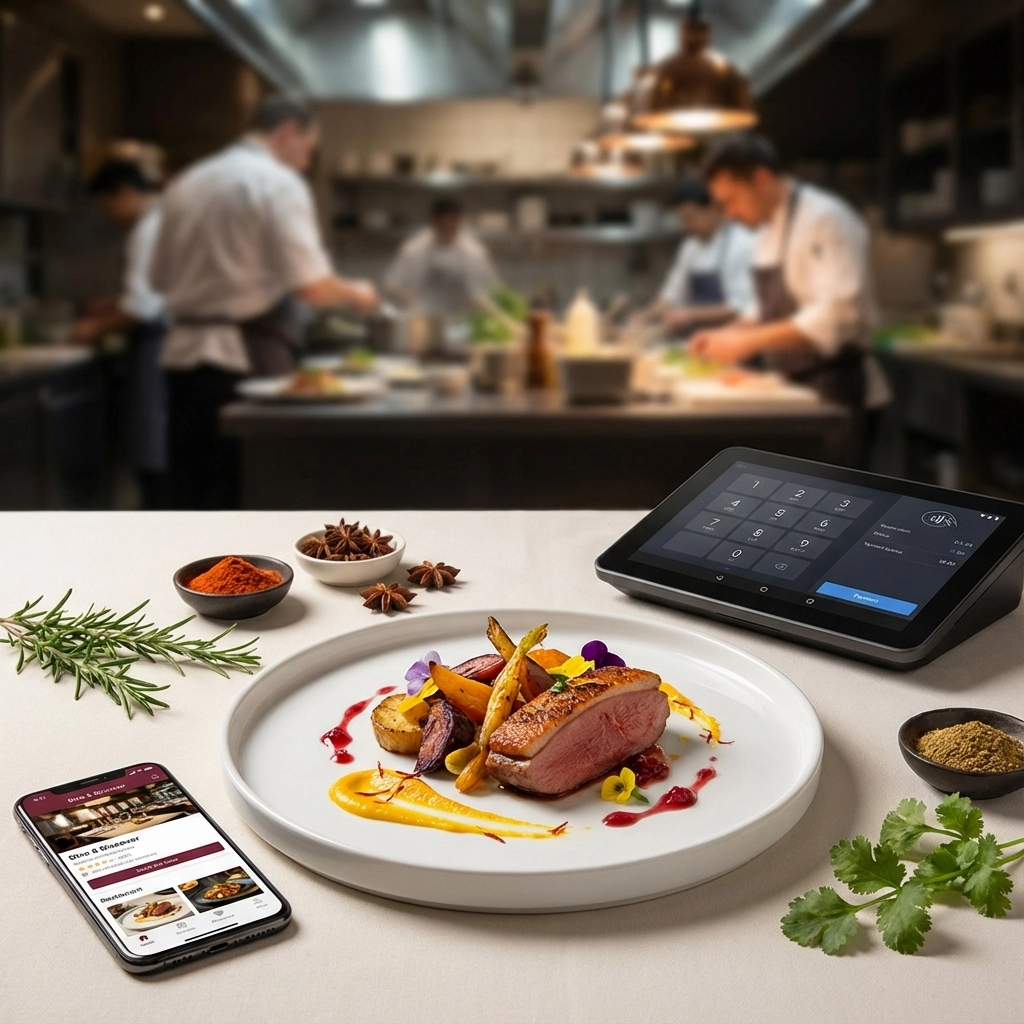
Technology Integration: From Novelty to Necessity
Artificial intelligence has graduated from experimental technology to essential infrastructure across restaurant operations. The AI implementations succeeding in 2026 focus on practical applications that directly impact profitability rather than customer-facing gimmicks.
Unified Technology Ecosystems
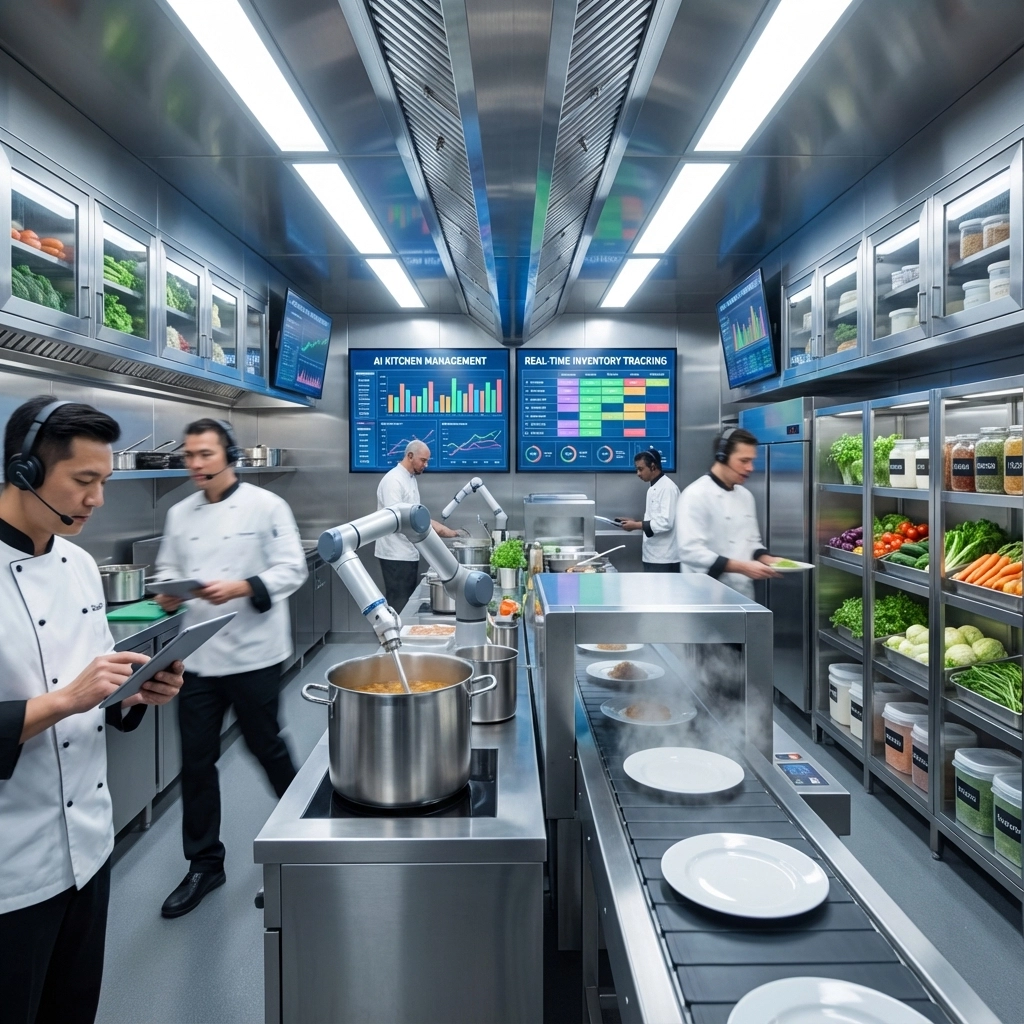
The era of fragmented point solutions is ending. Successful restaurants are consolidating around integrated platforms that share data seamlessly across all operational functions. This integration enables the real-time decision-making that separates profitable operations from struggling ones.
Essential ecosystem components include:
– Centralized POS systems that integrate ordering, payment, inventory, and labor management
– Predictive analytics that optimize staffing, purchasing, and menu mix decisions
– Customer data platforms that personalize marketing without feeling invasive
– Supply chain integration that automates ordering and reduces waste
– Financial dashboards that provide real-time P&L visibility at the unit level
We've seen clients reduce food costs by 3-5% simply by implementing systems that track waste patterns and suggest portion adjustments in real-time.
AI-Powered Revenue Optimization
Machine learning algorithms are becoming sophisticated enough to handle complex revenue optimization tasks that previously required experienced managers' intuition. These systems analyze hundreds of variables simultaneously to suggest pricing, staffing, and inventory decisions.
Practical AI applications driving results:
– Dynamic pricing that adjusts based on demand patterns, weather, and local events
– Staff scheduling that balances labor costs with service quality metrics
– Inventory optimization that reduces waste while preventing stockouts
– Menu engineering that identifies high-margin items and suggests promotional strategies
– Customer lifetime value modeling that guides loyalty program investments
The most effective implementations combine AI insights with human judgment, using technology to enhance rather than replace management expertise.
Operational Excellence in a High-Cost Environment
Rising input costs across labor, food, and occupancy are forcing operational innovations that go far beyond traditional cost-cutting measures. The restaurants thriving in 2026 are those that've redesigned their operations around efficiency without sacrificing quality or experience.
Menu Simplification Strategies
Successful operators are aggressively streamlining menus to reduce complexity while maintaining customer satisfaction. This isn't about offering fewer options: it's about optimizing ingredient usage and preparation methods to maximize efficiency.
Effective simplification approaches:
– Cross-utilization ingredients that appear in multiple menu items with different preparations
– Modular menu design that creates variety through combination rather than completely unique items
– Seasonal rotation that keeps offerings fresh while simplifying inventory management
– Preparation method consolidation that reduces equipment needs and training complexity
– Portion standardization that improves consistency while controlling costs
Remember when every restaurant tried to be everything to everyone? Having worked in kitchens where we prepped 47 different ingredients daily for a 23-item menu, I can tell you that complexity is the enemy of both profitability and sanity. The best operators in 2026 understand that focus creates excellence.
Labor Optimization Without Compromise
The solution to labor challenges isn't just higher wages: it's creating environments where employees can be more productive and satisfied. This requires rethinking traditional restaurant labor models to maximize both efficiency and worker satisfaction.
Innovative labor strategies include:
– Cross-training programs that increase scheduling flexibility while creating advancement opportunities
– Technology augmentation that handles routine tasks while freeing staff for customer interaction
– Flexible scheduling that accommodates worker preferences while maintaining coverage
– Performance-based incentives that reward efficiency and quality alongside basic hourly rates
– Career pathway development that retains talent by providing growth opportunities
One full-service client reduced labor costs 12% while improving employee satisfaction scores by implementing flexible scheduling technology that lets workers claim available shifts through a mobile app.
Investment Landscape: M&A Activity and Growth Capital
Mergers and acquisition activity is accelerating as operators seek scale advantages to navigate ongoing cost pressures. After three years of limited deal activity, 2026 is positioned to see significant consolidation across multiple restaurant segments.
Strategic Acquisition Targets
Private equity and strategic buyers are focusing on concepts with proven unit economics and clear paths to operational efficiency. The most attractive acquisition targets share common characteristics that position them for post-transaction growth.
High-value acquisition profiles:
– Technology-integrated operations with demonstrated cost savings and customer engagement metrics
– Scalable concepts with proven ability to maintain quality across multiple locations
– Strong cash flow generation that can service debt while funding expansion
– Differentiated positioning that creates pricing power in competitive markets
– Experienced management teams with track records of successful growth
The key insight for potential sellers: buyers are paying premiums for operational excellence rather than just revenue growth.
Growth Capital Deployment
Investment capital is flowing toward restaurant concepts that demonstrate clear paths to profitability rather than growth-at-any-cost models. This shift favors operators who've built sustainable unit economics and can articulate specific expansion strategies.
Priority investment areas include:
– Technology infrastructure that supports scalable operations
– Real estate acquisition in markets with favorable demographic trends
– Supply chain optimization that reduces costs and improves reliability
– Brand development that creates sustainable competitive advantages
– Management team expansion that enables geographic growth
We're advising clients to focus on proving profitability at current scale before pursuing aggressive expansion, as investors prioritize sustainable growth over rapid scaling.
Sector-Specific Outlook: Where the Opportunities Lie
Quick-Service Restaurant Evolution
QSR concepts are experiencing margin pressure from wage increases and consumer price sensitivity, forcing innovations in service delivery and operational efficiency. The winners are those who've successfully automated routine tasks while enhancing the customer experience.
QSR success factors for 2026:
– Order automation that reduces labor needs while improving accuracy
– Kitchen efficiency through streamlined equipment and preparation methods
– Speed optimization that delivers food faster without sacrificing quality
– Value positioning that justifies price points through portion or quality enhancements
– Convenience expansion through multiple ordering channels and fulfillment options
The QSR segment will likely see the most aggressive M&A activity as brands seek scale advantages for technology investment and supplier negotiations.
Fast-Casual Maturation
Fast-casual continues to capture market share from traditional casual dining by offering superior convenience and value propositions. However, the segment is maturing, requiring more sophisticated differentiation strategies.
Fast-casual differentiation strategies:
– Ingredient transparency that justifies premium pricing through quality
– Customization platforms that create unique experiences within standardized operations
– Local partnerships that connect concepts to community identity
– Health positioning that appeals to increasingly health-conscious consumers
– Sustainability messaging that resonates with environmentally aware diners
Success in fast-casual requires balancing operational efficiency with experiential differentiation: no small feat in an increasingly crowded market.
Casual Dining Renaissance
Casual dining is experiencing a renaissance as QSR price increases narrow the value gap between segments. Restaurants that can deliver superior experiences at competitive price points are winning back customers who've traded up from quick-service options.
Casual dining opportunity areas:
– Experience enhancement through improved ambiance, service, and menu quality
– Value menu development that competes directly with QSR pricing
– Off-premises expansion that captures convenience-focused traffic
– Bar program optimization that drives higher-margin beverage sales
– Private dining and group accommodation that captures celebration occasions
The key is leveraging the full-service advantage while maintaining operational efficiency that enables competitive pricing.
Fine Dining Adaptation
Fine dining concepts are adapting to changed consumer expectations around value, convenience, and experience. The most successful operators are maintaining their quality standards while becoming more accessible and flexible.
Fine dining evolution trends:
– Casual fine dining concepts that maintain quality while reducing formality
– Multi-concept development that captures different occasions within single locations
– Retail integration that extends brand reach through packaged goods
– Private event expansion that maximizes revenue from existing infrastructure
– Tasting menu alternatives that provide fine dining experiences at lower price points
Fine dining success in 2026 requires balancing exclusivity with accessibility: maintaining prestige while expanding market reach.

Regional Market Dynamics and Growth Opportunities
Geographic expansion strategies are becoming more sophisticated as operators recognize that successful concepts must adapt to local market conditions. The one-size-fits-all approach that drove rapid growth in previous decades is giving way to regional customization strategies.
Emerging Market Opportunities
Secondary and tertiary markets are becoming increasingly attractive for restaurant expansion as real estate costs remain favorable and demographic trends support dining growth.
High-opportunity markets include:
– Suburban growth corridors in major metropolitan areas with favorable demographics
– University towns with stable populations and limited competition
– Tourist destinations that benefit from both local and visitor traffic
– Industrial centers with growing employment and limited dining options
– Retirement communities in states with favorable business climates
The key is matching concept positioning to local market characteristics rather than forcing uniform approaches across diverse geographies.
Urban Market Evolution
Urban markets are experiencing significant shifts as work patterns, housing costs, and lifestyle preferences reshape dining demand. Successful urban operators are adapting to these changes rather than clinging to pre-pandemic models.
Urban adaptation strategies:
– Neighborhood positioning that serves local residents rather than just office workers
– Flexible service models that accommodate both dine-in and off-premises demand
– Real estate optimization that maximizes revenue per square foot
– Delivery radius expansion that captures broader customer bases
– Community integration that creates local loyalty beyond convenience
Urban success requires understanding the specific dynamics of each neighborhood rather than treating cities as homogeneous markets.
Marketing and Customer Engagement Evolution
Digital marketing sophistication has become a fundamental competitive requirement rather than an optional enhancement. The restaurants succeeding in 2026 are those who've mastered personalized engagement without sacrificing operational efficiency.
Loyalty Program Innovation
Traditional point-based loyalty programs are evolving into comprehensive engagement platforms that create genuine value for customers while generating actionable data for operators.
Advanced loyalty strategies include:
– Behavioral personalization that suggests items based on ordering history and preferences
– Tier-based benefits that create aspirational value beyond simple discounts
– Experiential rewards that provide unique access rather than just price reductions
– Social integration that encourages sharing and referrals
– Gamification elements that make engagement entertaining rather than transactional
The most effective programs create emotional connections that transcend purely economic incentives.
Content Marketing Excellence
Social media marketing has matured beyond simple promotional posts to become a sophisticated brand-building tool that drives both immediate sales and long-term customer relationships.
Effective content strategies:
– Behind-the-scenes storytelling that humanizes brands and creates authenticity
– User-generated content that leverages customer enthusiasm while reducing content costs
– Educational content that positions brands as culinary authorities
– Community engagement that builds local connections and loyalty
– Influencer partnerships that expand reach through trusted voices
Success requires consistent quality rather than constant posting: better to share fewer pieces that genuinely engage audiences than to flood feeds with mediocre content.
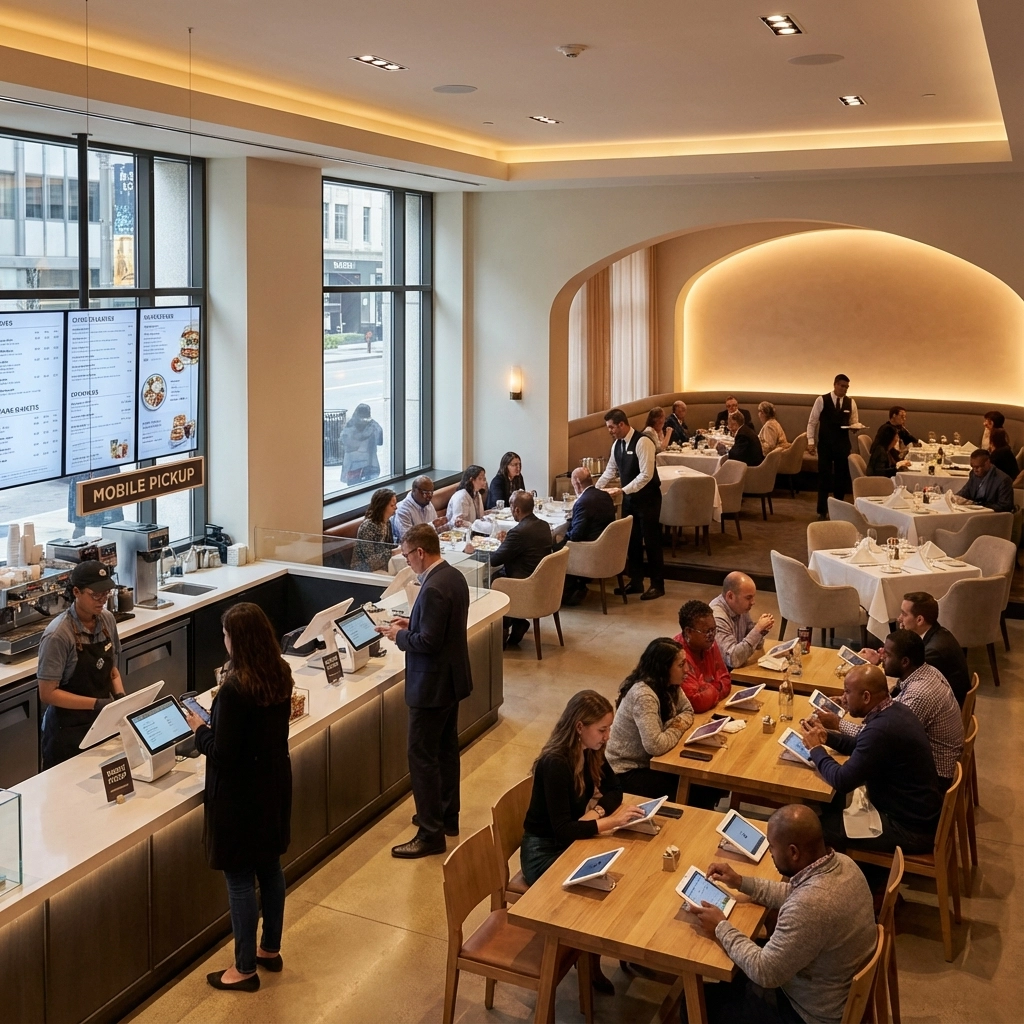
Supply Chain and Sustainability Integration
Supply chain disruptions have forced restaurants to develop more resilient sourcing strategies that balance cost control with reliability. The most successful operators have transformed these challenges into competitive advantages through local partnerships and sustainable practices.
Local Sourcing Advantages
Regional and local sourcing strategies are becoming economically viable as transportation costs increase and consumers value transparency in ingredient sourcing.
Local sourcing benefits:
– Cost predictability through direct relationships that eliminate intermediary markups
– Quality control through closer supplier relationships and shorter transportation times
– Marketing value that resonates with environmentally conscious consumers
– Supply reliability that reduces risk of disruption from distant suppliers
– Community connection that creates local loyalty and media interest
The key is finding the sweet spot between local sourcing and operational efficiency: not every ingredient needs to be local, but strategic choices can create significant value.
Sustainability as Competitive Advantage
Environmental sustainability has evolved from a nice-to-have amenity to a business imperative that affects customer choice, employee satisfaction, and operational costs.
Practical sustainability measures:
– Waste reduction programs that minimize food waste while tracking cost savings
– Energy efficiency initiatives that reduce utility costs while supporting environmental goals
– Packaging optimization that balances sustainability with functionality and cost
– Water conservation systems that reduce expenses while supporting conservation
– Recycling programs that engage employees and customers in environmental responsibility
The most effective sustainability programs generate measurable cost savings while creating marketing value: proving that doing good can also mean doing well financially.
Risk Management and Contingency Planning
The lessons learned from pandemic disruptions have fundamentally changed how successful restaurants approach risk management. Rather than simply hoping for stable conditions, the best operators have built flexibility into their business models that allows rapid adaptation to changing circumstances.
Operational Flexibility
Multi-channel service capabilities have become essential infrastructure rather than optional enhancements. Restaurants that can seamlessly shift between service models maintain revenue stability during disruptions.
Flexibility components include:
– Scalable staffing models that adjust to demand fluctuations
– Menu adaptability that maintains core offerings while accommodating supply disruptions
– Technology redundancy that ensures operations continue during system failures
– Financial reserves that provide working capital during challenging periods
– Supplier diversification that prevents single-source dependency
Financial Stress Testing
Successful restaurants regularly stress-test their financial models against various scenarios to ensure they can weather unexpected challenges while maintaining growth investments.
Stress testing scenarios:
– Labor cost increases of 15-25% above current levels
– Food cost inflation that outpaces menu price increases
– Traffic decreases of 20-30% due to economic downturns or external factors
– Supply chain disruptions that affect key ingredients or packaging
– Regulatory changes that affect operational costs or capabilities
The goal isn't to plan for every possible scenario but to understand which variables most significantly impact profitability and build appropriate safeguards.
Looking Forward: Strategic Priorities for Success
The restaurant operators who will dominate 2026 and beyond share common characteristics that distinguish them from competitors still operating with pre-pandemic assumptions. These leaders understand that success requires continuous adaptation rather than perfecting a fixed formula.
Investment Priorities
Strategic capital allocation focuses on capabilities that create sustainable competitive advantages rather than short-term revenue boosts.
High-priority investments:
– Technology infrastructure that enables operational efficiency and customer engagement
– Team development that creates capabilities rather than just filling positions
– Brand building that creates emotional connections beyond transactional relationships
– Real estate optimization that maximizes return on occupancy investments
– Systems development that scale efficiently as operations grow
Partnership Strategies
Successful restaurants are increasingly leveraging strategic partnerships to access capabilities and markets that would be expensive to develop independently.
Valuable partnership categories:
– Technology providers that offer integrated solutions rather than standalone products
– Supplier relationships that provide stability and innovation rather than just competitive pricing
– Marketing partners that extend reach and credibility rather than just advertising placement
– Financial partners that provide growth capital and expertise rather than just funding
– Community organizations that create local connections and support
The Path Forward
The restaurant industry entering 2026 offers tremendous opportunities for operators willing to embrace change while maintaining focus on fundamental business principles. Success requires balancing innovation with execution, growth with profitability, and efficiency with experience.
Having worked every role from dishwasher to director, I can tell you that the best restaurants have always been those that treat customers, employees, and investors as partners in success rather than adversaries to be managed. That principle remains true regardless of technological advances or market conditions.
The operators who will thrive understand that restaurant success has always been about creating value for all stakeholders: customers who receive experiences worth their investment, employees who can build careers while serving others, and investors who can generate returns while supporting communities.
The tools and techniques may evolve, but the fundamental mission remains unchanged: bringing people together around great food and memorable experiences. Those who remember this truth while mastering operational excellence will find 2026 filled with opportunities for growth, profitability, and impact.
For restaurant operators ready to navigate these opportunities strategically, Restaurant Finance Advisors provides the expertise and capital access needed to transform challenges into competitive advantages.
Keywords: restaurant consulting, restaurant investment, restaurant growth, restaurant finance, restaurant business development, restaurant trends 2026, restaurant industry outlook, restaurant technology, restaurant operations, find money for restaurants, restaurant capital, restaurant expansion, restaurant profitability, restaurant strategy, restaurant management consulting
Meta Description: Comprehensive 2026 restaurant industry outlook covering investment opportunities, operational trends, technology integration, and growth strategies. Expert analysis for restaurant owners and investors seeking competitive advantages in dining, delivery, and expansion markets.


