
The restaurant industry in 2026 isn't for the faint of heart: but it's absolutely ripe for operators who know where to look. After four consecutive months of comparable sales and traffic declines heading into this year, the old playbook of "raise prices and hope for the best" is officially dead. The operators who'll scale successfully this year are the ones who understand a fundamental truth: your guests haven't stopped eating out: they've just gotten pickier about where their dollars go.
Having worked every position in restaurants from busser to Director of Marketing, I can tell you that the most successful scaling stories I've witnessed never came from operators who waited for perfect conditions. They came from people who understood how to read the room: and the balance sheet: at the same time.
Let's dig into what 2026 actually looks like and how you can scale your concept without losing your shirt (or your sanity).
The Economic Landscape: What the Numbers Are Really Telling Us
Inflation has cooled, but your guests' wallets haven't warmed up yet. According to the National Restaurant Association's 2026 State of the Industry Report, consumer spending on dining remains constrained even as headline inflation numbers improve. Interest rates, while stabilizing, still make traditional restaurant investment more expensive than the pre-pandemic era.
Here's the reality we're working with:
– Traffic is down, but spending per visit is holding – Guests are coming less frequently but spending more when they do, which creates opportunities for strategic upselling and premium experiences.
– Trading down is the new normal – Consumers aren't abandoning restaurants; they're shifting from fine dining to fast-casual, from fast-casual to QSR. This creates market share opportunities for concepts positioned correctly.
– Tax relief may boost spending – Expected tax measures in 2026 could put more money in the pockets of lower-and-middle-income consumers who've pulled back the most.
The takeaway? Restaurant growth in 2026 isn't about fighting the current: it's about swimming with it.
Redefining Value: It's Not Just About Discounts
If your scaling strategy relies on slashing prices, you're already losing. The top dining trend restaurateurs expect in 2026 is happy hour and value promotions: 51% of Americans want to see more of these offerings. But here's where most operators get it wrong: value isn't just about price. It's about perception.
We've seen restaurant consulting clients double down on value in ways that actually protect margins:
– Authenticity over gimmicks – Guests can smell inauthenticity from a mile away. If your Nashville hot chicken concept was born in a corporate test kitchen, they'll know. Lean into your real story.
– Customization creates perceived value – Sauces, toppings, and build-your-own options make a $12 bowl feel like a $20 experience. The ingredient cost difference? Often pennies.
– Wellness positioning commands premiums – Clean ingredients, transparency about sourcing, and functional benefits (think: protein-forward, gut-friendly) justify higher price points without feeling like a ripoff.
– Limited-time offerings generate urgency – LTOs aren't just for Taco Bell. A rotating seasonal menu creates FOMO and drives repeat visits without permanent menu bloat.
Remember when I was managing a brewpub and we introduced a "secret" off-menu burger? Word spread, guests felt like insiders, and we sold more of those $16 burgers than our regular $12 option. Value is a story you tell, not just a number on a menu.
Menu Engineering for a High-Cost Environment
Chicken is your best friend in 2026. With beef prices remaining stubbornly high, chicken-forward concepts and menu items offer the margin protection you need to scale sustainably. This isn't about abandoning your identity: it's about smart restaurant investment in your menu architecture.
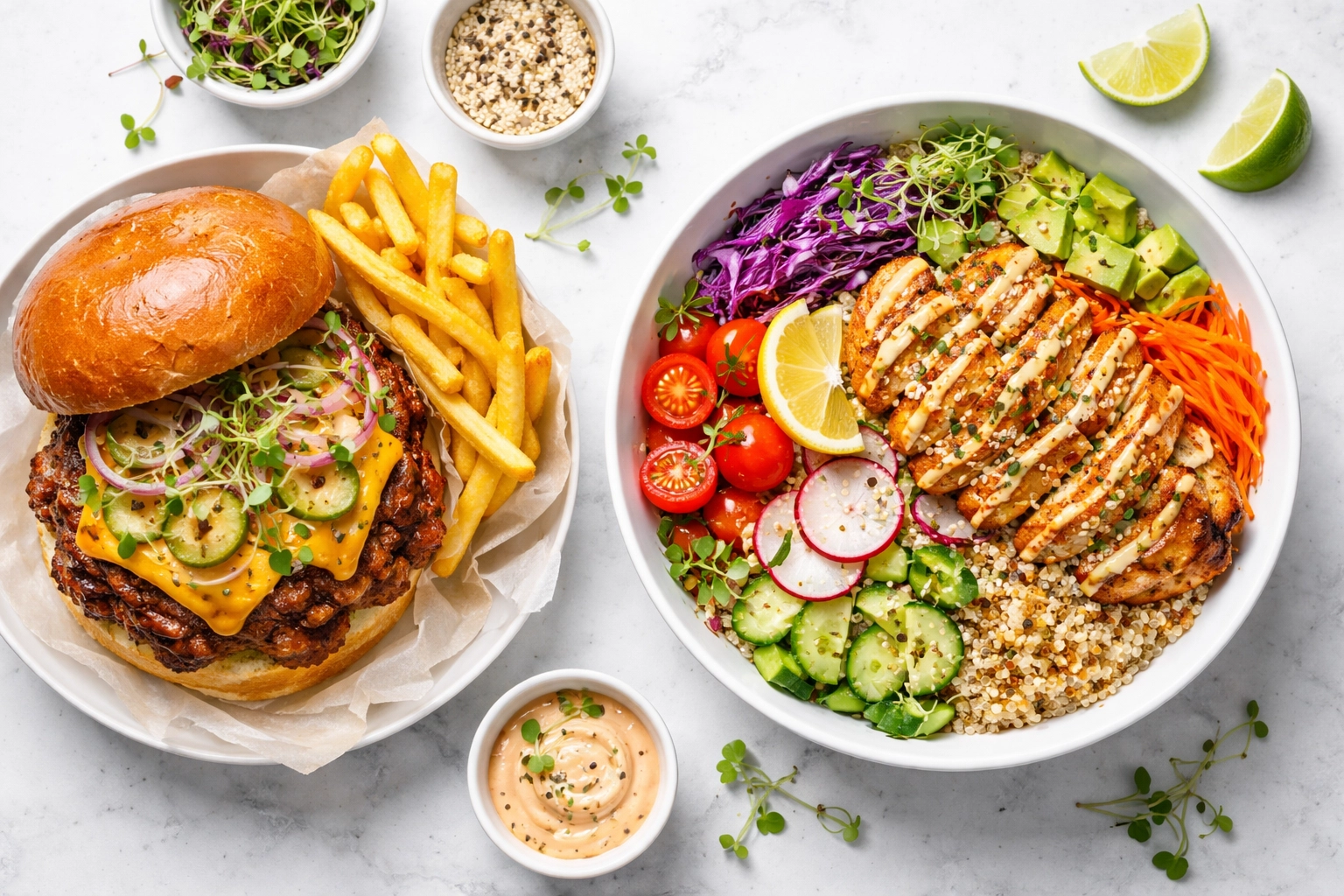
Trending items that balance cost control with guest appeal:
– Smashed burgers – Lower protein cost per patty, faster cook times, and that crispy-edged appeal that Instagram loves.
– Chicken-based alternatives – Chicken burgers, chicken sandwiches, and chicken bowls deliver the comfort food experience at better margins.
– Caribbean curry bowls – Global flavors with affordable protein and grain bases. Plus, they travel well for delivery.
– Flavor mashups – Sweet-savory combinations like miso caramel or chili honey let you elevate simple ingredients into premium experiences.
For a deeper dive on menu optimization, check out our post on Menu Engineering Magic: Turning Pancakes into Profit.
Capture the Dayparts Everyone Else Is Ignoring
Late-night dining has grown over 10% annually since 2021: are you capturing it? While everyone fights over the lunch rush and dinner prime time, savvy operators are finding restaurant new business in overlooked dayparts.
Here's where we see the biggest scaling opportunities:
– Late-night (9 PM – 12 AM) – Full-service restaurants especially are seeing growth here. Your kitchen's already staffed; extending hours strategically can add revenue without proportional labor costs.
– Early afternoon (2 PM – 5 PM) – The dead zone doesn't have to be dead. Happy hour, study/work-friendly environments, or snack-forward menus can fill these seats.
– Event-driven traffic – The FIFA World Cup hits North America in June-July 2026. March Madness, Valentine's Day, and local events are traffic goldmines if you plan ahead.
I learned this lesson the hard way as a server: nothing worse than standing around during a dead Tuesday afternoon when a simple trivia night could have packed the place.
Labor: Your Secret Weapon for Scaling
The labor crisis isn't over, but the dynamics have shifted. With unemployment rising slightly and wage pressure declining, 2026 presents a window to invest in retention-focused strategies that actually stick.
Here's what we're seeing from restaurant consulting engagements:
– Retention beats recruitment – Several casual chains have achieved record-setting retention rates, directly improving same-store sales. The cost of replacing an employee far exceeds the cost of keeping them.
– Balanced training approaches – Digital training for consistency, on-the-job mentoring for culture. Neither alone gets the job done.
– Career pathing matters – Employees who see a future stay longer. Even simple progression frameworks (line cook → lead → sous) create stickiness.
For more on navigating labor challenges, read The Great Labor Shortage: Why I Can't Find a Dishwasher and What to Do About It.
Funding Your Growth: The Equity-Free Advantage
Here's where most scaling dreams die: the financing conversation. Traditional restaurant investment typically means giving up equity, taking on high-interest debt, or both. By the time you've scaled to five locations, you might own less of your concept than your investors do.
At Restaurant Finance Advisors, we've built a different model. Our equity-free, interest-free credit solutions help operators find money your restaurants are already generating: and redeploy it for growth without diluting ownership or drowning in debt payments.
This isn't about magic. It's about:
– Vendor credit optimization – Restructuring supplier relationships to free up working capital
– Cash flow engineering – Timing your payables and receivables for maximum flexibility
– Strategic capital stacking – Combining funding sources intelligently instead of defaulting to the first term sheet that lands on your desk
Scaling shouldn't mean selling your soul: or your equity.
Technology and Personalization: The 2026 Edge
AI-powered personalization isn't coming: it's here. Tools that tailor offers to individual guest preferences, optimize pricing dynamically, and improve discovery are becoming table stakes for serious operators.
According to Forbes' 2026 Restaurant Technology Outlook, brands that modernize while preserving their authentic identity see measurable financial rewards. The operators who stumble are those who chase every shiny object without strategic intent.
Explore how technology is reshaping margins in our post on How AI is Changing Restaurant Profit Margins.
The Bottom Line: Scale Smarter, Not Harder
2026 rewards operators who adapt, not those who wait. Traffic may be down, but market share is there for the taking. Costs may be elevated, but so are the opportunities to find money your restaurants are already leaving on the table.
The concepts that scale this year will be the ones that:
– Redefine value beyond discounting
– Engineer menus for margin protection
– Capture overlooked dayparts and events
– Invest in labor retention as a competitive advantage
– Fund growth without sacrificing ownership
At Restaurant Finance Advisors, we partner with operators who are serious about restaurant growth: not just dreaming about it. Ready to find out where your scaling opportunities really are? Let's talk.
Keywords: restaurant consulting, restaurant investment, restaurant new business, restaurant growth, find money your restaurants
Meta Description: Is 2026 the year your restaurant scales? Discover the key economic trends and scaling strategies to grow your concept without diluting equity.
Outbound Links:


